Hexarelin vs Ipamorelin
Hexarelin vs Ipamorelin: compare GH potency, desensitization, side effects, use patterns, and which peptide better fits each research goal.
The hexarelin vs ipamorelin choice is strength versus selectivity: hexarelin is the better fit for a maximum acute growth-hormone pulse, while ipamorelin better fits a cleaner, steadier research pattern. No trial has compared them directly; this comparison weighs their separate human studies, and neither has human proof for muscle gain, fat loss, or recovery.
What is the core difference between hexarelin and ipamorelin?
Hexarelin and ipamorelin both activate the ghrelin receptor and prompt the pituitary to release growth hormone (GH), but they do not push that system in the same way. Hexarelin produces a harder acute signal with more endocrine spillover, while ipamorelin was designed to be more selective. Think firm shove versus cleaner tap: both move the same door, but one rattles the frame.
Hexarelin is a six-amino-acid growth-hormone-releasing peptide. Placebo-controlled human work found a dose-dependent GH response, but also transient increases in prolactin, adrenocorticotropic hormone (ACTH), and cortisol. Ipamorelin is a five-amino-acid secretagogue. Human pharmacokinetic work measured a clear GH pulse, while its profile emphasizes less activity outside the intended GH pathway.
That makes ipamorelin vs hexarelin more than a contest over which produces more GH. The useful question is which trade-off matches the goal: a larger short-term push, or a more selective signal with fewer known hormonal extras. Both sit in the same growth-hormone peptide family, and neither supplies GH from outside the body.
Which peptide has the stronger acute GH effect?
Hexarelin is the by-goal pick for maximum acute GH release, but that conclusion comes from separate pharmacology studies rather than a direct contest with ipamorelin. Hexarelin produced a large, dose-dependent GH response in controlled human research. Ipamorelin also produced a measurable human GH pulse. Without the same participants, doses, timing, and assay, the comparison cannot honestly become a percentage or a victory margin.
The distinction matters because “raises GH” is the endpoint these studies actually measured. No human trial shows that either peptide’s pulse builds muscle, reduces fat, improves sleep, or speeds recovery. Those popular outcomes remain mechanistic hypotheses: GH biology supplies a plausible bridge, but the bridge has not been crossed in an outcomes trial.
For short-term research centered on the largest acute signal, hexarelin has the clearer fit. For anyone asking hexarelin or ipamorelin for physique results, the evidence does not support crowning either one. The measurable hormone response is real; the desired downstream payoff is still waiting for a proper human test.
Which option holds its effect better over time?
Ipamorelin is the more sensible by-goal pick when sustained responsiveness matters, mainly because hexarelin has a documented tolerance problem. During continuous daily hexarelin use, the GH response became partially blunted and later recovered after a break. Ipamorelin does not carry the same documented degree of desensitization, although no long-term head-to-head study proves that its response stays constant.
Hexarelin’s fading response changes how its potency should be read. A strong first pulse does not guarantee the same pulse weeks later. The compound profile reports human research in which responsiveness declined during treatment and recovered after four weeks off. That is evidence of partial, reversible desensitization, not evidence that hexarelin permanently stops working.
Ipamorelin’s cleaner reputation is easier to translate into a longer research pattern, but “more sustainable” must stay relative. Human exposure has been small and short, and there is no long-term safety dataset for repeated GH and insulin-like growth factor 1 (IGF-1) elevation. Cleaner does not mean consequence-free; it means fewer documented off-target hormone changes in the available pharmacology.
How do side effects and reported use patterns differ?
Hexarelin brings the busier side-effect profile, while ipamorelin’s reported effects are usually narrower and short-lived. Hexarelin can cause flushing, warmth, hunger, water retention, and fatigue alongside cortisol and prolactin increases. Ipamorelin is associated with warmth or a head-rush, headache, mild water retention, tingling, and injection-site irritation. Neither has adequate long-term human safety evidence.
The reported patterns follow those differences. Hexarelin research used injections around 1–2 micrograms per kilogram, while community accounts often describe roughly 100 micrograms and shorter cycles because responsiveness fades. Ipamorelin community accounts commonly sit in the low hundreds of micrograms, often timed before bed or after training and used for longer cycles. Those community patterns are anecdotal, not clinically validated doses or personal protocols.
Both peptides are research-use-only in the United States as of 2026. Neither is FDA-approved, and neither is a legal dietary supplement. Product purity, dose accuracy, and sterility therefore add practical risks beyond the molecule itself. The broader regulatory-status guide explains what that label does—and does not—mean.
Which peptide fits each goal?
Hexarelin fits maximum short-term GH release; ipamorelin fits selectivity and a pattern less constrained by known desensitization. That is the honest split, not a universal ranking. The structured picks above answer the useful version of hexarelin vs ipamorelin: choose the compound by the research goal, then keep the certainty proportional to what human studies have actually measured.
Hexarelin’s case is strongest when the endpoint is the acute GH pulse itself. Its weakness is that potency comes bundled with cortisol and prolactin movement plus declining responsiveness during continuous use. Ipamorelin’s case is strongest when a cleaner GH signal matters more than chasing the largest immediate spike. Its weakness is not a failed trial; it is the absence of long-term outcome and safety trials.
Neither choice has earned a recommendation for muscle, fat loss, recovery, or anti-aging outcomes. Readers weighing those claims can use the guide to growth-hormone secretagogues to separate a measured hormone change from an assumed real-world benefit. The science already answers which buttons these peptides press. The next useful studies need to show what happens after pressing them repeatedly.
Hexarelin vs Ipamorelin, point by point
Every dimension side by side — the honest differences, not a scoreboard.
| Dimension | Hexarelin | Ipamorelin |
|---|---|---|
| Acute growth-hormone release | The stronger acute GH-pulse pick based on its separate placebo-controlled human studies. | Produces a clear, short-lived GH pulse in human pharmacology studies, with a gentler profile. |
| Hormone selectivity | Raises GH but can also produce transient, dose-dependent increases in prolactin, ACTH, and cortisol. | Designed as a selective ghrelin-receptor agonist; human pharmacology describes GH release without a meaningful cortisol or prolactin bump. |
| Tolerance over time | The GH response partially fades during continuous daily use and recovered after a break in a human study. | Not known to share hexarelin's documented degree of desensitization, but long-term comparative data do not exist. |
| Reported use pattern | Human research used injections around 1–2 mcg/kg; community reports often describe roughly 100 mcg and short cycles. | Community reports usually describe low hundreds of micrograms, often before bed or after training and in longer cycles. |
| Side-effect trade-off | Flushing, warmth, hunger, water retention, fatigue, endocrine spillover, and a fading GH response are the main concerns. | Head-rush, warmth, headache, mild water retention, tingling, and injection-site irritation are commonly reported; long-term GH/IGF-1 effects remain unknown. |
| US regulatory status (2026) | Research-use-only; not FDA-approved and not a legal dietary supplement. | Research-use-only; not FDA-approved and not a legal dietary supplement. |
- Acute growth-hormone release: No trial has compared hexarelin and ipamorelin directly; this judgment weighs separate human studies, not a head-to-head result.
- Reported use pattern: Community doses are anecdotal and not clinically validated recommendations.
Hexarelin vs Ipamorelin: the two molecules
The 2D chemical structures, straight from PubChem — a quick way to see how similar (or not) the two actually are.
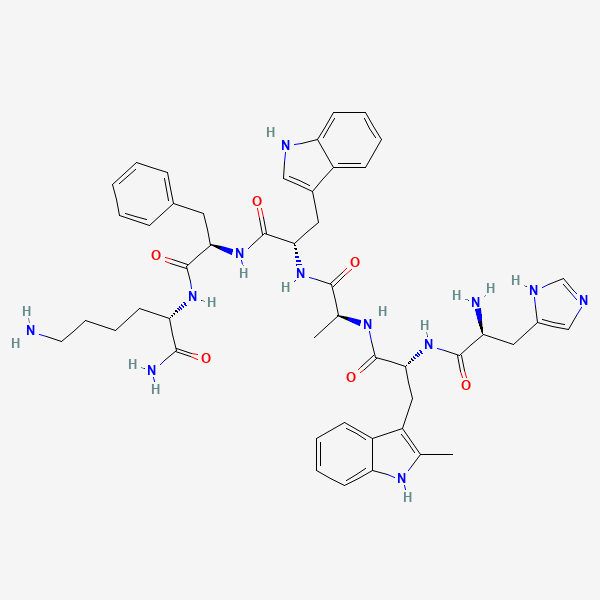
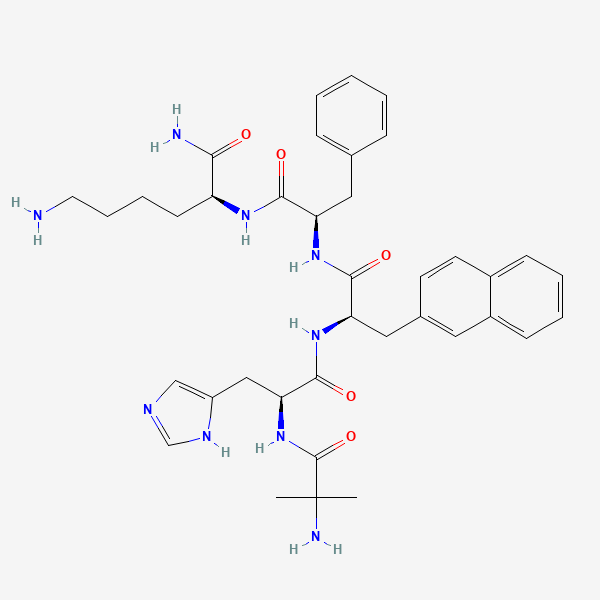
Which one fits which goal?
There's no universal winner here — the honest answer depends on what you're after. These picks are framed by goal, and each says why.
Maximum acute growth-hormone release for short-term research
Leans toward Hexarelin
Hexarelin has the harder acute GH signal in its separate human evidence, provided the goal is a short pulse rather than sustained daily responsiveness.
A cleaner, more selective GH pulse
Leans toward Ipamorelin
Ipamorelin raises GH without the same documented cortisol and prolactin spillover seen with hexarelin.
A use pattern intended to remain consistent over time
Leans toward Ipamorelin
Hexarelin has documented partial desensitization during continuous use; ipamorelin is the better fit when avoiding that known trade-off matters most, though long-term data are still limited.
References
- 1.Hexarelin-induced GH, cortisol and prolactin release: a dose-response study — PubMed
- 2.Does desensitization to hexarelin occur? — PubMed
- 3.Pharmacokinetic-pharmacodynamic modeling of ipamorelin in human volunteers — PubMed
- 4.Hexarelin and ipamorelin comparative literature search — PubMed
- 5.Drugs@FDA approved drug products database