Ipamorelin vs Tesamorelin for visceral fat
Ipamorelin vs Tesamorelin: Tesamorelin has human visceral-fat RCTs; Ipamorelin has no human body-composition efficacy trial.
Ipamorelin vs Tesamorelin is not an even contest for visceral-fat evidence. Tesamorelin reduced visceral adipose tissue in two Phase 3 randomized trials and is FDA-approved only for excess abdominal fat in adults with HIV lipodystrophy. Ipamorelin raises growth hormone in people, but no published human efficacy trial has tested fat loss or body composition.
Which peptide has evidence for visceral fat?
Tesamorelin is the evidence-backed pick for visceral fat, but only within a clearly defined evidence boundary. The pivotal studies enrolled adults with HIV-associated lipodystrophy, not a general med-spa population trying to flatten ordinary belly fat. The current EGRIFTA WR label also says the drug is not indicated for weight-loss management and is weight-neutral.
Tesamorelin produced about a 15.4% placebo-adjusted reduction in visceral adipose tissue at 26 weeks in a pooled analysis of two Phase 3 trials. A second pivotal report described an approximately 18% reduction. Those numbers refer to fat packed around the abdominal organs, measured by computed tomography—not every soft inch someone can pinch at the waist.
For the query which peptide for visceral fat, tesamorelin therefore has the stronger answer. That is a by-goal pick, not a universal winner and not proof that the HIV trial result transfers unchanged to people without HIV lipodystrophy.
What is the GHRH vs GHRP difference for fat loss?
Tesamorelin is a GHRH analog, while ipamorelin is a ghrelin-receptor agonist often grouped with GHRPs; both can prompt growth-hormone release, but through different receptor systems. Think of the pituitary as a room with two switches. Both switches affect the same light, yet flipping either one does not guarantee the same downstream result.
Tesamorelin activates the growth-hormone-releasing hormone receptor. Ipamorelin activates GHSR-1a, the ghrelin receptor. A controlled human pharmacology study found that ipamorelin caused a short growth-hormone pulse, peaking at about 0.67 hours, after intravenous infusions (Gobburu et al.). That verifies hormone release. It does not verify visceral-fat loss.
This endpoint distinction is where many ghrh vs ghrp for fat loss pages quietly change lanes: a measured growth-hormone response becomes an assumed body-composition benefit. Molecular Reference does not sell either compound, so there is no need to promote a mechanistic bridge as though researchers already crossed it. Our guide to growth-hormone secretagogues explains the two signaling routes in more detail.
What do the ipamorelin human trials actually show?
Ipamorelin has human data for growth-hormone release and postoperative gut recovery, but no published human efficacy RCT for body composition, fat loss, muscle gain, or recovery. The body-composition badge is therefore mechanistic hypothesis, none in humans. Calling ipamorelin “human studied” without naming the endpoint gives a technically true phrase a misleading job.
The reported Phase 2 postoperative-ileus failure is verifiable. A multicenter randomized trial enrolled 117 bowel-resection patients and compared intravenous ipamorelin with placebo. Median time to a tolerated solid meal was 25.3 versus 32.6 hours, but the difference was not statistically significant (p=0.15); key and secondary efficacy analyses found no significant benefit (Beck et al.). That result concerns gut motility after surgery, not visceral fat. It neither proves nor disproves a fat-loss effect—it simply cannot answer that question.
No trial has compared ipamorelin and tesamorelin directly. The same evidence hierarchy applies to tesamorelin vs ipamorelin: this comparison weighs separate evidence bases rather than inventing a head-to-head result.
Do the tesamorelin results last after stopping?
Tesamorelin’s visceral-fat reduction was treatment-dependent in the Phase 3 extensions. Participants who continued tesamorelin maintained the reduction better; participants switched to placebo had visceral fat rise by 16% in one trial and 22% in the other from week 26 to week 52, according to the current label. The effect was not a permanent metabolic receipt stamped “paid.”
The reversal matters because a before-and-after percentage can hide the maintenance question. It also separates tesamorelin from broad weight-loss drugs: the label calls EGRIFTA WR weight-neutral, even while computed tomography showed less visceral fat. The scale and the organ-fat compartment are answering different questions.
Are Egrifta and ipamorelin equally regulated?
Egrifta vs ipamorelin is an approved prescription drug versus an unapproved peptide, not a choice between two equivalent med-spa products. Tesamorelin has been FDA-approved since 2010 for one indication: reducing excess abdominal fat in adults with HIV lipodystrophy. Ipamorelin has no FDA-approved indication.
Tesamorelin dosing also needs a formulation label, not a copied number. The pivotal trials used 2 mg subcutaneously once daily. Current EGRIFTA WR labeling specifies 1.28 mg once daily and says WR and SV formulations are not substitutable. Ipamorelin’s negative ileus study used 0.03 mg/kg intravenously twice daily; that hospital regimen does not validate the small subcutaneous “fat-loss” doses marketed by clinics.
Both compounds remain prohibited at all times for tested athletes under the 2026 WADA Prohibited List, category S2. Tesamorelin’s approval does not create a sport exemption by itself.
What is the honest by-goal verdict?
Tesamorelin fits the goal of evidence-backed visceral-fat reduction in adults with HIV lipodystrophy; ipamorelin fits the narrower research goal of studying selective ghrelin-receptor-driven growth-hormone release. For general belly-fat loss, neither profile supports a blanket promise: tesamorelin’s proof comes from a specific clinical population, while ipamorelin has no human body-composition efficacy trial at all.
The table and by-goal picks preserve that distinction. Tesamorelin earned the visceral-fat claim. Ipamorelin earned the claim that it raises growth hormone in people. Those are different achievements, and no amount of med-spa proximity turns them into the same one.
Ipamorelin vs Tesamorelin for visceral fat, point by point
Every dimension side by side — the honest differences, not a scoreboard.
| Dimension | Ipamorelin | Tesamorelin for visceral fat |
|---|---|---|
| Drug class | Selective ghrelin-receptor agonist, commonly grouped with growth-hormone-releasing peptides (GHRPs). | Stabilized growth-hormone-releasing hormone (GHRH) analog. |
| Human body-composition evidence | Mechanistic hypothesis; none in humans. No published human efficacy RCT has tested fat loss or body composition. | Two Phase 3 randomized, placebo-controlled trials measured visceral adipose tissue in adults with HIV lipodystrophy. |
| Visceral-fat result | Unknown in humans. Raising growth hormone is not the same endpoint as reducing visceral fat. | About a 15.4% placebo-adjusted reduction at 26 weeks in the pooled Phase 3 analysis; one pivotal trial reported an 18% reduction. |
| What happened after stopping | Unknown for body composition because that outcome has not been tested in a published human trial. | Visceral fat reaccumulated after participants were switched from tesamorelin to placebo; continued treatment maintained the effect better. |
| Study dose and route | The negative Phase 2 ileus RCT used 0.03 mg/kg by intravenous infusion twice daily; that trial does not validate med-spa fat-loss dosing. | The pivotal visceral-fat trials used 2 mg subcutaneously daily. Current EGRIFTA WR labeling uses 1.28 mg daily; formulations are not substitutable. |
| US regulatory status (2026) | Not FDA-approved; FDA lists ipamorelin acetate in category 2 under its 503B interim compounding policy because of potential safety risks. | FDA-approved as prescription EGRIFTA only to reduce excess abdominal fat in adults with HIV lipodystrophy; not indicated for weight-loss management. |
| Banned in sport | Yes. Ipamorelin is prohibited at all times under WADA category S2. | Yes. Tesamorelin is prohibited at all times under WADA category S2. |
- Drug class: The compounds stimulate the growth-hormone axis through different receptors; they are not interchangeable versions of the same drug.
Ipamorelin vs Tesamorelin for visceral fat: the two molecules
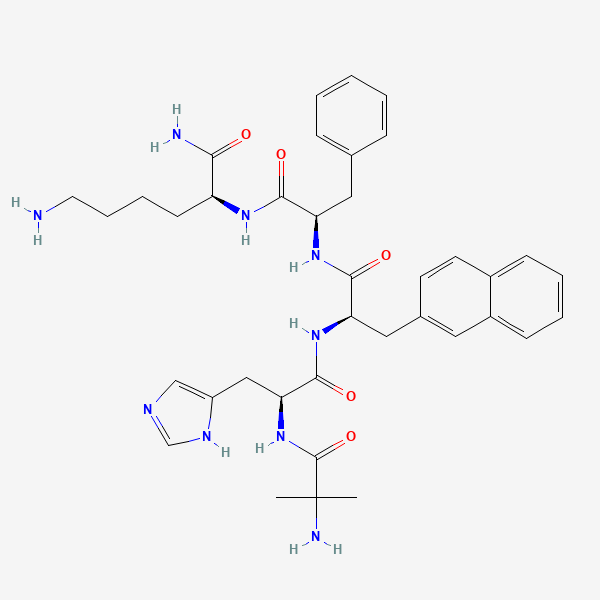
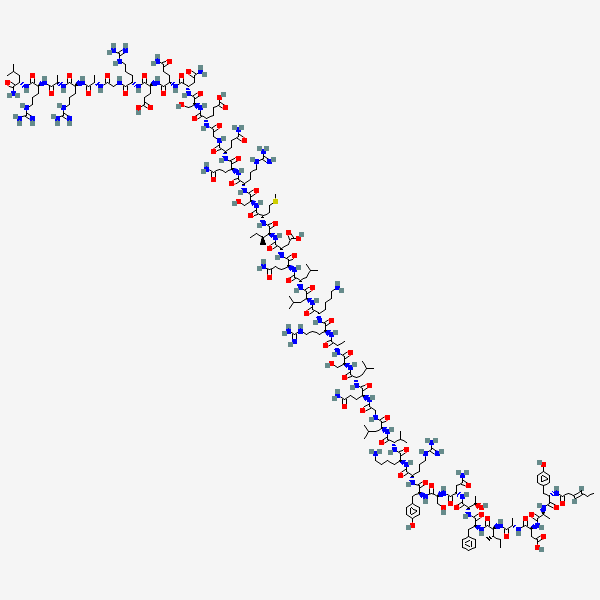
The 2D chemical structures, straight from PubChem — a quick way to see how similar (or not) the two actually are.
Which one fits which goal?
There's no universal winner here — the honest answer depends on what you're after. These picks are framed by goal, and each says why.
Reducing excess visceral fat in an adult with HIV lipodystrophy
Leans toward Tesamorelin for visceral fat
Tesamorelin is the option with two Phase 3 RCTs and an FDA-approved indication for this exact population and outcome.
Studying selective ghrelin-receptor stimulation and a short growth-hormone pulse
Leans toward Ipamorelin
Ipamorelin directly fits that mechanistic research question; this pick does not imply proven fat loss, muscle gain, or recovery benefits.
Choosing the stronger human evidence for visceral-fat reduction
Leans toward Tesamorelin for visceral fat
Tesamorelin has measured visceral-fat outcomes in randomized human trials; ipamorelin has none.