Kisspeptin-10 vs PT-141
How Kisspeptin-10 and PT-141 compare — what each is, how strong the human evidence is for each, doses reported in research, the key risks, and 2026 US legal status. No universal winner.
Kisspeptin-10 and PT-141 come up together when people are weighing similar options. Here's the honest side-by-side: what each is, how strong the human evidence is for each, the doses reported in research, the risks, and where each stands with the FDA as of 2026. There's no universal winner — scroll to the by-goal picks for which one fits which goal.
Kisspeptin-10 vs PT-141, point by point
Every dimension side by side — the honest differences, not a scoreboard.
| Dimension | Kisspeptin-10 | PT-141 |
|---|---|---|
| What it is | KISS1-derived decapeptide and kisspeptin receptor agonist | Synthetic cyclic heptapeptide; melanocortin-receptor agonist (an analog of the body's own α-MSH) |
| Class / category | GH secretagogues | Melanocortin |
| Evidence tier | Human (controlled) · Helped | Human RCT · Helped |
| Studied / approved for | Reproductive hormone stimulation; Secondary hypogonadism in men; Reproductive-axis testing | Hypoactive sexual desire disorder (HSDD) in premenopausal women |
| US regulatory status (2026) | research use only (as of Jul 2026) | fda approved (as of Jul 2026) — approved for Hypoactive sexual desire disorder (HSDD) in premenopausal women |
| Doses reported in research | No established study doses | No established study doses |
| Registered trials (ClinicalTrials.gov) | No data | 10 |
| Banned in sport (WADA) | Yes — on the WADA prohibited list | Unknown |
| Key risks | Acute intravenous KP-10 studies have not raised major safety concerns, but they were small and short. Long-term treatment safety, repeated subcutaneous or intramuscular use, and clinically useful dosing are not established. FDA also identified unresolved immunogenicity, aggregation, impurity, and formulation risks for compounded injections. | PT-141 is better-studied for safety than almost any peptide sold this way — thousands of women took it in the Vyleesi approval trials. Nausea is close to universal on the first dose (about 40% of women) and usually eases with later ones. Every dose briefly raises blood pressure and lowers heart rate, so it isn't for anyone with uncontrolled high blood pressure or known cardiovascular disease. Repeated dosing can darken the skin, face, or gums, and that pigment may not fully fade after stopping. |
- Evidence tier: A tier reflects how human the evidence is, not a promise the compound works.
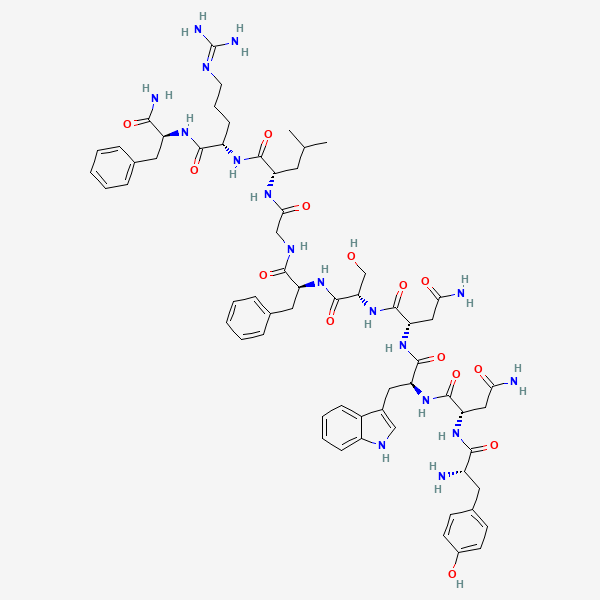
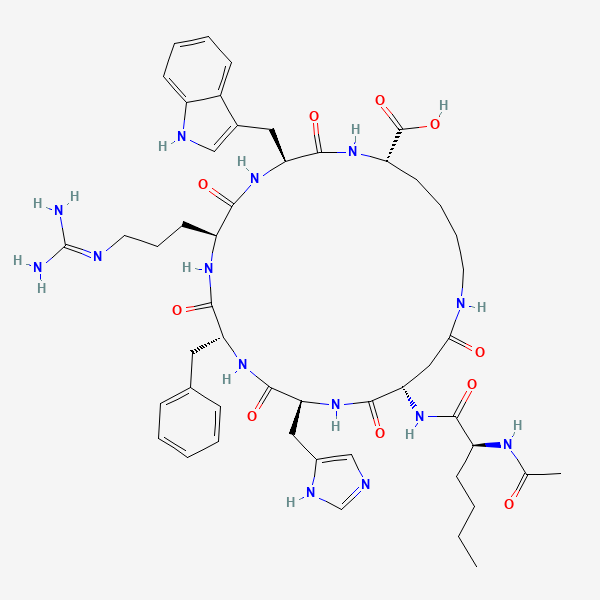
Kisspeptin-10 vs PT-141: the two molecules
The 2D chemical structures, straight from PubChem — a quick way to see how similar (or not) the two actually are.
Which one fits which goal?
There's no universal winner here — the honest answer depends on what you're after. These picks are framed by goal, and each says why.
If you want the option with more human evidence behind it
Leans toward PT-141
PT-141's evidence sits at human rct, a more human tier than Kisspeptin-10's human (controlled). That reflects how the data was gathered, not a guarantee it works.
If you want an FDA-approved, prescribable option
Leans toward PT-141
PT-141 is FDA-approved (as of Jul 2026); Kisspeptin-10 is research use only in the US, so it isn't available as an approved prescription.
References
- 1.PubChem — Kisspeptin-10 (CID 25240297)
- 2.Jayasena et al., 2011 — sexual dimorphism after kisspeptin-10 (PMID 21976724)
- 3.George et al., 2011 — kisspeptin-10 and LH pulse frequency (PMID 21632807)
- 4.Thurston et al., 2022 — kisspeptin-54 in women with HSDD (PMID 36287566)
- 5.Mills et al., 2023 — kisspeptin-54 in men with HSDD (PMID 36735255)
- 6.FDA — final minutes of the October 2024 Pharmacy Compounding Advisory Committee