Mazdutide vs Retatrutide
Mazdutide vs Retatrutide compares dual versus triple agonism, human weight-loss evidence, trial doses, safety, andundefinedUS regulatory status.
Mazdutide vs Retatrutide is a comparison of two once-weekly, next-generation incretin peptides: Mazdutide combines GLP-1 and glucagon activity, while Retatrutide adds GIP for a triple-receptor design. Both have human randomized-trial evidence, but no trial has compared them directly, and neither is FDA-approved in the United States as of 2026.
What is the core difference between mazdutide and retatrutide?
Mazdutide uses two metabolic signals; retatrutide uses three. Mazdutide activates the GLP-1 and glucagon receptors, pairing appetite control with a pathway thought to raise energy use and reduce liver fat. Retatrutide activates those same two receptors plus GIP, another incretin signal involved in insulin response and appetite. That is the cleanest triple vs dual agonist distinction.
Mazdutide is based on oxyntomodulin, a natural gut hormone, and its development has been led largely through China by Innovent. Retatrutide was designed by Eli Lilly as a single molecule that presses all three receptor buttons. The extra button makes retatrutide mechanistically broader, but broader does not automatically mean better. Receptor count is a design difference, not a clinical scoreboard.
Both compounds are given once weekly in trials. Readers comparing how weekly exposure differs from a molecule’s underlying persistence can use the half-life visualizer; the tool models timing, not a personal injection schedule.
Which has stronger weight-loss evidence?
Mazdutide has the more mature regulatory record, while retatrutide has the larger headline number from a pivotal obesity trial. Mazdutide completed randomized Phase 3 obesity studies and gained approval in China for chronic weight management. Retatrutide’s pivotal Phase 3 TRIUMPH-1 trial reported 28.3% average weight loss at 80 weeks with 12 mg weekly, while additional Phase 3 trials continue (Eli Lilly topline results).
That does not settle mazdutide vs retatrutide weight loss. The compounds were tested in separate trials with different populations, protocols, doses, and development stages. No direct head-to-head trial has compared them. Ranking the percentages as though both drugs ran the same race would be tidy, popular, and wrong.
Mazdutide’s evidence maturity is its practical strength: Phase 3 completion and regulator approval decisions in China. Retatrutide’s strength is the size of its pivotal Phase 3 randomized signal, with additional Phase 3 trials continuing. Both earn a Human RCT evidence tier, but the regulatory and geographic breadth of that evidence differ.
How do the study doses and safety signals compare?
Mazdutide and retatrutide were both studied as once-weekly injections with gradual dose escalation, and both produced mainly gastrointestinal side effects. A dedicated mazdutide Phase 3 obesity study tested 9 mg weekly (NCT06164873); retatrutide’s Phase 2 obesity trial tested doses up to 12 mg weekly. Those figures describe separate research programs, not equivalent doses and not a self-use protocol.
Mazdutide’s trial record lists nausea, diarrhea, vomiting, decreased appetite, and constipation as the recurring effects. The longer-term record remains concentrated largely in Chinese trial populations, so broader-population follow-up still matters (mazdutide research on PubMed).
Retatrutide produced a similar gastrointestinal pattern, especially during dose escalation. Retatrutide also raised heart rate in a dose-dependent way in the Phase 2 program, and the long-term meaning of that change is still being studied. Both compounds share the wider GLP-1 drug class’s unresolved rodent thyroid C-cell tumor concern. Separate safety datasets cannot tell us which compound is safer overall.
What is their regulatory status in 2026?
Mazdutide and retatrutide are both investigational in the United States and neither is FDA-approved as of 2026. Mazdutide has important qualifications: China approved it for chronic weight management and for glycemic control in adults with type 2 diabetes (Innovent approval announcement). Retatrutide remains investigational everywhere; a pivotal Phase 3 obesity trial has reported positive topline results, and additional Phase 3 trials are continuing to confirm benefits and fill in the longer-term safety picture.
The phrase “both investigational” therefore needs a jurisdiction attached. It is accurate for the US, but mazdutide is already an approved medicine in China. The Drugs@FDA database lists neither as an approved US product. Online “research” versions sit outside the approved-drug system and do not carry the purity, sterility, or dose assurance of a regulated medicine.
The nearby comparisons sharpen that context: mazdutide vs tirzepatide contrasts a China-approved, US-investigational GLP-1/glucagon drug with an FDA-approved dual incretin, while retatrutide vs tirzepatide compares triple agonism with an approved GLP-1/GIP option.
Which one fits which goal?
Mazdutide fits the goal of choosing the more mature regulatory record; retatrutide fits the goal of following the broader triple-agonist mechanism and its large Phase 3 weight-loss signal. Neither wins every category, and neither is an FDA-approved choice for a US patient in 2026. The useful answer depends on what the comparison is meant to prioritize.
Choose mazdutide as the evidence-maturity pick: completed Phase 3 obesity work and approvals in China put more regulatory weight behind its headline use. Choose retatrutide as the mechanism-and-signal pick: GIP adds a third pathway, and the 80-week Phase 3 result set a high bar while additional Phase 3 trials continue.
For anyone asking retatrutide vs mazdutide as though receptor count alone decides the outcome, the honest answer is to wait for comparable evidence. A direct trial would need to place both compounds in the same population under the same protocol. Until then, this comparison can separate mechanisms and evidence maturity; it cannot manufacture a winner.
Mazdutide vs Retatrutide, point by point
Every dimension side by side — the honest differences, not a scoreboard.
| Dimension | Mazdutide | Retatrutide |
|---|---|---|
| Receptor mechanism | Dual agonist: GLP-1 receptor + glucagon receptor. | Triple agonist: GIP receptor + GLP-1 receptor + glucagon receptor. |
| Clinical evidence maturity | Multiple completed randomized Phase 3 trials, largely in Chinese populations; approved in China for chronic weight management and glycemic control in adults with type 2 diabetes. | A pivotal randomized Phase 3 obesity trial has reported positive topline results; additional Phase 3 trials are ongoing. |
| Weight-loss trial signal | Phase 3 randomized trials in adults with obesity or overweight supported China's weight-management approval. | A pivotal Phase 3 obesity trial reported 28.3% mean weight loss at 80 weeks with 12 mg. |
| Doses reported in obesity studies | Once-weekly subcutaneous dosing; a dedicated Phase 3 obesity study tested 9 mg. | Once-weekly subcutaneous dosing; the Phase 2 obesity study tested doses up to 12 mg. |
| United States status (2026) | Investigational and not FDA-approved for any use. | Investigational and not FDA-approved for any use. |
| Status outside the United States | Approved in China for chronic weight management and glycemic control in adults with type 2 diabetes; broader-market programs remain under study. | No approved indications; still an investigational drug. |
| Safety picture | Gastrointestinal effects dominate trial reports; long-term and broader-population data are still accumulating. | Gastrointestinal effects dominate trial reports; dose-related heart-rate increases and long-term safety remain under study. |
- Receptor mechanism: Both include GLP-1 and glucagon activity; retatrutide adds GIP activity.
- Weight-loss trial signal: No trial has compared mazdutide and retatrutide directly; results from separate trials cannot establish which causes more weight loss.
- Doses reported in obesity studies: These are study doses, not interchangeable strengths or personal dosing instructions.
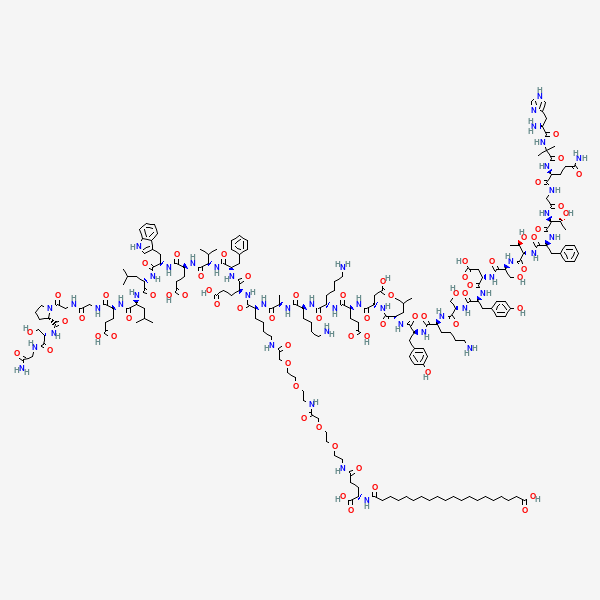
Mazdutide vs Retatrutide: the two molecules
The 2D chemical structures, straight from PubChem — a quick way to see how similar (or not) the two actually are.
Which one fits which goal?
There's no universal winner here — the honest answer depends on what you're after. These picks are framed by goal, and each says why.
Preferring the more mature Phase 3 and regulatory record
Leans toward Mazdutide
Mazdutide has completed multiple Phase 3 trials and has a weight-management approval in China, although it remains investigational in the United States.
Prioritizing the triple-agonist mechanism and strongest weight-loss signal
Leans toward Retatrutide
Retatrutide adds GIP activity and its 12 mg group averaged 28.3% weight loss at 80 weeks in a pivotal Phase 3 obesity trial, with additional Phase 3 trials underway.
Preferring a two-receptor design without GIP activity
Leans toward Mazdutide
Mazdutide targets GLP-1 and glucagon rather than all three receptors, making it the cleaner fit for that mechanism-specific goal.
References
- 1.Mazdutide — indexed research (PubMed, National Library of Medicine)
- 2.Phase 3 study of mazdutide in obesity or overweight (NCT05607680)
- 3.Mazdutide 9 mg Phase 3 obesity trial (ClinicalTrials.gov)
- 4.Retatrutide — indexed research (PubMed, National Library of Medicine)
- 5.Retatrutide Phase 2 obesity trial (NCT04881760)
- 6.Retatrutide TRIUMPH-1 Phase 3 obesity topline results
- 7.Mazdutide approved in China for glycemic control in adults with type 2 diabetes
- 8.Drugs@FDA approval-status database