Melanotan 1 vs Melitane
Melanotan 1 vs Melitane compares an FDA-approved 16 mg implant with an accessible topical MC1R agonist, including evidence, access, and by-goal picks.
Melanotan 1 vs Melitane is not a contest between two interchangeable tanning peptides: afamelanotide is a clinician-placed 16 mg prescription implant with human randomized-trial evidence for EPP, while Melitane is an accessible topical cosmetic ingredient whose tanning case rests mainly on supplier claims. No trial has compared them directly.
What are Melanotan 1 and Melitane actually comparing?
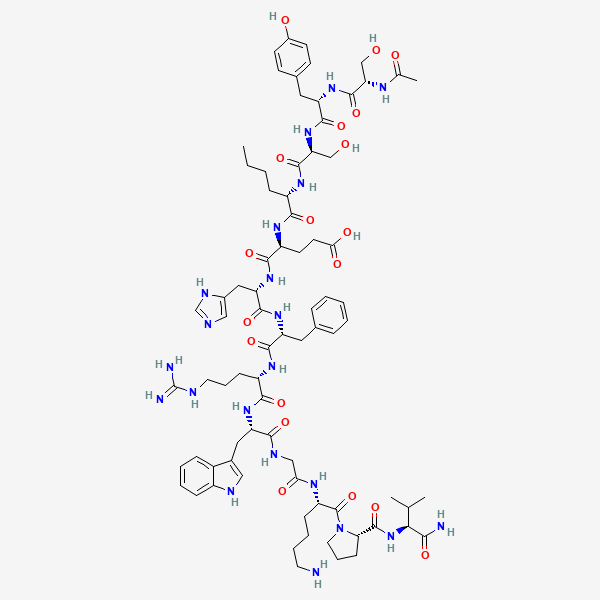
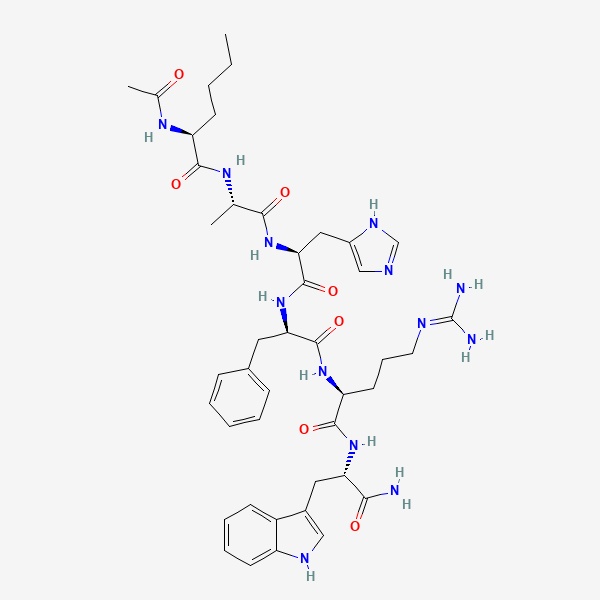
Melanotan 1 and Melitane both point at the melanocortin-1 receptor (MC1R), the pigment switch on melanocytes, but almost everything around that shared target differs. Melanotan I, or afamelanotide, is a 13-amino-acid drug delivered as a slow-release implant. Melitane is acetyl hexapeptide-1, a six-amino-acid cosmetic ingredient applied to skin.
Afamelanotide is an established MC1R agonist. Switching on MC1R raises production of eumelanin, the darker pigment involved in tanning and photoprotection. The current SCENESSE label describes that mechanism and says eumelanin production rises without sunlight or artificial ultraviolet exposure.
Melitane is marketed as a topical MC1R agonist for stimulating tyrosinase, melanin synthesis, and pigmentation. That description comes from the ingredient supplier, not an independent clinical program. PubChem confirms that Melitane is acetyl hexapeptide-1, CID 10129683, with CAS 448944-47-6. PubChem establishes identity; it does not establish that a topical product tans human skin.
Which compound has stronger evidence?
Afamelanotide has much stronger human evidence, but the proven use is EPP rather than elective tanning. Two randomized, double-blind, placebo-controlled trials used 16 mg subcutaneous implants in people with erythropoietic protoporphyria and found more pain-free light exposure than placebo. Those trials supported the drug pathway that ended in the SCENESSE approval.
Melitane sits at the weaker mechanistic-hypothesis tier. A PubMed search for acetyl hexapeptide-1 surfaced one indexed record and no independent human tanning trial. The acetyl hexapeptide-1 tanning pitch therefore rests on receptor logic and supplier testing, not a peer-reviewed randomized trial. Supplier data can be useful for formulating a product; it cannot be quietly promoted into clinical proof.
No head-to-head trial has tested afamelanotide vs melitane. PubMed and ClinicalTrials.gov searches combining the two names returned no comparative study. The evidence gap is the central fact of Melanotan 1 vs Melitane, not an inconvenient footnote to bury beneath a winner badge.
How do access and regulatory status differ in 2026?
Afamelanotide is the evidenced but restricted option; Melitane is the accessible but lightly evidenced option. FDA approved SCENESSE on October 8, 2019, to increase pain-free light exposure in adults with EPP. The current label specifies one 16 mg implant every two months, placed by a trained healthcare professional. Cosmetic tanning is not an approved indication.
That distinction matters because “Melanotan 1” can mean either the regulated SCENESSE implant or gray-market afamelanotide powder. Only the implant has the approval, manufacturing controls, and label-backed dose. The prescription product is not a cosmetic tanning service hiding behind a rare-disease label.
Melitane appears in commercial topical cosmetics and can be purchased without arranging a subcutaneous implant. US cosmetic ingredients generally do not receive FDA premarket approval, so availability says little about whether a product works. The practical mismatch is almost comic: the compound with real trials is unavailable for the cosmetic purpose, while the compound sold for that purpose has supplier-grade support.
Is Melitane a practical melanotan alternative?
Melitane is a practical melanotan alternative only if “alternative” means a topical product with easier access, not an evidence-equivalent substitute for afamelanotide. The delivery burden is smaller: no clinician, implant, injection, or systemic prescription drug. The certainty is smaller too, because no validated topical dose or independent human tanning outcome was located.
For diagnosed EPP, the by-goal pick is afamelanotide because SCENESSE was studied and approved for that disease. For someone comparing commercially available topical tanning ingredients, Melitane is the relevant format, with the evidence caveat attached in permanent ink. For someone demanding strong human proof for cosmetic tanning plus ordinary retail access, neither option cleanly meets both conditions.
The broader melanocortin peptide family explains why these molecules converge on pigment despite living in different regulatory worlds. Our guide to peptides for tanning covers the wider field and why receptor activity does not turn a tan into a replacement for sunscreen.
What safety differences matter most?
Afamelanotide has known label risks because people have actually received the approved implant in controlled trials and clinical use. DailyMed lists implant-site reactions, nausea, fatigue, dizziness, and skin hyperpigmentation among common adverse reactions. The label also recommends twice-yearly full-body skin examinations because afamelanotide can darken existing moles and freckles or produce new pigmentary lesions.
Melitane has fewer documented systemic concerns, but “fewer documented” is not the same as “demonstrated safe.” Published human safety trials for acetyl hexapeptide-1 were not located. A finished topical can also irritate skin because of its full formula, not necessarily because of the peptide alone. Patch testing addresses local tolerance; it does not manufacture missing long-term evidence.
Melanotan 1 vs Melitane therefore has no universal winner. Afamelanotide wins the EPP and human-evidence goals, while Melitane wins the topical-access goal. The honest trade is evidence versus availability, with route, intended use, and regulatory oversight doing more work than the shared MC1R label suggests.
Melanotan 1 vs Melitane, point by point
Every dimension side by side — the honest differences, not a scoreboard.
| Dimension | Melanotan 1 | Melitane |
|---|---|---|
| What it is | Afamelanotide, a synthetic 13-amino-acid alpha-MSH analog sold as the prescription drug SCENESSE. | Acetyl hexapeptide-1, a synthetic 6-amino-acid cosmetic ingredient sold under the Melitane name. |
| MC1R action | An established melanocortin-1 receptor agonist that increases eumelanin production. | Marketed by its supplier as a topical MC1R agonist that stimulates melanin; independent human confirmation is absent. |
| Format and route | A 16 mg bioresorbable implant placed subcutaneously by a trained healthcare professional. | A topical ingredient formulated into cosmetic serums, creams, or tanning products. |
| Studied or marketed goal | FDA-approved to increase pain-free light exposure in adults with erythropoietic protoporphyria (EPP). | Marketed for cosmetic pigmentation and sunless-tanning support, without an approved medical indication. |
| Human evidence | Randomized, double-blind, placebo-controlled human trials support the 16 mg implant for EPP. | No independent human tanning trial was located; the efficacy case is supplier-grade and mechanism-led. |
| Use level or dose | One 16 mg SCENESSE implant every 2 months under the FDA label. | No clinically validated topical dose; use levels come from cosmetic formulators and suppliers. |
| US regulatory reality (2026) | FDA-approved since October 2019 for EPP only; the label does not authorize cosmetic tanning. | Sold as a cosmetic ingredient, not an FDA-approved drug; cosmetic availability is not proof of efficacy. |
| Safety evidence | Human label data identify implant-site reactions, nausea, fatigue, hyperpigmentation, and the need for skin monitoring. | Published human safety data are absent; risk depends partly on the finished topical formulation. |
- MC1R action: The receptor story overlaps, but the evidentiary support does not.
- Human evidence: No trial has compared afamelanotide and Melitane directly; this page weighs their separate evidence.
Melanotan 1 vs Melitane: the two molecules
The 2D chemical structures, straight from PubChem — a quick way to see how similar (or not) the two actually are.
Which one fits which goal?
There's no universal winner here — the honest answer depends on what you're after. These picks are framed by goal, and each says why.
FDA-approved treatment for EPP
Leans toward Melanotan 1
SCENESSE is approved for this exact use and has randomized human trials behind the 16 mg clinician-placed implant.
A purchasable topical tanning ingredient
Leans toward Melitane
Melitane is sold in topical cosmetic products and avoids an implant, but its tanning claims remain supplier-grade rather than independently human-proven.
Choosing by strength of human evidence
Leans toward Melanotan 1
Afamelanotide has controlled human evidence; Melitane does not. That advantage applies most clearly to EPP, not unrestricted cosmetic access.
References
- 1.SCENESSE (afamelanotide) prescribing information — DailyMed
- 2.FDA orphan-drug approval record — SCENESSE (afamelanotide)
- 3.Langendonk et al. — Afamelanotide for Erythropoietic Protoporphyria (PMID 26132941)
- 4.Acetyl hexapeptide-1 — PubChem CID 10129683
- 5.Acetyl hexapeptide-1 — indexed research search (PubMed)