Melanotan 1 vs Setmelanotide
Melanotanundefinedvs Setmelanotide: MC1R pigment drug versus MC4R obesity drug, with approved uses, evidence tiers, formats, and risks.
melanotan 1 vs setmelanotide is an MC1R skin-pigment drug versus an MC4R hunger-control drug, not a contest for one job. Afamelanotide fits photoprotection in erythropoietic protoporphyria; setmelanotide fits specific rare obesity conditions. Both have human randomized-trial evidence, but no trial has compared them directly and neither wins every goal.
What is the central difference?
Melanotan I and setmelanotide sit in the same hormone family but press different biological buttons. Melanotan I, or afamelanotide, mainly activates melanocortin-1 receptor (MC1R) on pigment-making skin cells. Setmelanotide targets melanocortin-4 receptor (MC4R) in brain circuits that control hunger and energy balance. Think of one wiring diagram with switches in different rooms: same melanocortin building, different lights.
That receptor split is the useful way to read mc1r vs mc4r drugs. Afamelanotide raises eumelanin, the dark pigment that absorbs light, to help people with EPP tolerate daylight. Setmelanotide restores a downstream satiety signal when disease or injury has disrupted the pathway above MC4R. The melanocortin peptide hub maps the wider family, while our plain-English melanocortin agonist guide explains the shared biology.
What does the human evidence actually support?
Afamelanotide and setmelanotide both earn a Human RCT badge for their headline medical uses, but that badge does not make their evidence interchangeable. Afamelanotide’s two pivotal EPP trials randomized 74 European and 94 US patients to 16 mg implants or placebo every 60 days; treated patients gained more pain-free daylight exposure. That is direct support for photoprotection in EPP, not a blanket finding about cosmetic tanning (PubMed).
Setmelanotide’s evidence is disease-specific too. Its labeled program includes placebo-withdrawal trials in POMC/PCSK1 and LEPR deficiency, a randomized placebo-controlled period in BBS, and a 2026 label update based on a randomized acquired-hypothalamic-obesity trial. The current IMCIVREE label reports 142 randomized patients in that acquired-HO study. Human RCT means tested in people under controlled conditions; it does not mean approved for every nearby use. Our evidence-grading rules keep that boundary visible.
How do SCENESSE and IMCIVREE differ in use?
scenesse vs imcivree is also implant versus daily injection. SCENESSE is a 16 mg bioresorbable implant placed under the skin by a trained clinician every two months. IMCIVREE is a ready-to-use subcutaneous solution used once daily, with label-directed titration based on diagnosis, age, tolerability, renal function, and sometimes body weight. These are prescription products, not interchangeable research vials.
The approved-dose comparison is therefore not “which number is larger.” A slow-release 16 mg implant and a daily solution have different release profiles, targets, and treatment goals. Copying milligram numbers across them would be pharmacology by spreadsheet, which is still bad pharmacology. The SCENESSE label and IMCIVREE label describe clinician-supervised dosing for their own indications.
Which compound fits which goal?
For pain-free light exposure in adult EPP, afamelanotide is the evidence-backed pick; for an IMCIVREE-labeled rare obesity condition, setmelanotide is the evidence-backed pick. That is the whole by-goal answer. setmelanotide vs melanotan 1 only becomes confusing when “same peptide family” gets mistaken for “same purpose.”
Afamelanotide was FDA-approved on October 8, 2019 for EPP as SCENESSE. Setmelanotide arrived in 2020 for POMC, PCSK1, and LEPR deficiency obesity, expanded to BBS in 2022, and expanded again on March 19, 2026 to acquired hypothalamic obesity in people aged four years and older. The 2026 change appears in the updated DailyMed label; the exact approval date is recorded in Rhythm’s SEC filing. Those approvals answer different clinical problems, so there is no honest universal winner.
Are either approved for tanning or ordinary weight loss?
Neither drug is approved for the popular shortcut people may infer from the comparison. Afamelanotide visibly increases pigment, but FDA approval covers EPP photoprotection through the SCENESSE implant, not cosmetic tanning. Powder sold online as “Melanotan 1” may contain the same named molecule, but it is not the approved implant and does not inherit the implant’s manufacturing controls or evidence.
Setmelanotide can reduce weight and hunger, but its label explicitly excludes general polygenic obesity outside acquired HO, BBS, and POMC/PCSK1/LEPR deficiency. In other words, afamelanotide vs setmelanotide is not a menu offering “tan” or “lose weight.” The receptor biology explains those associations; the diagnosis-specific trials define where the evidence and approvals actually land.
What risks overlap, and where do they differ?
Both drugs can darken skin and existing moles, so pigmentation is not exclusive to the MC1R-focused option. SCENESSE labeling recommends a full-body skin examination twice yearly. IMCIVREE labeling calls for an exam before treatment and periodic monitoring, and also warns about injection-site reactions, nausea, headache, depression or suicidal thinking, and changes in sexual arousal.
Setmelanotide’s 2026 acquired-HO labeling adds precautions that matter in that population, including acute adrenal insufficiency and sodium imbalance in people with central diabetes insipidus. Afamelanotide’s label instead emphasizes implant reactions, nausea, fatigue, hypersensitivity, and ongoing light-protection measures. Shared family chemistry creates some overlap; different receptors, delivery systems, and patient populations create the rest.
Has a trial compared them directly?
No trial has compared Melanotan I with setmelanotide head to head. The available trials ask separate questions in separate populations: whether afamelanotide increases pain-free light exposure in EPP, and whether setmelanotide reduces weight and hunger in defined obesity disorders. This page weighs those separate evidence records; it does not manufacture a ranking from unrelated endpoints.
That distinction is what most thin comparison pages miss. melanotan 1 vs setmelanotide is best understood as a map of two approved destinations inside one receptor family: MC1R for EPP photoprotection and MC4R for selected rare-obesity biology. The right pick follows the diagnosed goal. For cosmetic tanning or general weight loss, the honest pick is neither.
Melanotan 1 vs Setmelanotide, point by point
Every dimension side by side — the honest differences, not a scoreboard.
| Dimension | Melanotan 1 | Setmelanotide |
|---|---|---|
| Drug and brand | Afamelanotide, the prescription drug sold as SCENESSE; also called Melanotan I or Melanotan 1. | Setmelanotide, the prescription drug sold as IMCIVREE. |
| Main receptor | MC1R, chiefly on pigment-making melanocytes in the skin. | MC4R, chiefly in brain pathways that regulate hunger and energy balance. |
| FDA-approved purpose | Increasing pain-free light exposure in adults with erythropoietic protoporphyria (EPP). | Long-term weight reduction in acquired hypothalamic obesity, Bardet-Biedl syndrome, and obesity due to POMC, PCSK1, or LEPR deficiency. |
| US approval timeline | SCENESSE was approved October 8, 2019 for EPP. | IMCIVREE was approved in 2020 for POMC/PCSK1/LEPR deficiency, expanded in 2022 to BBS, and on March 19, 2026 to acquired hypothalamic obesity. |
| Approved format and dosing | A clinician-placed 16 mg subcutaneous implant every 2 months. | A ready-to-use subcutaneous injection taken once daily; the label titrates by indication, age, tolerability, and sometimes body weight. |
| Evidence behind the approved use | Human randomized, double-blind, placebo-controlled trials in EPP. | Human randomized or placebo-withdrawal trials across its labeled rare-obesity populations. |
| What the approval does not cover | Not FDA-approved for cosmetic tanning; gray-market Melanotan 1 powder is not SCENESSE. | Not FDA-approved for general polygenic obesity or routine weight loss. |
| Key safety distinction | Pigment and mole darkening, implant reactions, nausea, fatigue, and hypersensitivity; the label recommends twice-yearly full-body skin exams. | Pigment and mole darkening, injection reactions, nausea, headache, sexual effects, and mood warnings; acquired-HO labeling adds adrenal and sodium-balance precautions. |
- Main receptor: Setmelanotide can also activate pigment signaling enough to darken skin and moles.
- Evidence behind the approved use: Human RCT is the shared badge, but the trials studied different diseases and cannot rank one drug against the other.
Melanotan 1 vs Setmelanotide: the two molecules
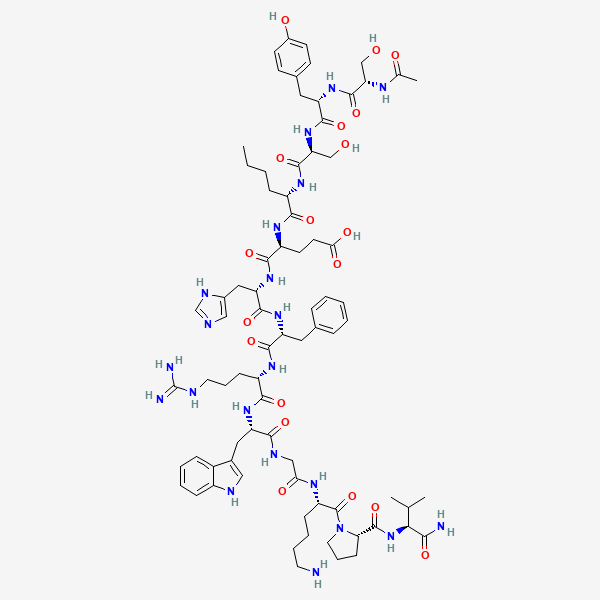
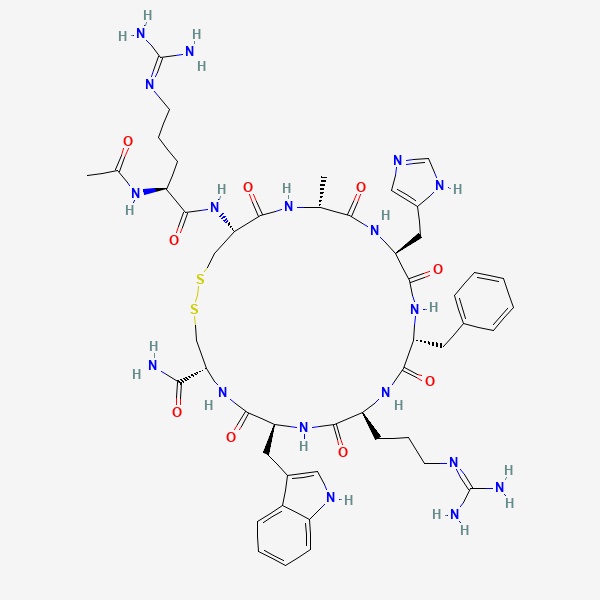
The 2D chemical structures, straight from PubChem — a quick way to see how similar (or not) the two actually are.
Which one fits which goal?
There's no universal winner here — the honest answer depends on what you're after. These picks are framed by goal, and each says why.
Photoprotection in erythropoietic protoporphyria
Leans toward Melanotan 1
Afamelanotide is the MC1R-focused drug approved for increasing pain-free light exposure in adults with EPP.
Treating an IMCIVREE-labeled rare obesity condition
Leans toward Setmelanotide
Setmelanotide targets MC4R and is approved for acquired hypothalamic obesity, BBS, and obesity caused by POMC, PCSK1, or LEPR deficiency.
References
- 1.SCENESSE (afamelanotide) prescribing information
- 2.IMCIVREE (setmelanotide) prescribing information, updated April 2026
- 3.Langendonk et al. — Afamelanotide for Erythropoietic Protoporphyria (PMID 26132941)
- 4.FDA approval of IMCIVREE for POMC, PCSK1, and LEPR deficiency obesity
- 5.FDA approval of IMCIVREE for Bardet-Biedl syndrome