Melanotan 2 vs Setmelanotide
Melanotanundefinedvs Setmelanotide comes down to receptor selectivity, evidence and legal status: broad unapproved MT-II versus prescribed IMCIVREE.
Melanotanundefinedvs Setmelanotide is mainly a selectivity comparison: Melanotan II broadly activates MC1R, MC3R, MC4R and MC5R, while Setmelanotide prefers MC4R. That split explains why one peptide tans, suppresses appetite and triggers erections, while the other is a prescription appetite drug whose skin darkening is a side effect.
No trial has compared them directly; this page weighs their separate evidence. The shared badge is Human (controlled) because Melanotan II has the weaker evidence tier, even though setmelanotide has randomized-trial support.
What is the core difference?
Melanotan II broadcasts across the melanocortin system, while setmelanotide aims most of its activity at melanocortin-4 receptor (MC4R), the brain receptor tied to hunger, fullness and energy balance. The current IMCIVREE label reports 20-fold less setmelanotide activity at MC1R and MC3R than at MC4R. Melanotan II does not offer that separation.
That receptor map explains the whole comparison. MC1R tells pigment cells to make melanin. MC3R and MC4R participate in appetite and sexual signaling. MC5R has roles in exocrine tissues. Melanotan II presses several of those buttons together, so tanning, appetite suppression, nausea and erections travel as a package. The small Phase 1 pilot recorded pigmentation, nausea, yawning and spontaneous erections in the same three volunteers (PubMed).
Setmelanotide was built around a narrower job. The current IMCIVREE label calls it an MC4 receptor agonist and documents reduced activity at MC1R and MC3R. Reduced does not mean zero: setmelanotide still darkens skin and moles, and sexual effects remain on the label.
Searchers sometimes describe this as selective vs dirty agonist. “Promiscuous” or “non-selective” is the cleaner pharmacology term, but the blunt phrase captures the practical difference. For a plain-English map of the receptor family, see what a melanocortin agonist is and the melanocortin peptide hub.
Which compound has stronger human evidence?
Setmelanotide has the stronger evidence for its approved obesity uses; Melanotan II has small controlled human studies for tanning and erectile effects. No published or registered head-to-head trial was identified, so any claim that one beat the other on weight, appetite, pigmentation or safety would be invented comparison math.
Melanotan II earned the human-controlled tier from early, small studies. A single-blind, placebo-controlled Phase 1 pilot enrolled three men and found measurable tanning in two after subcutaneous dosing. A later double-blind crossover study enrolled ten men with erectile dysfunction: erections were reported after 12 of 19 Melanotan II injections versus 1 of 21 placebo injections, with more nausea and yawning on Melanotan II (PubMed). Those are real human signals, not a modern development program or long-term safety record.
Setmelanotide has randomized evidence in the rare populations named on its label. The latest expansion rests on a 52-week randomized, double-blind, placebo-controlled trial in acquired hypothalamic obesity. That makes setmelanotide vs melanotan 2 an uneven evidence comparison: the former is a regulated medicine tested for defined diseases; the latter is an experimental multi-receptor peptide whose controlled studies were small and early.
How do approved uses and legal status differ?
Setmelanotide is FDA-approved as IMCIVREE for defined obesity disorders, while Melanotan II has no FDA-approved use. On March 19, 2026, FDA expanded IMCIVREE to adults and children aged 4 years and older with acquired hypothalamic obesity, adding to Bardet-Biedl syndrome and POMC, PCSK1 or LEPR deficiency indications.
The FDA supplement approval letter ties the acquired hypothalamic obesity indication to the Phase 3 RM-493-040 trial. IMCIVREE remains a precision treatment, not a general-purpose weight-loss injection. A clinician selects patients by the diagnosis described in the label and monitors the labeled skin, mood, sexual, adrenal and sodium-related risks.
Melanotan II sits on the other side of the line. FDA enforcement records describe injectable Melanotan II marketed for tanning as an unapproved new drug that could not be introduced into interstate commerce without an approved application (FDA). A “research use only” label does not turn a gray-market vial into an approved medicine.
This is why imcivree vs melanotan is not a brand-versus-generic choice. IMCIVREE is setmelanotide in an approved prescription product. Melanotan II is a different molecule, with different receptor coverage, evidence and regulatory status.
Why can both compounds darken skin?
Melanotan II darkens skin because MC1R activation is central to what people seek from it; setmelanotide darkens skin because MC1R activity survives despite MC4R preference. In one case pigmentation is the point. In the other, hyperpigmentation and darkening of existing moles are labeled adverse effects that require skin monitoring.
Setmelanotide’s selectivity is relative, not absolute. Calling setmelanotide an MC4R appetite peptide does not erase its activity elsewhere. The label calls for a full-body skin examination before treatment and periodically afterward because new or darker pigmented lesions can appear.
Melanotan II has the opposite emphasis. Broad activation gives the tanning effect, but the same lack of selectivity also makes appetite and erectile effects hard to separate from it. That is pharmacology, not a bonus-feature menu.
Which compound fits which goal?
Setmelanotide is the by-goal pick only for prescribed treatment of an eligible genetic or acquired hypothalamic obesity diagnosis. Nothing here endorses Melanotan II for tanning, appetite control, sexual function or weight loss. Its small controlled studies establish effects; they do not supply FDA approval, regulated manufacturing or long-term safety evidence.
For common obesity, neither side of this comparison becomes the automatic answer. IMCIVREE’s label specifically limits use to acquired hypothalamic obesity, Bardet-Biedl syndrome, and qualifying POMC, PCSK1 or LEPR deficiency. Melanotan II has no approved obesity role at all.
The honest result is not a universal winner. It is a routing decision: a confirmed label-matched diagnosis points toward a setmelanotide prescriber; curiosity about Melanotan II points toward its evidence and risk profile, not a recommendation to use it.
That is the usable answer to melanotan 2 vs setmelanotide: receptor selectivity determines the effects, while evidence and regulatory status determine what can be prescribed.
Melanotan 2 vs Setmelanotide, point by point
Every dimension side by side — the honest differences, not a scoreboard.
| Dimension | Melanotan 2 | Setmelanotide |
|---|---|---|
| Receptor reach | A promiscuous agonist at MC1R, MC3R, MC4R and MC5R. | An MC4R-preferring agonist with 20-fold less activity at MC1R and MC3R, according to the current label. |
| Main role | An unapproved experimental peptide studied for tanning and sexual effects. | A prescription MC4R agonist for specific rare genetic and acquired hypothalamic forms of obesity. |
| Pigmentation | Skin darkening is the intended headline effect through MC1R. | Hyperpigmentation and darkened moles are labeled adverse effects from residual MC1R activity. |
| Appetite and weight | Broad melanocortin activity can suppress appetite, but Melanotan II has no approved obesity indication. | MC4R activation reduces hunger and body weight in the specific populations covered by the IMCIVREE label. |
| Sexual effects | Small placebo-controlled human studies documented spontaneous erections and increased sexual desire. | Spontaneous erections and changes in sexual arousal remain labeled adverse effects, despite MC4R preference. |
| Human evidence | Human-controlled: small, early placebo-controlled studies support tanning and erectile effects. | Human RCT: randomized trials support approved obesity indications. |
| US regulatory status (2026) | Not FDA-approved; FDA has treated marketed injectable Melanotan II as an unapproved new drug. | FDA-approved as IMCIVREE; the indication expanded on March 19, 2026 to acquired hypothalamic obesity in patients aged 4 years and older. |
| Supply and oversight | No approved US product, prescribing label or regulated indication. | A finished prescription medicine with labeled dosing, monitoring and manufacturing controls. |
- Receptor reach: Selectivity is the central difference: Melanotan II spreads one signal across several receptors; setmelanotide concentrates it at MC4R.
- Human evidence: The shared comparison badge uses the weaker tier, human-controlled. No trial has compared the two compounds directly.
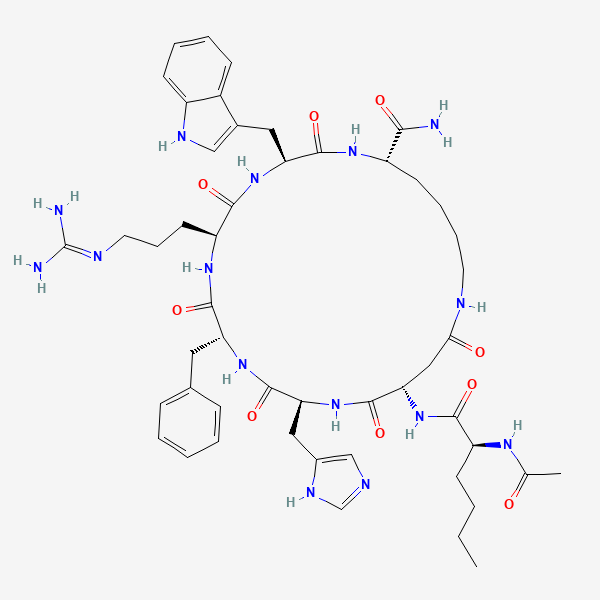
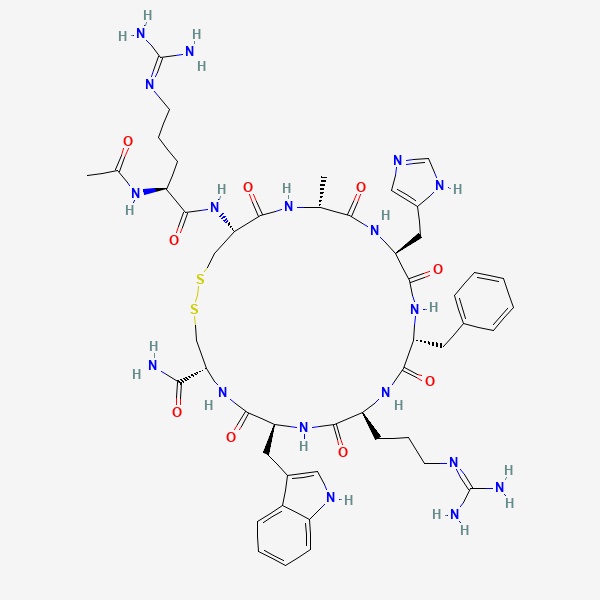
Melanotan 2 vs Setmelanotide: the two molecules
The 2D chemical structures, straight from PubChem — a quick way to see how similar (or not) the two actually are.
Which one fits which goal?
There's no universal winner here — the honest answer depends on what you're after. These picks are framed by goal, and each says why.
Prescribed treatment for an eligible genetic or acquired hypothalamic obesity diagnosis
Leans toward Setmelanotide
Setmelanotide is the FDA-approved option with randomized human evidence for the diagnoses named in its label; Melanotan II is not an approved obesity treatment.
References
- 1.IMCIVREE acquired hypothalamic obesity supplement approval letter (NDA 213793/S-009)
- 2.IMCIVREE (setmelanotide) current prescribing information
- 3.Evaluation of Melanotan-II in a placebo-controlled pilot Phase 1 study (PMID 8637402)
- 4.Melanotan II in men with organic erectile dysfunction (PMID 11018622)
- 5.FDA enforcement record describing Melanotan II as an unapproved new drug