Melitane vs Nonapeptide-1
How Melitane and Nonapeptide-1 compare — what each is, how strong the human evidence is for each, doses reported in research, the key risks, and 2026 US legal status. No universal winner.
Melitane and Nonapeptide-1 come up together when people are weighing similar options. Here's the honest side-by-side: what each is, how strong the human evidence is for each, the doses reported in research, the risks, and where each stands with the FDA as of 2026. There's no universal winner — scroll to the by-goal picks for which one fits which goal.
Melitane vs Nonapeptide-1, point by point
Every dimension side by side — the honest differences, not a scoreboard.
| Dimension | Melitane | Nonapeptide-1 |
|---|---|---|
| What it is | Synthetic acetylated hexapeptide and alpha-MSH-mimetic MC1R agonist used as a cosmetic tanning ingredient | Synthetic nine-amino-acid alpha-MSH antagonist peptide used as a topical cosmetic ingredient |
| Class / category | Cosmetic / skin | Cosmetic / skin |
| Evidence tier | Mechanistic · Unclear · none in humans | In-vitro · Unclear · none in humans |
| Studied / approved for | Gradual tanning and tan enhancement (cosmetic); Supporting skin pigmentation in sun-care formulas (cosmetic) | Skin brightening in topical cosmetics; Melasma maintenance as one ingredient in combination products |
| US regulatory status (2026) | unscheduled (as of Jul 2026) | unscheduled (as of Jul 2026) |
| Doses reported in research | No established study doses | No established study doses |
| Registered trials (ClinicalTrials.gov) | 0 | No data |
| Banned in sport (WADA) | Unknown | Unknown |
| Key risks | Melitane's honest safety answer is "not established in published human research." It is used as a low-percentage topical ingredient in cosmetic formulations, and there are no published standalone human safety trials to point to. The likely real-world risks are the ordinary hazards of a finished topical formula, including irritation or allergic contact reactions in sensitive skin. Melitane is not a sunscreen, and stimulating pigment does not make UV exposure safe. | Nonapeptide-1 has no published long-term human safety trial as a standalone ingredient. Small randomized studies of multi-ingredient topical products reported adverse events at the finished-product level, which cannot identify the peptide as the cause or rule it out. Irritation or allergy remains possible with any topical formula, and safety depends on the whole product. |
- Evidence tier: A tier reflects how human the evidence is, not a promise the compound works.
Melitane vs Nonapeptide-1: the two molecules
The 2D chemical structures, straight from PubChem — a quick way to see how similar (or not) the two actually are.
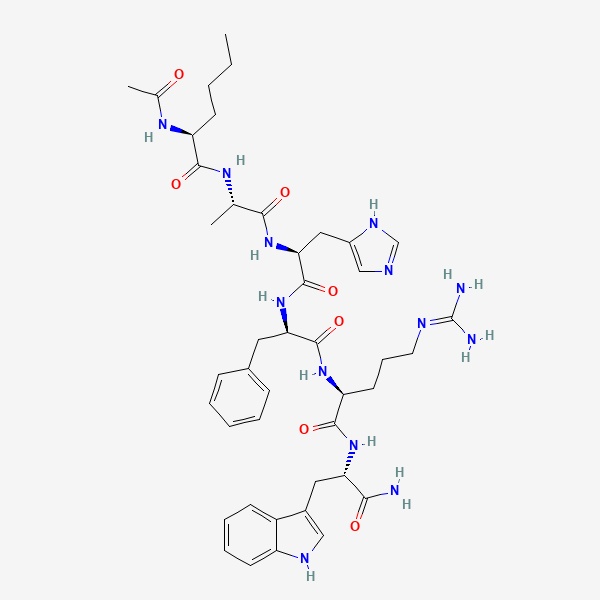
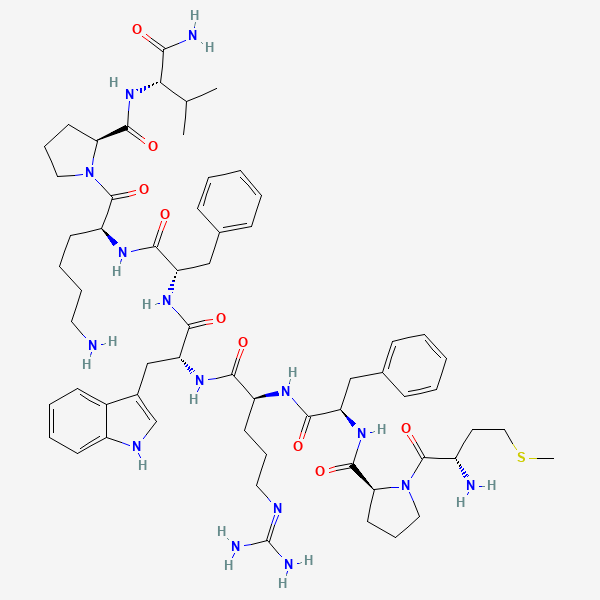
Which one fits which goal?
There's no universal winner here — the honest answer depends on what you're after. These picks are framed by goal, and each says why.
If you want the option with more human evidence behind it
Leans toward Nonapeptide-1
Nonapeptide-1's evidence sits at in-vitro, a more human tier than Melitane's mechanistic. That reflects how the data was gathered, not a guarantee it works.
References
- 1.Lucas Meyer Cosmetics - Melitane GL product information and mechanism
- 2.COSMILE Europe - Acetyl Hexapeptide-1 INCI function
- 3.Dubs et al., 2007 - MC1R activity of alpha-MSH analogues compared with Melitane (PMID 17896820)
- 4.WO2014177406A1 - Melitane as a melanotropic MC1R ligand in pigmenting compositions
- 5.US20100021401A1 - Acetyl hexapeptide-1 stimulation of MC1R, tyrosinase, and melanogenesis
- 6.Clariant - Melanostatine 5 BG (Nonapeptide-1), the lightening-side alpha-MSH antagonist