Modified GRF 1-29 vs Sermorelin
Modified GRF 1-29 vs Sermorelin explained: four sequence changes, different human evidence, FDA history, 503A status, and the CJC no-DAC naming trap.
Modified GRF 1-29 vs Sermorelin is mainly engineered stability versus clinical pedigree: Sermorelin is GRF(1-29), while Mod GRF adds four substitutions to the same 29-amino-acid framework. No trial has compared them directly; this comparison weighs separate evidence, where sermorelin has human data and Mod GRF remains a mechanistic hypothesis.
Is sermorelin the same as GRF 1-29?
Sermorelin is GRF(1-29): the amidated, biologically active first 29 amino acids of human growth-hormone-releasing hormone (GHRH). Mod GRF 1-29 starts with that framework but changes four positions, so the answer to “is sermorelin the same as grf 1-29” is yes, while sermorelin and modified GRF 1-29 are not chemically identical.
Both compounds target the GHRH receptor on pituitary cells. Both are signals intended to prompt release of the body’s own growth hormone rather than supply growth hormone directly. That shared receptor explains why shallow comparisons call them interchangeable. The sequence, evidence, and regulatory histories say otherwise.
What do the four Mod GRF substitutions change?
Mod GRF 1-29 replaces Ala2, Asn8, Gly15, and Met27 in sermorelin with D-Ala2, Gln8, Ala15, and Leu27. D-Ala at position 2 blocks a major dipeptidyl peptidase-4 (DPP-4) cleavage route; the remaining swaps address other degradation liabilities. The design case is better persistence, but a cleaner molecule on paper is not a clinical outcome.
FDA’s 2024 review confirms the distinct 29-amino-acid CJC-1295 free-base sequence and separates it from the longer-acting DAC form. FDA also says the common names are inconsistent enough that “CJC-1295” may not identify the actual structure. That makes the certificate of analysis and sequence more useful than the vial nickname.
Which peptide has stronger human evidence?
Sermorelin has the stronger evidence by a wide margin. Sermorelin was used in controlled human GH-stimulation testing, and a PubMed-indexed review reports limited pediatric treatment data. Mod GRF 1-29 has no human efficacy study of the exact no-DAC/free-base peptide. No direct sermorelin vs mod grf trial exists, so claims that Mod GRF is clinically “better” outrun the record.
The historical sermorelin literature reports 1 mcg/kg intravenously for diagnostic testing and 30 mcg/kg subcutaneously once daily in limited studies of prepubertal children with idiopathic growth hormone deficiency. Those are old study doses in a specific clinical population, not a protocol for healthy adults.
FDA found no clinical data with which to assess CJC-1295 free base or acetate for safety or effectiveness. Human CJC-1295 papers reviewed by FDA involved an uncertain substance that may have been the DAC form, and they did not measure body composition or pediatric growth. Borrowing those results for Mod GRF would turn a naming ambiguity into false evidence.
What does “CJC-1295 no DAC” mean here?
CJC-1295 no DAC commonly means Mod GRF 1-29, but the phrase is market shorthand rather than a dependable scientific identifier. In a cjc-1295 no dac vs sermorelin comparison, the intended contrast is usually the four-substitution 29-amino-acid peptide versus unmodified GRF(1-29). CJC-1295 with DAC adds an albumin-binding unit and is a different comparison.
This naming mess is not cosmetic. FDA found inconsistent names, mismatched identifiers, and uncertainty about which active moiety appeared in clinical references. A claim attached to “CJC-1295” cannot safely be moved to Mod GRF until the paper or product identifies the exact sequence and chemical form. Vendor copy tends to skip that sentence. It also tends to sell something.
How does US regulatory status differ in 2026?
Sermorelin has a former-drug and current-compounding pathway; Mod GRF 1-29 does not have FDA approval. Geref’s treatment product was approved in 1997, the manufacturer discontinued Geref products in 2008, and FDA withdrew the approvals in 2009. FDA’s 2013 Federal Register determination says plainly that Geref was not withdrawn for safety or effectiveness reasons. That supports the usual “commercial withdrawal” description, although the notice does not name a more specific business reason.
Sermorelin may be prepared by a state-licensed 503A pharmacy for an identified patient when every applicable condition is met. FDA’s current rules allow 503A bulk substances that are components of FDA-approved products, subject to prescription, sourcing, quality, and other requirements. A compounded preparation is not itself FDA-approved, and “available from a clinic” is not the same claim as “FDA-approved today.”
Mod GRF 1-29 remains an unapproved research peptide. The label “research use only” does not establish clinical quality, legality for treatment, or efficacy. Both compounds are also prohibited at all times in tested sport under WADA’s S2 category for GHRH and its analogues.
Which one fits which goal?
Sermorelin is the evidence-first pick; Mod GRF 1-29 is the laboratory-mechanism pick. For direct human pharmacology, an FDA-reviewed clinical lineage, or a patient-specific 503A route, sermorelin fits the goal. For studying how four stability-focused substitutions alter GHRH(1-29) in a controlled lab setting, Mod GRF fits—without pretending that mechanism supplies missing human outcomes.
The useful conclusion from mod grf 1-29 vs sermorelin is not a universal winner. Mod GRF may be the more degradation-resistant design, while sermorelin owns the human record. Readers sorting GHRH analogs from ghrelin-receptor peptides can continue with this GHRH analog comparison to GHRPs; the distinction prevents a second, equally common naming mix-up.
Modified GRF 1-29 vs Sermorelin, point by point
Every dimension side by side — the honest differences, not a scoreboard.
| Dimension | Modified GRF 1-29 | Sermorelin |
|---|---|---|
| What it is | A synthetic 29-amino-acid GHRH analog with four substitutions relative to sermorelin. | Synthetic amidated GHRH(1-29), also called GRF(1-29): the active 29-amino-acid fragment of human GHRH. |
| Sequence | D-Ala2, Gln8, Ala15 and Leu27 replace Ala2, Asn8, Gly15 and Met27 in sermorelin. | The unmodified GHRH(1-29) sequence used in the former Geref drug products. |
| Common naming | Often sold as Mod GRF, tetrasubstituted GRF(1-29), or CJC-1295 no DAC. | Sermorelin, sermorelin acetate, GRF(1-29), or the former brand Geref. |
| Human efficacy evidence | None for the exact no-DAC/free-base peptide; FDA found no clinical data to assess its safety or effectiveness. | Controlled human use as a GH-stimulation test, plus limited pediatric treatment data for idiopathic growth hormone deficiency. |
| Doses reported in human research | No human efficacy-trial dose exists for this exact peptide. | Historical literature reports 1 mcg/kg intravenously for diagnostic testing and 30 mcg/kg subcutaneously once daily in limited pediatric treatment data. |
| US regulatory position (2026) | Not FDA-approved; the no-DAC/free-base material lacks an established clinical indication. | Geref was FDA-approved, discontinued in 2008, and its approvals were withdrawn in 2009; patient-specific 503A compounding remains possible when all federal and state conditions are met. |
| Banned in sport | Yes. GHRH analogs and CJC-1295 fall under WADA S2 and are prohibited at all times. | Yes. Sermorelin is named under WADA S2 and is prohibited at all times. |
- Sequence: D-Ala2 resists DPP-4 cleavage; the other substitutions address additional stability liabilities.
- Common naming: FDA warns that common CJC-1295 names do not reliably identify one structure; sequence and chemical form matter.
- Human efficacy evidence: No trial has compared Mod GRF 1-29 with sermorelin directly.
- Doses reported in human research: Historical study doses are not personal dosing advice.
- US regulatory position (2026): FDA determined in 2013 that Geref was not withdrawn for safety or effectiveness reasons. Compounded sermorelin is not FDA-approved.
Modified GRF 1-29 vs Sermorelin: the two molecules
The 2D chemical structures, straight from PubChem — a quick way to see how similar (or not) the two actually are.
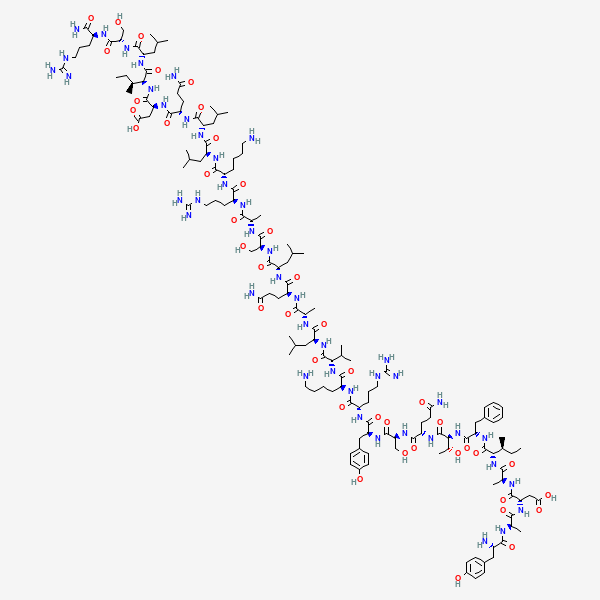
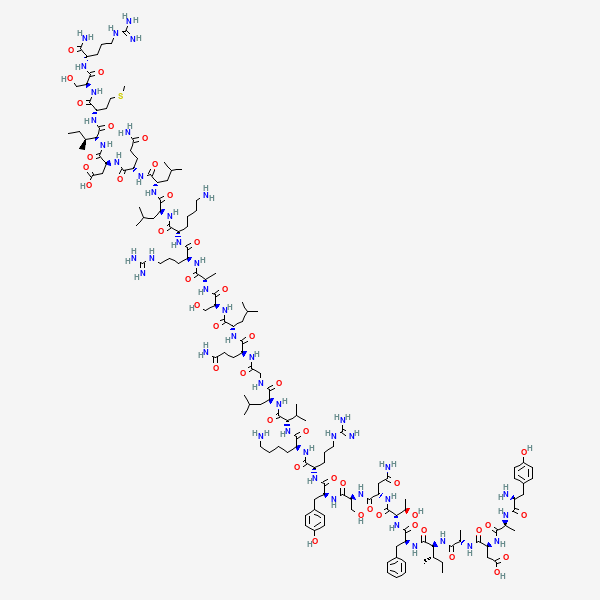
Which one fits which goal?
There's no universal winner here — the honest answer depends on what you're after. These picks are framed by goal, and each says why.
Choosing the compound with direct human evidence
Leans toward Sermorelin
Sermorelin has controlled human pharmacology, historical clinical use, and an FDA-reviewed drug record; Mod GRF 1-29 does not.
Studying a degradation-resistant GHRH(1-29) analog in a laboratory
Leans toward Modified GRF 1-29
Mod GRF 1-29 is the four-substitution research analog, provided the exact sequence and chemical form are verified rather than inferred from a vendor name.
Using a patient-specific 503A prescription route
Leans toward Sermorelin
Sermorelin was a component of an FDA-approved drug product, so a state-licensed 503A pharmacy may compound it for an identified patient when every applicable condition is satisfied.
References
- 1.FDA PCAC review of CJC-1295-related bulk drug substances (2024)
- 2.Sermorelin in pediatric growth hormone deficiency — human evidence review (PubMed)
- 3.Federal Register — Geref was not withdrawn for safety or effectiveness
- 4.FDA — bulk drug substances used in 503A and 503B compounding
- 5.WADA 2026 Prohibited List