Also known as: GHRH(1-29) · GRF(1-29) · Sermorelin acetate · Geref · hGHRH(1-29)NH2
Human (controlled)Mixed
On this page
- What people actually use sermorelin for — and what they report
- What is sermorelin?
- How does sermorelin work?
- Does sermorelin actually work? What the science says
- Is sermorelin safe? Side effects
- FDA and legal status (2026)
- Sermorelin dosage: what studies and clinics report
- Where people get sermorelin — and what to actually check
- Sermorelin vs CJC-1295, ipamorelin, and HGH
- Frequently asked questions
- Who sermorelin is for — and who should skip it
- Evidence by outcome
- FDA & legal status
- Registered clinical trials
- Reported side effects
- Chemical identifiers
- References
- Related compounds
- More on Sermorelin
If you’re here, you’ve probably hit the age where sleep gets lighter and recovery drags, and you found a telehealth clinic pitching sermorelin as a gentle way to walk your growth hormone back up.
Sermorelin is a GHRH peptide that prompts your own pituitary to release more growth hormone, and it’s the starter compound anti-aging and telehealth clinics reach for first — run mostly for deeper sleep, better recovery, and slow fat loss. That it raises your own GH is settled human fact; it was once an FDA-approved test built on that exact effect. Whether a healthy adult gets a durable anti-aging payoff worth the nightly needle is the part still parked on mixed, modest evidence.
What people actually use sermorelin for — and what they report
Sermorelin has a clearer street identity than most research peptides: it’s the “gateway” GH peptide, the one wellness and anti-aging clinics put people on first. The four things people actually run it for are better sleep, faster workout recovery, gradual fat loss and lean-muscle recomposition, and a broad “dial my age-related GH decline back up” anti-aging goal. What sets sermorelin apart from something like MOTS-c is that most people don’t buy it off a research-chemical site at all — they get it on a prescription, from a clinic, as a compounded vial. That sourcing reality shapes the whole conversation around it.
The sourcing splits three ways, and people argue about all three. The common path is a telehealth or anti-aging clinic that runs a quick lab panel, has a prescriber sign off, and ships a compounded sermorelin vial for somewhere around $150 to $225 a month. The cheaper path, which forum regulars migrate to once they know what they’re doing, is a compounding pharmacy or a research-chemical vendor selling the same peptide for a fraction of that. On the Peptide Critic forum, users compared paying $400 to $800 through a clinic against a supply that runs closer to $70 a vial from a compounder — and mostly framed the clinic markup not as a scam but as “tuition” for learning to research peptides themselves. The honest read: a chunk of the sermorelin economy is people paying convenience-and-hand-holding prices for a fairly cheap molecule.
The doses people actually run (anecdotal, not a validated anti-aging protocol): the common range is 200 to 300 mcg subcutaneously, once nightly, taken 30 to 60 minutes before bed on an empty stomach. The point of the bedtime shot is to land the dose on top of the body’s biggest natural GH pulse, which fires in early deep sleep. Beginners usually titrate up from 100 mcg, clinics frequently write it as five nights a week rather than seven, and most people run it in cycles of three to six months. None of those numbers come from a modern anti-aging trial; they’re clinic conventions and community habit, and they carry exactly that weight.
What they report — the wins. Sleep is the standout, and it’s the thing people mention first and earliest: deeper, heavier sleep, sometimes unusually vivid dreams, often inside the first two to three weeks. Recovery from training tends to follow. The body-composition changes — a little leaner, a little more muscle — are the slow ones, generally not obvious until month two or three, if they show at all. People who get bloodwork often watch their IGF-1 climb, which is the objective sign the peptide is doing its one well-established job.
And the letdowns, because sermorelin has some specific ones. The most common disappointment is impatience meeting a slow compound: “first month, nothing” is a recurring line, and plenty of people quit before the point where it might have done anything. The second is that sermorelin is, by wide community agreement, gentle — a word that reads as a virtue on a clinic page and as “weak” on a forum. A large share of users eventually graduate off it to a CJC-1295 and ipamorelin combo, which hits two GH pathways instead of one for a noticeably stronger effect, and they don’t look back. The third is desensitization: at least one detailed user account described the deep-sleep and recovery benefit fading around week nine or ten on an unchanged dose, then a flat couple of weeks after stopping — which is the practical argument for cycling rather than running it forever.
One caution on reading any of this: sermorelin is close to a perfect setup for a flattering anecdote pile. The benefit people chase hardest — better sleep — is deeply suggestible, and a nightly bedtime injection ritual aimed squarely at sleep is about the most placebo-friendly thing you could design. Layer on that the compound is slow, so the people who bail at week three never come back to file a verdict, and “most users report better sleep” quietly shrinks to “most users still on it at month two, who wanted it to work, report better sleep.” That’s a real signal. It’s just a softer one than the testimonials make it sound.
What is sermorelin?
Sermorelin is a lab-made peptide, a chain of 29 amino acids (sequence YADAIFTNSYRKVLGQLSARKLLQDIMSR, capped with a C-terminal amide) that copies the first 29 building blocks of growth hormone-releasing hormone, or GHRH — the brain signal that tells your pituitary to release growth hormone. Those first 29 residues are the working end of the full 44-amino-acid hormone, which is why the shortened copy behaves like the real thing. Chemically it’s a roughly 3,358-dalton molecule (formula C149H246N44O42S, CAS 86168-78-7). The one distinction to hold onto: sermorelin doesn’t add growth hormone from outside the way injected HGH does — it asks your own gland to make more.
How does sermorelin work?
Sermorelin works by binding the GHRH receptor on somatotroph cells in your anterior pituitary, which prompts the gland to make and release your own growth hormone in natural pulses; that GH then tells the liver to pump out more IGF-1, the messenger behind most of growth hormone’s downstream effects. Picture your GH output as a furnace on a thermostat: injecting HGH forces the furnace to full blast regardless of the room, while sermorelin just nudges the thermostat up, so the gland keeps firing in its own rhythm and the body’s feedback loop can still call “enough.”
That pulse is quick by design. Sermorelin’s half-life in humans is only about six to seven minutes, so it spikes GH and clears fast — which is exactly why it’s taken at night to ride one big pulse instead of flooding the system around the clock. That physiologic, pulsatile pattern is the entire selling point of GHRH-class peptides (Grossman et al., 1986). The honest caveat: what happens when you nudge this axis nightly for months in an otherwise healthy adult hasn’t been fully mapped.
Does sermorelin actually work? What the science says
Here’s the split the clinic brochures blur: sermorelin has genuinely solid human evidence for one thing, and thin-to-borrowed evidence for the things people actually buy it for. Keep the two piles apart and the picture gets clear fast.
The solid pile: sermorelin reliably makes a working pituitary release growth hormone in people. That’s not anecdote — it’s controlled human data, and it was the basis for sermorelin’s original FDA-approved job as a diagnostic, the GHRH stimulation test used to check whether a sluggish pituitary could still respond. On the plain “does it raise your own GH” question, the answer is a clean yes.
The treatment evidence is older and narrower. A published review of children with idiopathic GH deficiency found sermorelin increased height velocity in some kids, but with no head-to-head trial showing it matched standard growth hormone (somatropin) and no answer on final adult height (Prakash and Goa, 1999). Real and useful — and not the anti-aging question anyone is actually asking.
The modern anti-aging use is where the evidence goes soft. GHRH-class peptides have been tested in older adults for body composition, sleep, and well-being, and the better studies do show real increases in GH and IGF-1 plus some modest gains — a bit more lean mass, better slow-wave sleep — but the effects are small, and several of the cleaner trials used related analogs like tesamorelin rather than sermorelin itself. So the mechanism plainly fires; what’s missing is a modern trial proving a healthy 45-year-old feels a durable, worth-it payoff from sermorelin specifically.
| Question | Best evidence | What it supports |
|---|---|---|
| Does it release your own GH? | Controlled human data (its old diagnostic use) | Yes, if the pituitary can respond |
| Can it test GH reserve? | Historical FDA-approved diagnostic | A stimulated GH response, not a wellness benefit |
| Can it treat pediatric GH deficiency? | Limited human treatment data | Catch-up growth in some kids; final height unresolved |
| Sleep, fat loss, recovery in healthy adults? | Small or indirect studies, often other GHRH analogs | Plausible and modest, not a settled sermorelin result |
My read: sermorelin is neither hype nor a fountain of youth. It’s a real GH-releaser whose famous benefits are running about a decade ahead of the trials that would confirm them. The GH bump is proven; the felt anti-aging result is a reasonable bet riding on mechanism, older-adult signals, and a very motivated user base, not on a modern sermorelin outcome trial. That’s a fair place to be curious, as long as you hold it at exactly that weight.
Is sermorelin safe? Side effects
Sermorelin was generally well tolerated across its years as an approved drug, and the community side-effect picture matches that. The most common complaint is an injection-site reaction — redness, swelling, or a small welt where the needle went. Next is a transient flush: a warm, sometimes prickly feeling across the face and neck a few minutes after the nightly shot, which usually settles within the first couple of weeks. Headache and mild dizziness show up less often. Some people notice light water retention or a bump in appetite in the first week or two that then fades.
One less-common effect is worth flagging: tingling or numbness in the fingers, a carpal-tunnel-type symptom that can appear with sustained higher doses (300 mcg and up) run for months, reflecting growth hormone’s known tendency to hold onto fluid. It’s uncommon, and it is the body registering that the GH effect is real.
Because sermorelin raises GH and IGF-1, it carries the whole growth-hormone class’s core caution: IGF-1 is a growth signal, so active cancer and pregnancy are firm reasons to avoid it, and anyone with a serious medical condition needs real oversight rather than a mail-order vial. There is no long-term human safety data for the anti-aging use — the old approval covered diagnosis and pediatric deficiency, not years of nightly wellness dosing. And present-day compounded or research vials add purity, sterility, and dose-accuracy risks the old branded product never carried.
FDA and legal status (2026)
Sermorelin is not currently an FDA-approved drug, as of July 17, 2026 — but its history is unusual, and the details matter. The branded product Geref (sermorelin acetate) was FDA-approved: the orphan-drug record dates its pediatric marketing approval to September 26, 1997, and it was used both to diagnose and to treat growth hormone deficiency. It later left the U.S. market, around 2008, after a business decision tied to loss of its active-ingredient supply — not a safety or effectiveness problem. That distinction is the single most misunderstood fact about sermorelin: it wasn’t pulled for being dangerous or useless; the manufacturer simply stopped making it.
So what’s for sale today isn’t Geref. Human-use sermorelin is now a compounded product — mixed for a specific patient by a 503A compounding pharmacy or a 503B outsourcing facility on a valid prescription — and a compounded drug is not FDA-approved and does not inherit Geref’s old approval. Anything sold as a “research use only” vial is not an approved route for human use at all.
| Question | Status on July 17, 2026 | What it means |
|---|---|---|
| FDA-approved drug? | No (Geref’s approval ended around 2008) | No current FDA-reviewed sermorelin product or label |
| Why did it leave the market? | Business/supply decision, not safety or efficacy | Its old safety record still stands; it just isn’t sold as Geref |
| Legal to prescribe? | Yes, as a patient-specific compounded product | Lawful on a valid script, but not FDA-approved |
| “Research use only” vials | Sold online; not an approved human-use route | Availability is not approval, safety, or quality assurance |
| Elite sport | Prohibited at all times (WADA S2) | Banned as a GH secretagogue / releasing factor |
Sermorelin sits in WADA’s S2 category (peptide hormones and growth factors) and is prohibited at all times in sport; anti-doping labs have also built methods specifically to catch GHRH analogs (2026 WADA Prohibited List; Memdouh et al., 2021). For a tested athlete this is a hard no, not a gray area.
Sermorelin dosage: what studies and clinics report
There is no validated sermorelin dose for healthy-adult anti-aging — the numbers in circulation come from two very different places, and neither was built for that goal. The old diagnostic literature used a single intravenous dose of 1 microgram per kilogram to provoke a GH response and test pituitary reserve. The limited pediatric treatment data used about 30 micrograms per kilogram per day subcutaneously, often at bedtime (Prakash and Goa, 1999). The modern clinic and community dose — 200 to 300 mcg nightly before bed — is a convention, not a trial-established figure.
| Source and setting | Who | Reported sermorelin dose | What it can tell you |
|---|---|---|---|
| Diagnostic GH-stimulation test | Adults being evaluated | 1 mcg/kg, single intravenous dose | Whether the pituitary responds — not a wellness dose |
| Pediatric GH-deficiency treatment | Children with GHD | ~30 mcg/kg/day subcutaneous, often at bedtime | A catch-up-growth signal, not an adult protocol |
| Modern clinic / community use | Adults, off-label / compounded | 200–300 mcg nightly, subcutaneous, cycled 3–6 months | What people actually run — no modern trial behind it |
Whatever the number, converting a per-kilogram diagnostic or pediatric dose into a personal anti-aging protocol just manufactures a figure nobody has tested. If you’re doing the concentration math on a vial, the reconstitution and dosing calculator handles the arithmetic without pretending to recommend a dose, and the mixing compatibility reference covers what people combine in one syringe and where the honest answer is “not enough data” — which, for pairing sermorelin with another peptide, it largely is.
Where people get sermorelin — and what to actually check
“Sermorelin near me” almost never leads to a supplement shelf — it leads to a licensed prescriber and a named, state-licensed pharmacy, whether that’s a local clinic or a telehealth service. The vial matters less than the paperwork behind it, and a few checks separate a real operation from a glossy one: an active prescriber license and an actual medical evaluation; a named pharmacy with a state license, plus lot numbers and beyond-use dates on the label; and a Certificate of Analysis whose lot number matches the vial in your hand. A generic COA that doesn’t match your lot is evidence about some other batch, not yours.
The sterility point isn’t hypothetical. An FDA warning letter documents a compounded sermorelin/GHRP-6 lot recalled after a sterility failure. HPLC can confirm the right peptide is in the vial; it cannot tell you the vial is free of microbes. Ask for both the chemistry answer (identity and purity) and the sterile-process answer, and treat a research-chemical vial that comes with neither as an unverified product whose label protects the seller, not you.
Sermorelin vs CJC-1295, ipamorelin, and HGH
The comparison people actually run is sermorelin against the CJC-1295 and ipamorelin combo, because that’s the fork most clinics put in front of you. All three raise your own growth hormone, but by different levers. Sermorelin and CJC-1295 are both GHRH-type peptides that tap the same “release GH” receptor; CJC-1295 is engineered to resist breakdown, so it lingers and drives a longer, larger pulse than sermorelin’s quick blip. Ipamorelin comes at GH through a second door entirely — the ghrelin receptor — so pairing it with a GHRH peptide stacks two independent signals for a bigger, more synergistic pulse than either alone. That’s the mechanistic reason the community consensus holds: sermorelin is the gentle single-pathway nudge, and CJC-1295-plus-ipamorelin is the stronger two-pathway push people step up to when “gentle” stops impressing them.
Set all of these against injectable HGH (somatropin) and the trade-off snaps into focus. HGH floods the body with growth hormone directly — fast, powerful, able to drive levels far past anything your gland would make on its own — but it switches off your own production while it’s on board and carries the bigger side-effect load. Sermorelin and its cousins instead coax your pituitary to release more on its own schedule, which keeps the natural pulses and feedback intact but produces a smaller, ceiling-limited rise: your pituitary can only give what it’s got. None of them is a fountain of youth, and because they all raise IGF-1, they all share the same growth-signal cautions.
Sermorelin sits in the growth-hormone peptide family alongside those secretagogues, plus tesamorelin — a longer GHRH analog that actually holds a current FDA approval, for HIV-related visceral fat — and AOD-9604, an HGH fragment marketed for fat loss rather than pituitary GH release. If you can’t keep the names straight, you’re in good company; the GH-peptide shelf reads like a rack of slightly different passwords for the same account.
Frequently asked questions
Sermorelin questions tend to collapse into a handful of decisions: whether it works for anti-aging at all, how long it takes, whether today’s version is legal, how it differs from HGH and from the stronger stacks, and where the risk sits. Short answers below.
Does sermorelin actually work for anti-aging?
Partly, and it’s worth being precise about which part. Sermorelin reliably raises your own growth hormone and IGF-1 — that piece is human-proven. The specific anti-aging payoff people want (better sleep, faster recovery, a leaner body, feeling younger) shows up in a lot of anecdote and some modest older-adult data, but there’s no modern trial proving a durable, worth-it result in healthy adults, and some of the supporting evidence is borrowed from related analogs. Expect a gentle, gradual nudge, not a transformation.
How long until sermorelin works?
Sleep improvements are the early win, often within two to three weeks, with recovery following. The body-composition changes people want — a bit leaner, a bit more muscle — are slow, typically not visible until month two or three, and not guaranteed even then. Sermorelin rewards patience; the single most common disappointment is quitting before it had a chance to do anything.
Is sermorelin legal in 2026?
Sermorelin is not an FDA-approved drug as of July 2026, though the branded version Geref once was, before leaving the market around 2008 for business reasons. It can be legally prescribed and dispensed as a patient-specific compounded product through a licensed pharmacy — lawful on a valid prescription, but not FDA-approved. A “research use only” vial is not an approved route for human use.
Is sermorelin banned in sport?
Yes. The 2026 WADA Prohibited List places GHRH analogs like sermorelin in category S2 (peptide hormones and growth factors) and bans them at all times, in and out of competition. Anti-doping labs have developed methods to detect GHRH analogs, so for a tested athlete this is a clear no.
Is sermorelin the same as HGH?
No. Somatropin (HGH) is growth hormone delivered directly from outside the body; sermorelin is a signal that asks your own pituitary to release more. HGH bypasses your gland and can push levels far higher, while sermorelin’s effect is capped by what your pituitary can produce and leaves your natural feedback loop in charge.
Sermorelin or CJC-1295 and ipamorelin — which is stronger?
CJC-1295 plus ipamorelin is the stronger option, and it isn’t close. That combo hits two GH pathways at once (GHRH plus ghrelin) while sermorelin works one, so the pulse is bigger and the effects tend to show faster. Sermorelin’s pitch isn’t raw strength — it’s the gentler, single-pathway, closest-to-natural nudge, which is why clinics so often start people there.
Does sermorelin cause cancer?
No evidence shows sermorelin causes cancer. The caution is mechanistic: sermorelin raises IGF-1, a growth signal, so anyone with an active malignancy is advised to avoid it. That’s a precaution rooted in how growth hormone works, not a demonstrated sermorelin cancer effect.
Who sermorelin is for — and who should skip it
Sermorelin fits the person it’s marketed to fairly honestly: someone who wants the gentlest, most physiologic way to nudge growth hormone back up — better sleep and recovery first, slow body-recomposition second — and who’d rather coax their own gland than flood the system with injected HGH. Its two real advantages are that it stays close to how your body already works, and that it once cleared the FDA as a drug, so its basic safety profile is better mapped than most research peptides.
It’s a poor fit for several people. Anyone chasing dramatic, fast body-composition change will likely find it too gentle and end up at CJC-1295/ipamorelin or beyond. Tested athletes can’t touch it. Pregnancy and active cancer are hard stops. And anyone unwilling to accept compounded-product uncertainty, months of patience, and the fact that the anti-aging payoff is still unproven should wait.
So, back to the lighter sleep and the slower recovery that brought you here. Sermorelin is a genuine tool, not a gimmick: it reliably does the one hormonal thing it claims, and the felt benefits people chase are plausible, early, and — for the honest anti-aging question — still waiting on a modern trial to turn “a lot of people swear by it” into “it works.” That’s not a dead end. It’s a real GH-releaser with a proven mechanism, whose best evidence is either decades old or borrowed from its cousins, sold today in a market where the biggest variable might be who you buy it from.
Evidence by outcome
Each outcome Sermorelin has been studied for, with the honest evidence grade and what the studies actually found. A tier never stands alone — the verdict rides with it.
| Outcome | Evidence | What was found |
|---|---|---|
| Raising growth hormone & IGF-1 (pharmacodynamics) | Human (controlled)Helped | In controlled human studies, sermorelin reliably stimulates the pituitary to release growth hormone — the effect is consistent enough that it was used as an FDA-approved diagnostic (a GH-stimulation test). This is the best-established thing about sermorelin: it does raise your own GH in people. |
| Diagnosing growth hormone deficiency | Human (controlled)Helped | Sermorelin was approved and studied in controlled human research as a way to provoke a GH response and help diagnose growth hormone deficiency. As a diagnostic signal — does the pituitary respond — the human evidence here is solid. |
| Anti-aging, body composition & recovery in healthy adults | Human (controlled)Mixed | The popular modern use. GHRH-class peptides have been tested in older adults for body composition, sleep and cognition with mixed, modest results, and several of those trials used related analogs (like tesamorelin) rather than sermorelin itself. The human testing exists and is ongoing — the anti-aging payoff just isn't nailed down yet. |
FDA & legal status
- United States: withdrawn (as of Jul 2026)
Sermorelin is not currently an FDA-approved drug. It once was: the branded product Geref (sermorelin acetate) was approved for diagnosing and treating growth hormone deficiency, then withdrawn from the U.S. market after a business decision tied to loss of active-ingredient supply, not a safety or effectiveness finding. Patient-specific compounding is governed by federal and state requirements; a compounded sermorelin product is not FDA-approved.
openFDA Drugs@FDA lists no approved product for sermorelin as of 2026-07-15.
Registered clinical trials
27 registered studies mention Sermorelin on ClinicalTrials.gov (latest update 2026-05-19). A registered trial means a study is planned or underway — not that Sermorelin is approved or proven.
Reported side effects
| Effect | Frequency | Severity |
|---|---|---|
| Injection-site reactions (redness, swelling, pain) | — | — |
| Flushing / warmth | — | — |
| Headache | — | — |
| Dizziness | — | — |
| Nausea | — | — |
Chemical identifiers
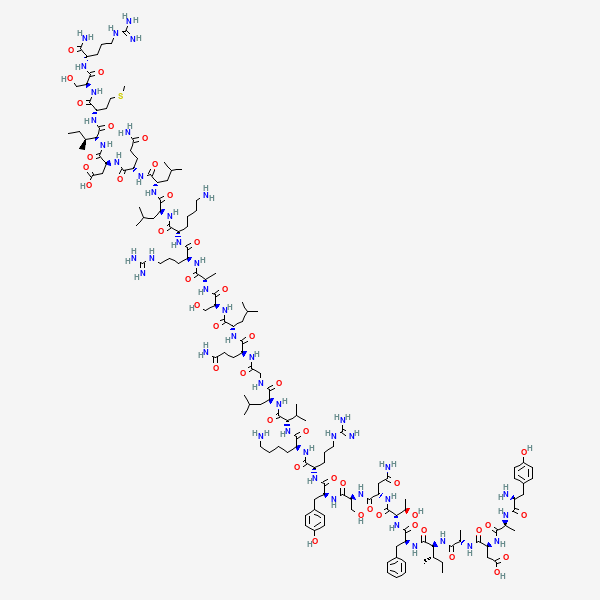
- Molecular formula
- C149H246N44O42S
- Molecular weight
- 3357.9 g/mol
- IUPAC name
- (3S)-4-[[(2S)-1-[[(2S,3S)-1-[[(2S)-1-[[(2S,3R)-1-[[(2S)-4-amino-1-[[(2S)-1-[[(2S)-1-[[(2S)-1-[[(2S)-6-amino-1-[[(2S)-1-[[(2S)-1-[[2-[[(2S)-5-amino-1-[[(2S)-1-[[(2S)-1-[[(2S)-1-[[(2S)-1-[[(2S)-6-amino-1-[[(2S)-1-[[(2S)-1-[[(2S)-5-amino-1-[[(2S)-1-[[(2S,3S)-1-[[(2S)-1-[[(2S)-1-[[(2S)-1-amino-5-carbamimidamido-1-oxopentan-2-yl]amino]-3-hydroxy-1-oxopropan-2-yl]amino]-4-methylsulfanyl-1-oxobutan-2-yl]amino]-3-methyl-1-oxopentan-2-yl]amino]-3-carboxy-1-oxopropan-2-yl]amino]-1,5-dioxopentan-2-yl]amino]-4-methyl-1-oxopentan-2-yl]amino]-4-methyl-1-oxopentan-2-yl]amino]-1-oxohexan-2-yl]amino]-5-carbamimidamido-1-oxopentan-2-yl]amino]-1-oxopropan-2-yl]amino]-3-hydroxy-1-oxopropan-2-yl]amino]-4-methyl-1-oxopentan-2-yl]amino]-1,5-dioxopentan-2-yl]amino]-2-oxoethyl]amino]-4-methyl-1-oxopentan-2-yl]amino]-3-methyl-1-oxobutan-2-yl]amino]-1-oxohexan-2-yl]amino]-5-carbamimidamido-1-oxopentan-2-yl]amino]-3-(4-hydroxyphenyl)-1-oxopropan-2-yl]amino]-3-hydroxy-1-oxopropan-2-yl]amino]-1,4-dioxobutan-2-yl]amino]-3-hydroxy-1-oxobutan-2-yl]amino]-1-oxo-3-phenylpropan-2-yl]amino]-3-methyl-1-oxopentan-2-yl]amino]-1-oxopropan-2-yl]amino]-3-[[(2S)-2-[[(2S)-2-amino-3-(4-hydroxyphenyl)propanoyl]amino]propanoyl]amino]-4-oxobutanoic acid
Verified external records:
References
- 1.Sermorelin — indexed human research (PubMed, National Library of Medicine)
- 2.Sermorelin — registered clinical studies (ClinicalTrials.gov)
- 3.Growth hormone releasing hormone — review (Grossman, Savage & Besser, 1986)
- 4.Advances in the detection of GHRH synthetic analogs (Memdouh et al., 2021)
- 5.Therapeutic Peptides in Orthopaedics: Applications, Challenges, and Future Directions (Rahman et al., 2026)
- 6.FDA — drug approval and market-status information
- 7.Sermorelin review — diagnosis and treatment of children with idiopathic growth hormone deficiency (Prakash & Goa, 1999)
- 8.FDA orphan drug designation and approval record — Geref (sermorelin acetate)
- 9.FDA — bulk drug substances used in compounding
- 10.WADA 2026 Prohibited List
- 11.FDA warning letter — compounded sermorelin/GHRP-6 sterility failure
- 12.Mendias CL et al. — Safety and Efficacy of Approved and Unapproved Peptide Therapies for Musculoskeletal Injuries and Athletic Performance.
- 13.Coutinho LFD et al. — A new era of doping? Use of peptide and peptide-analog drugs in recreational and professional sport and bodybuilding: a critical review.
- 14.González-López NM et al. — In-house standards derived from doping peptides: Enzymatic and serum stability and degradation profile of GHRP and GHRH-related peptides.
More on Sermorelin
Everything else we've written about Sermorelin — what the community reports, the explainers that cover it, and the terms it keeps running into.
- Sermorelin Reddit: Results, Cost & EvidenceOn Reddit
- GHRH vs GHRP: The Two GH Peptide TypesExplainer
- Peptides vs HGH: Which Is Better?Explainer
- N-terminus and C-terminusGlossary
- Pulsatile releaseGlossary