Modified GRF 1-29 vs Tesamorelin
Modified GRF 1-29 vs Tesamorelin: same GHRH idea, sharply different proof. Compare structure, human data, FDA status, dosing, and by-goal picks.
Modified GRF 1-29 vs Tesamorelin is a comparison between two stabilized GHRH analogs built around the same pituitary signal, but only tesamorelin has human efficacy trials and FDA approval. No trial has compared them directly; this page weighs separate evidence. Tesamorelin fits proven visceral-fat reduction in its approved HIV population, while Mod GRF remains a laboratory research compound.
What is the core difference?
Mod GRF 1-29 changes four amino acids in the active 29-amino-acid fragment of growth-hormone-releasing hormone (GHRH); tesamorelin keeps the full 44-amino-acid sequence and adds a hexenoyl group at one end. Both press the same pituitary receptor, but matching mechanisms do not produce matching evidence. One molecule became an FDA-reviewed medicine. The other did not reach a human efficacy trial.
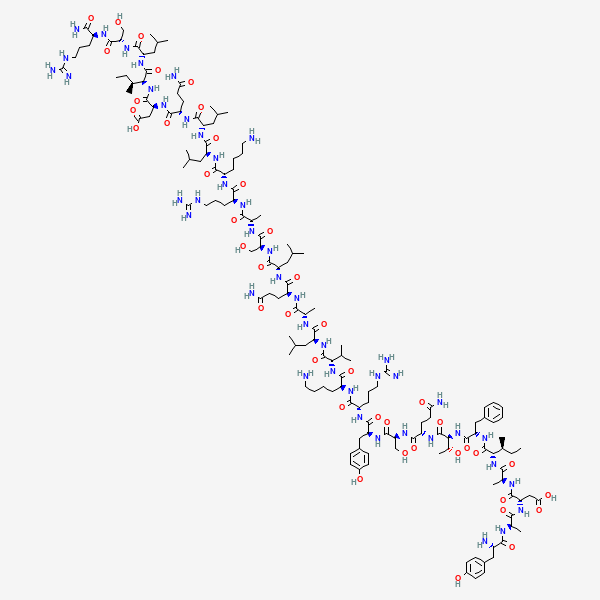
Mod GRF 1-29 is often called CJC-1295 without DAC. FDA’s 2024 chemistry review describes non-DAC CJC-1295 as a 29-amino-acid GHRH analog with substitutions at positions 2, 8, 15, and 27. Those substitutions are meant to make the fragment less easy for enzymes to dismantle. The same FDA review also warns that names for CJC-1295 forms are used inconsistently, which makes neat claims about a vial’s identity less neat in practice (FDA compounding review).
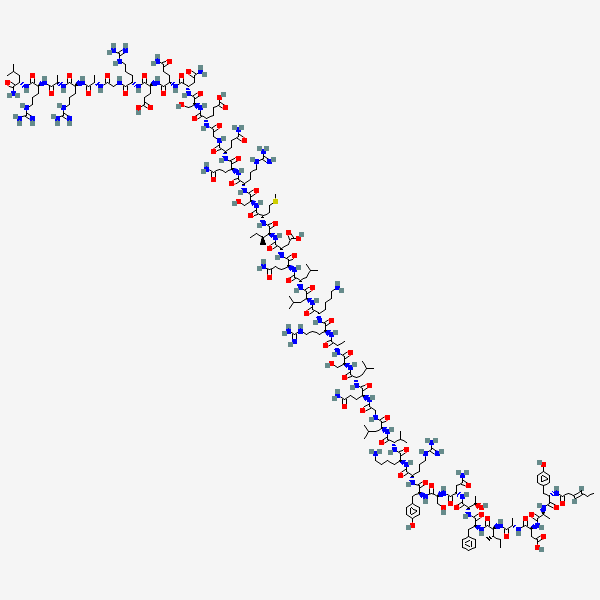
Tesamorelin is a different stabilized GHRH analog. The current Egrifta WR label defines it as all 44 amino acids of human GRF plus an N-terminal hexenoyl group. Mechanistically, tesamorelin vs mod grf is therefore not “GHRH pathway versus another pathway.” It is two engineered versions of the same natural signal, separated by molecular design and, much more importantly, clinical development.
Which one has better human evidence?
Tesamorelin has the decisive human-evidence advantage. Two multicenter, randomized, double-blind, placebo-controlled studies enrolled adults with HIV, lipodystrophy, and excess abdominal fat. Mod GRF 1-29 has zero human efficacy data for its own molecule. Calling both compounds “research-backed” without stating that gap would flatten a Phase 3 program and a receptor hypothesis into the same thing.
The pivotal tesamorelin studies randomized 412 and 404 participants. After 26 weeks, mean visceral adipose tissue changed by -18% and -14% in the tesamorelin groups, versus +2% and -2% with placebo. Body weight barely changed. That matters: tesamorelin was studied for deep abdominal fat in a specific HIV population, not as general weight-loss therapy. The current label says plainly that Egrifta WR is not indicated for weight-loss management (FDA label).
Mod GRF 1-29 has a plausible receptor story, but plausibility is not an outcome. FDA reported that it could not identify human studies of the non-DAC free-base or acetate forms it evaluated. Human work on long-acting CJC-1295 with DAC cannot be quietly reassigned to the no-DAC peptide. The honest shared badge is therefore the weaker compound’s grade: mechanistic-hypothesis, with no human efficacy data.
How do FDA status and compounding differ?
Tesamorelin is FDA-approved for one narrow use; Mod GRF 1-29 is not FDA-approved, and its compounding position is unfavorable rather than settled by internet availability. FDA’s advisory review concluded that the evidence weighed against placing CJC-1295 free base or acetate on the section 503A Bulks List. A research seller listing Mod GRF does not turn that product into an approved or quality-controlled medicine.
Section 503A generally limits bulk compounding to substances covered by an applicable USP/NF monograph, components of FDA-approved drugs, or substances on the 503A Bulks List. FDA found no applicable monograph and no approved-drug component for the CJC-1295 forms it reviewed; it also flagged naming, characterization, impurity, aggregation, and immunogenicity concerns. That is more specific than the loose phrase “research use only,” and it is the regulatory fact most comparison pages skip (FDA’s current 503A overview).
Egrifta vs mod grf 1-29 is not simply prescription price versus research-market price. Egrifta is a labeled drug whose identity, formulation, dosing, and adverse reactions have been reviewed. Mod GRF’s lower-cost research-market positioning, where encountered, buys less evidence and less product certainty; price does not repair either gap.
How do the doses and risks compare?
Tesamorelin has a current labeled dose; Mod GRF 1-29 has no clinically established dose for efficacy. Egrifta WR uses 1.28 mg subcutaneously once daily. The pivotal trials used 2 mg daily of an older 1 mg/vial formulation, and FDA says the WR and SV formulations are not substitutable. Quoting “2 mg” without naming the formulation is now incomplete.
Tesamorelin’s label also supplies risks that belong to tesamorelin rather than to the GHRH family in the abstract: elevated insulin-like growth factor 1 (IGF-1), fluid retention, glucose intolerance or diabetes, hypersensitivity, and injection-site reactions. Active malignancy, pregnancy, and disruption of the hypothalamic-pituitary axis are contraindications. Mod GRF 1-29 lacks the human program needed to measure its own frequency and pattern of harm. Borrowed class effects are useful warning context, not a substitute safety record.
Which one fits which goal?
Tesamorelin fits the goal backed by clinical evidence: reducing excess visceral abdominal fat in adults with HIV-associated lipodystrophy under its prescription label. Mod GRF 1-29 fits a laboratory question about a short, tetrasubstituted GHRH(1-29) scaffold. For someone seeking a GHRH analog with human data, the pick is tesamorelin; for a researcher studying that exact 29-amino-acid design, the pick is Mod GRF.
That is not a universal-winner claim. Tesamorelin’s approval does not prove broad fat loss, bodybuilding, recovery, sleep, or anti-aging benefits. Mod GRF’s shorter scaffold does not prove a better pulse, better results, or fewer side effects in people. The by-goal table keeps those questions separate. For the wider mechanism, including why GHRH analogs differ from ghrelin-receptor peptides, see GHRH vs GHRP explained.
Modified GRF 1-29 vs Tesamorelin, point by point
Every dimension side by side — the honest differences, not a scoreboard.
| Dimension | Modified GRF 1-29 | Tesamorelin |
|---|---|---|
| Molecular design | A 29-amino-acid GHRH(1-29) analog with substitutions at positions 2, 8, 15, and 27. | The full 44-amino-acid human GHRH sequence with an N-terminal hexenoyl group. |
| Human efficacy evidence | No human efficacy study identified for the non-DAC CJC-1295 forms FDA evaluated; the site grade is mechanistic-hypothesis, none in humans. | Two multicenter, randomized, double-blind, placebo-controlled Phase 3 studies in adults with HIV-associated lipodystrophy. |
| Demonstrated outcome | No clinical outcome has been demonstrated for this exact peptide in people. | Reduced visceral abdominal fat in the FDA-reviewed trials; the effect was shown in adults with HIV-associated lipodystrophy. |
| US regulatory status (2026) | Not FDA-approved. FDA's 2024 review weighed against placing CJC-1295 free base and acetate on the 503A Bulks List. | FDA-approved by prescription as Egrifta for reducing excess abdominal fat in adults with HIV-associated lipodystrophy. |
| Dose supported by a label or trial | None for Mod GRF 1-29; no human efficacy trial establishes a clinical dose. | Egrifta WR: 1.28 mg subcutaneously once daily. The older 1 mg/vial formulation used 2 mg daily in the pivotal trials; the formulations are not substitutable. |
| What safety knowledge belongs to the compound | No long-term human safety record for this exact peptide; borrowing tesamorelin or DAC-CJC data cannot close that gap. | Human label data identify elevated IGF-1, fluid retention, glucose intolerance or diabetes, hypersensitivity, and injection-site reactions among the concerns. |
- Molecular design: Both are stabilized GHRH analogs, but they use different scaffolds and chemical changes.
- Human efficacy evidence: No trial has compared Mod GRF 1-29 and tesamorelin directly; this comparison weighs their separate records.
- US regulatory status (2026): Tesamorelin is not FDA-indicated for general weight-loss management.
Modified GRF 1-29 vs Tesamorelin: the two molecules
The 2D chemical structures, straight from PubChem — a quick way to see how similar (or not) the two actually are.
Which one fits which goal?
There's no universal winner here — the honest answer depends on what you're after. These picks are framed by goal, and each says why.
Evidence-based visceral-fat reduction for the FDA-approved HIV indication
Leans toward Tesamorelin
Tesamorelin is the GHRH analog with human data here: two Phase 3 placebo-controlled trials and an FDA indication for this narrow population.
Laboratory study of the short, tetrasubstituted GHRH(1-29) scaffold
Leans toward Modified GRF 1-29
Mod GRF 1-29 is the relevant research molecule when the scientific question is specifically about the 29-amino-acid, four-substitution scaffold rather than a clinical treatment choice.
Wanting a prescription product with characterized human risks
Leans toward Tesamorelin
The Egrifta label supplies human dosing, contraindication, adverse-reaction, and monitoring information that Mod GRF 1-29 does not have.
References
- 1.EGRIFTA WR (tesamorelin) prescribing information, revised March 2025
- 2.Falutz et al., 2007 — metabolic effects of tesamorelin in patients with HIV
- 3.Falutz et al., 2010 — randomized tesamorelin trial with safety extension
- 4.FDA evaluation of CJC-1295-related bulk drug substances for the 503A Bulks List
- 5.FDA — bulk drug substances used in compounding under section 503A