MOTS-c vs NAD+
MOTS-c vs NAD+ compares a mitochondrial-derived peptide with coenzyme repletion across mechanism, human evidence, delivery, safety, and research goals.
MOTS-c vs nad is not a contest between equivalent energy products: MOTS-c is a mitochondrial-derived peptide with mainly animal efficacy evidence, while NAD+ is a cellular coenzyme whose precursors can raise NAD+ in human trials. No trial has compared them directly, so the useful answer depends on the research goal and delivery route.
What is the core difference between MOTS-c and NAD+?
MOTS-c and NAD+ sit on different levels of the energy system. MOTS-c is a 16-amino-acid signal encoded within mitochondrial DNA; NAD+ is a coenzyme that cells already use to transfer electrons and support energy production. One aims to change metabolic signaling. The other is part of the machinery doing the work.
MOTS-c activates AMP-activated protein kinase (AMPK) in cells and mice. AMPK acts like a low-fuel warning light: when energy is scarce, it pushes metabolism toward using glucose and stored fuel more efficiently. Researchers also report that MOTS-c moves into the nucleus during metabolic stress and affects stress-response genes. The precise effect of injecting extra MOTS-c into people is not established.
NAD+ flips between NAD+ and NADH as it carries electrons from broken-down food toward the reactions that make adenosine triphosphate (ATP), the cell’s spendable energy. NAD+ also supplies sirtuins, PARP DNA-repair enzymes and CD38. That basic biology is settled. The leap from “cells require NAD+” to “raising NAD+ gives a healthy person more energy” is not.
Which compound has stronger human evidence?
NAD+ has the stronger human evidence base, but mainly for raising a biomarker rather than producing more energy. Randomized trials of precursors such as nicotinamide riboside and NMN show that people can raise measured NAD+ levels. Functional outcomes including energy, exercise performance and broad anti-aging effects have been mixed or null. Target engagement is not the same thing as a felt benefit.
MOTS-c remains animal-only for efficacy. In mice, MOTS-c improved insulin sensitivity and running capacity, which explains the “exercise mimetic” label. Human studies have mostly measured the body’s own MOTS-c during exercise or metabolic disease rather than administering the peptide as treatment (indexed MOTS-c research). A Phase 2 study in adults with prediabetes began recruiting in 2026, so human testing is starting rather than finished (NCT07505745).
The shared badge therefore uses the weaker tier: animal-only. Reading nad vs mots-c as “human-confirmed versus useless” would still be wrong. NAD+ repletion has human target-engagement data, while its promised energy and longevity payoff remains unsettled.
How does mots-c vs nad look for energy research?
mots-c vs nad for energy splits into two different questions. MOTS-c asks whether a mitochondrial signal can make metabolism behave more like it does during exercise. NAD+ asks whether restoring a molecule already required for energy chemistry improves function when levels are raised. Neither separate evidence base proves that the compound reliably boosts everyday energy in healthy people.
MOTS-c is the cleaner fit for an AMPK-centered, exercise-mimetic research question because the mouse work directly includes exercise capacity. That fit is mechanistic and preclinical, not a human performance result. The broader peptides for energy guide helps place that claim beside other compounds without pretending every “mitochondrial” label means the same thing.
NAD+ is the cleaner fit for studying coenzyme repletion in people because precursor trials can measure whether NAD+ actually rises. The useful caution is almost comically simple: a fuller fuel gauge does not prove the car drives faster. Human trials must still show a meaningful change in fatigue, performance or health.
How do delivery and reported doses differ?
MOTS-c is generally discussed as a reconstituted injection, while NAD+ research spans oral precursors and clinic-based infusions. Neither profile supplies a validated dose for general energy or anti-aging. MOTS-c community schedules are anecdotal; NAD+ products vary enough that an oral precursor dose, a sublingual product and an IV amount should not be treated as versions of one protocol.
MOTS-c commonly appears as freeze-dried powder intended for research and mixed before subcutaneous injection. The reconstitution calculator can check vial-concentration arithmetic, but arithmetic cannot turn an unvalidated community schedule into a clinically tested dose. MOTS-c also lacks the human pharmacokinetic record needed to make confident duration claims; the half-life visualizer is useful only when a defensible half-life input exists.
NAD+ human trials more often use oral precursors because swallowed NAD+ is a large, charged molecule that is broken down before efficient absorption. Compounded IV NAD+ is a separate route with little controlled evidence for wellness, energy or addiction-recovery claims. Choosing mots-c or nad+ therefore also means choosing between very different research materials, routes and evidence packages.
What are the safety and regulatory trade-offs?
NAD+ has more short-term human safety information, especially for oral precursors, while injected MOTS-c has almost none. NAD+ precursor trials generally report mild, brief problems such as nausea, warmth or stomach upset. Rapid IV NAD+ can cause flushing, nausea, chest tightness or cramping. Long-term deliberate elevation remains uncertain, including a theoretical concern around existing cancer.
MOTS-c being made naturally by mitochondria does not establish the safety of injecting more. Short animal studies cannot answer long-term human safety questions. The practical risks also include purity, dose accuracy and sterility because research-use-only products are unregulated.
As of July 2026, MOTS-c is not FDA-approved and is sold as a research chemical. MOTS-c is also prohibited under WADA’s S0 category. NAD+ is unscheduled but not FDA-approved as a drug; injectable NAD+ is compounded rather than approved. NAD+ itself is not prohibited in sport, though large IV infusions can violate WADA’s method rule.
Which one fits which research goal?
Neither compound wins across all research goals. MOTS-c fits work centered on mitochondrial peptide signaling, AMPK and the preclinical exercise-mimetic hypothesis. NAD+ fits work centered on human biomarker repletion, oral precursor studies and established coenzyme biology. For direct evidence of improved everyday energy in healthy adults, neither has earned a clean by-goal victory.
The useful decision is narrower than “which is better.” Pick the question first, then the molecule that can actually answer it. Researchers interested in how MOTS-c differs from another mitochondria-targeted compound can use the MOTS-c vs SS-31 comparison or browse the longevity peptide hub. Readers choosing between MOTS-c and NAD+ should keep the same discipline: mechanism, evidence tier and delivery route are three separate filters, not three votes for a universal winner.
MOTS-c vs NAD+, point by point
Every dimension side by side — the honest differences, not a scoreboard.
| Dimension | MOTS-c | NAD+ |
|---|---|---|
| What it is | A 16-amino-acid mitochondrial-derived peptide encoded within mitochondrial DNA. | Nicotinamide adenine dinucleotide, an endogenous coenzyme and dinucleotide, not a peptide. |
| Energy mechanism | Proposed to activate AMPK, the cell's low-fuel sensor, and alter metabolic stress signaling. | Transfers electrons during energy metabolism and supplies sirtuin, PARP and CD38 enzymes. |
| Evidence for energy or performance | Improved exercise capacity in mice; no completed trial shows injected MOTS-c improves human performance. | Human trials of NAD+ precursors raise NAD+ levels, but energy and performance outcomes in healthy adults are mixed or null. |
| Direct comparison | No head-to-head trial against NAD+ or an NAD+ precursor. | No head-to-head trial against MOTS-c. |
| Typical research delivery | Synthetic MOTS-c is generally discussed as a reconstituted subcutaneous injection. | Human research mostly uses oral precursors such as nicotinamide riboside or NMN; compounded IV NAD+ is a separate, weakly tested route. |
| Validated dose for energy or anti-aging | None established in humans. Community injection schedules are anecdotal. | No single validated energy or anti-aging dose; the compound, precursor and route are not interchangeable. |
| US regulatory status (2026) | Research-use-only and not FDA-approved; no approved MOTS-c product exists. | Unscheduled but not FDA-approved; injectable or IV NAD+ is compounded rather than an approved product. |
| Sport status | Prohibited at all times under WADA S0 as a non-approved substance. | The molecule is not prohibited, although large IV infusions can breach WADA's infusion-method rule. |
- Energy mechanism: MOTS-c's injected human mechanism is not established; NAD+'s basic cellular role is established, but a wellness benefit from raising it is not.
- Direct comparison: This comparison weighs separate evidence bases; it does not report a comparative effect estimate.
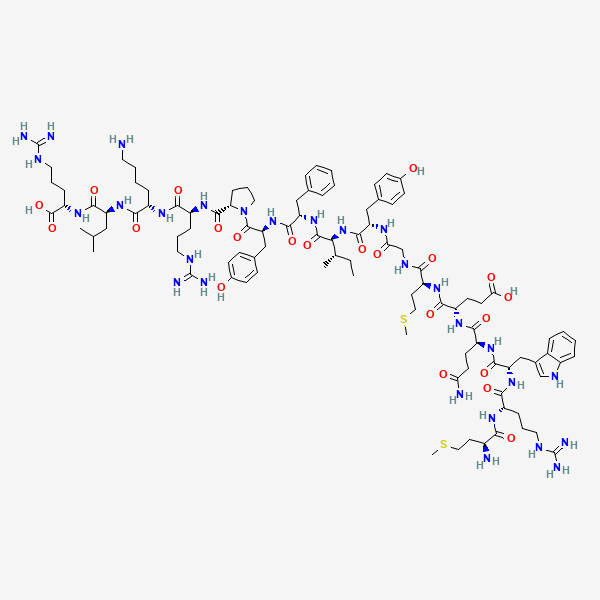
MOTS-c vs NAD+: the two molecules
The 2D chemical structures, straight from PubChem — a quick way to see how similar (or not) the two actually are.
Which one fits which goal?
There's no universal winner here — the honest answer depends on what you're after. These picks are framed by goal, and each says why.
Studying an exercise-mimetic or AMPK-centered peptide hypothesis
Leans toward MOTS-c
MOTS-c is the more direct research subject for mitochondrial peptide signaling and the rodent exercise-capacity hypothesis, while remaining unconfirmed for human performance.
Studying whether an intervention raises a human NAD+ biomarker
Leans toward NAD+
NAD+ precursor trials have repeatedly measured target engagement in people, giving this goal a human evidence base that MOTS-c does not yet have.
Comparing oral and infusion-based repletion routes
Leans toward NAD+
NAD+ research spans oral precursors and compounded IV delivery, although IV wellness claims still rest largely on anecdote rather than controlled outcomes.
Studying a mitochondrially encoded signaling peptide
Leans toward MOTS-c
MOTS-c is itself a mitochondrial-derived peptide; NAD+ is a coenzyme used throughout cellular metabolism, not a peptide signal.
References
- 1.MOTS-c — indexed research (PubMed, National Library of Medicine)
- 2.MOTS-c for improving insulin sensitivity in prediabetes — Phase 2 trial (NCT07505745)
- 3.NAD+ — indexed research (PubMed, National Library of Medicine)
- 4.NAD+ — registered clinical studies (ClinicalTrials.gov)
- 5.NAD+ (nicotinamide adenine dinucleotide) — PubChem CID 5892