Nad+ vs SS-31 (elamipretide) for mitochondrial aging
Nad+ vs SS-31 (elamipretide): compare a metabolic coenzyme with a cardiolipin-targeting peptide, including human evidence and Forzinity's narrow FDA approval.
Nad+ vs SS-31 (elamipretide) is a comparison between a dinucleotide coenzyme used across cellular metabolism and a synthetic peptide that binds mitochondrial cardiolipin. NAD+ fits research on age-related coenzyme decline; SS-31 fits cardiolipin and defined mitochondrial-disease research. Neither is proven to slow aging, and no trial has compared them directly.
What is the core difference?
NAD+ supplies metabolic chemistry, while SS-31 targets mitochondrial structure. NAD+ is nicotinamide adenine dinucleotide, an endogenous coenzyme that shuttles electrons during energy production and feeds enzymes involved in signaling and DNA repair. Calling NAD+ a peptide is chemically wrong: two linked nucleotides do not become a peptide because a longevity clinic put them on the same menu.
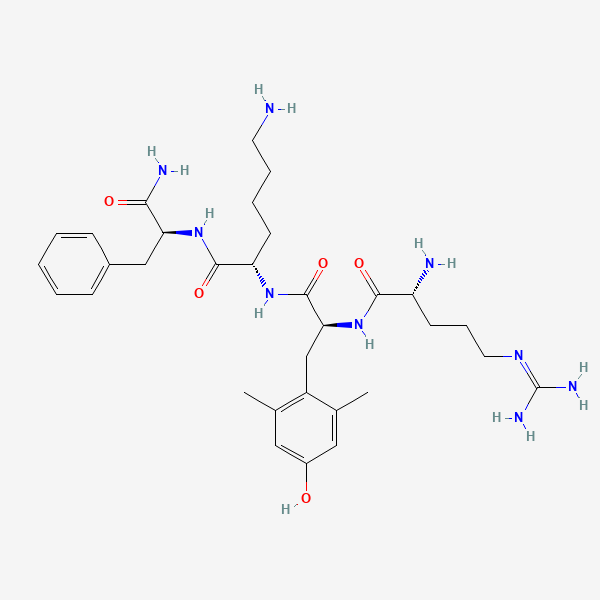
SS-31, also called elamipretide, is a synthetic tetrapeptide: a chain of four amino acids. SS-31 concentrates at the inner mitochondrial membrane and binds cardiolipin, a lipid that helps organize the machinery used to make adenosine triphosphate (ATP), the cell’s usable energy.
That makes the popular “fuel versus wiring” shorthand useful, but incomplete. NAD+ participates directly in energy transfer throughout the cell. SS-31 acts at a specific mitochondrial membrane target. The two mechanisms are complementary on paper, yet no human trial has shown that combining them produces synergy, slows aging or works better than either alone.
Which has stronger human evidence for aging?
NAD+ has more randomized precursor research, while SS-31 has smaller controlled human studies that act closer to mitochondrial function; neither has demonstrated an anti-aging outcome. The shared badge is therefore human-controlled, the weaker of the two profile tiers, rather than a claim that both have equivalent proof.
NAD+ research has an awkward but important naming problem. Human trials usually give nicotinamide riboside (NR) or nicotinamide mononucleotide (NMN), which the body uses to make NAD+, rather than giving direct NAD+. In one randomized crossover study of 12 older men, 21 days of NR changed the muscle NAD+ metabolome and more than doubled blood NAD+, but did not improve mitochondrial bioenergetics or whole-body metabolism (PMC). Raising a biomarker is real target engagement. It is not the same as making someone function younger.
SS-31 research reaches a different layer. A randomized, double-blind study enrolled 39 adults aged 60 to 85 with low muscle mitochondrial function. One elamipretide infusion briefly increased measured mitochondrial ATP capacity, but did not improve fatigue resistance, and the ATP effect was gone by day seven (PMC). That is controlled human evidence for a short biological effect, not evidence of slower aging.
For a broader map of this field, see what mitochondrial peptides are and the longevity and mitochondrial compounds hub.
What did Forzinity’s FDA approval actually prove?
Forzinity made elamipretide a real FDA-approved drug, but only for a narrow Barth syndrome indication and only through accelerated approval. On September 19, 2025, FDA approved Forzinity to improve muscle strength in adults and children with Barth syndrome who weigh at least 30 kg. The agency based approval on improved knee-extensor strength, an intermediate endpoint considered reasonably likely to predict practical benefit, not on directly demonstrated improvements in walking or daily life (FDA).
The regulatory history is unusually revealing. FDA issued a Complete Response Letter on May 15, 2025 after concluding the submitted evidence did not support traditional approval and the proposed surrogate endpoints did not support accelerated approval. The sponsor responded in August; FDA then accepted knee-extensor strength as the intermediate endpoint and approved the amended application in September (FDA integrated review). A confirmatory randomized trial must now show that the strength change translates into patient benefit.
Barth syndrome is ultra-rare. An FDA meeting record described fewer than 150 diagnosed US patients, which explains why the supporting trial package was tiny and why the approval pathway required judgment under severe data constraints (FDA correspondence). Forzinity’s approval matters. It still does not prove SS-31 treats normal mitochondrial aging.
How do the 2026 regulatory positions differ?
SS-31 now has one approved prescription form, while NAD+ has no FDA-approved anti-aging drug. Forzinity is the reviewed elamipretide product; “SS-31” research powder sold for longevity is not that regulated product and is not approved for general mitochondrial support.
NAD+ remains available in supplements and clinic settings, but injectable NAD+ is compounded rather than FDA-approved. FDA has warned that some compounders used food-grade NAD+ for sterile intravenous products and reported reactions consistent with endotoxin exposure, including severe chills, shaking, vomiting and fatigue (FDA compounding notice). “Available by IV” and “approved IV drug” are not synonyms.
This regulatory split is the detail many elamipretide vs nad pages miss. Approval validates a specific product, dose, population and endpoint. It does not upgrade every off-label aging claim attached to the molecule.
Which compound fits which research goal?
The useful pick depends on the biological question, not on declaring a winner. NAD+ is the cleaner match for research on age-related NAD decline, redox balance, sirtuin or PARP activity, and whether precursor-driven increases lead to functional change. SS-31 is the cleaner match for cardiolipin, inner-membrane structure, low mitochondrial ATP capacity or a defined mitochondrial disorder.
The reverse-order query, ss-31 vs nad+, leads to the same answer: different targets, different intervention evidence and no direct comparison. For another true mitochondrial peptide comparison, MOTS-c vs SS-31 separates a mitochondria-encoded signaling peptide from a cardiolipin-binding drug.
Are either proven for mitochondrial aging?
Neither NAD+ nor SS-31 is proven to slow mitochondrial aging in healthy humans. NAD+ precursor trials show that researchers can move the NAD+ metabolome, but clinical outcomes remain mixed. SS-31 can briefly move a direct mitochondrial-capacity measure in selected older adults, but fatigue did not improve in that study and long-term healthy-aging results are not established.
That is why there is no universal pick in this comparison. For nad+ vs ss-31, the research question has to come before the compound. Forzinity changed SS-31’s regulatory story, not the aging verdict. The honest research frontier is now sharper: NAD+ asks whether restoring a declining coenzyme pool changes function, while SS-31 asks whether stabilizing cardiolipin changes function. Both questions are testable. Neither answer is finished.
Nad+ vs SS-31 (elamipretide) for mitochondrial aging, point by point
Every dimension side by side — the honest differences, not a scoreboard.
| Dimension | Nad+ | SS-31 (elamipretide) for mitochondrial aging |
|---|---|---|
| What it is | An endogenous dinucleotide coenzyme used in energy metabolism and enzyme signaling; NAD+ is not a peptide. | A synthetic four-amino-acid, mitochondria-targeting peptide; its drug name is elamipretide. |
| Primary biological target | Carries electrons in redox metabolism and supplies sirtuin, PARP and CD38 enzymes. | Binds cardiolipin in the inner mitochondrial membrane and stabilizes mitochondrial energy machinery. |
| Human aging evidence | Randomized precursor trials raise the NAD+ metabolome, but functional and mitochondrial outcomes are mixed. | A small randomized study in older adults found a short-lived rise in muscle ATP capacity, without better fatigue resistance. |
| Direct comparison | No head-to-head trial against SS-31. | No head-to-head trial against NAD+ or its precursors. |
| US regulatory status (2026) | NAD+ is not an FDA-approved drug; injectable clinic products are compounded rather than approved. | Elamipretide is FDA-approved as Forzinity only to improve muscle strength in Barth syndrome patients weighing at least 30 kg. |
| Research format | Human aging research usually tests oral precursors such as nicotinamide riboside, not direct NAD+ itself. | Human studies use elamipretide by infusion or subcutaneous injection; Forzinity is injected once daily. |
| Best-matched research question | Whether restoring an age-linked coenzyme pool changes metabolism or function. | Whether stabilizing cardiolipin changes mitochondrial function in defined disease or low-function states. |
- Human aging evidence: Neither compound has been shown to slow aging or extend human healthspan.
- Direct comparison: This comparison weighs separate studies; claims of a proven combined or superior effect are unsupported.
- US regulatory status (2026): Forzinity is not approved for anti-aging, longevity or general mitochondrial support.
Nad+ vs SS-31 (elamipretide) for mitochondrial aging: the two molecules
The 2D chemical structures, straight from PubChem — a quick way to see how similar (or not) the two actually are.
Which one fits which goal?
There's no universal winner here — the honest answer depends on what you're after. These picks are framed by goal, and each says why.
Research on age-related NAD+ decline
Leans toward Nad+
NAD+ directly matches questions about coenzyme availability, redox metabolism and NAD-dependent enzymes; most human intervention data use NR or NMN precursors.
Cardiolipin or mitochondrial-disease research
Leans toward SS-31 (elamipretide) for mitochondrial aging
SS-31 directly binds cardiolipin, has controlled human mitochondrial-function data and is approved as elamipretide for one defined mitochondrial disease.
References
- 1.FDA accelerated approval announcement for Forzinity (elamipretide)
- 2.Forzinity (elamipretide), NDA 215244 — FDA integrated review
- 3.Elamipretide regulatory history and Barth syndrome development record — FDA
- 4.Elamipretide and mitochondrial ATP production in older adult skeletal muscle — randomized trial
- 5.Nicotinamide riboside and the aged human skeletal-muscle NAD+ metabolome — randomized trial