Semaglutide vs Setmelanotide
Semaglutide vs Setmelanotide is not a potency contest: compare diagnoses, mechanisms, human evidence, dosing, and currentundefinedFDA indications.
Semaglutide vs Setmelanotide is not a normal weight-loss contest: Semaglutide is a broad GLP-1 obesity drug, while Setmelanotide is a diagnosis-matched MC4R drug for rare or hypothalamic causes. No trial has compared them directly; this page weighs their separate human evidence, not an invented matchup.
Are semaglutide and setmelanotide substitutes?
Semaglutide and setmelanotide are usually not substitutes because they enter the treatment decision through different doors. Semaglutide is prescribed under broad weight and health criteria. Setmelanotide is reserved for specific conditions in which the brain’s hunger-control circuitry is disrupted. Calling this simply imcivree vs wegovy hides the most important column: why the person has obesity.
Wegovy’s weight-management label covers adults with obesity, adults with overweight plus at least one weight-related condition, and adolescents aged 12 or older with obesity. Imcivree’s April 2026 label covers acquired hypothalamic obesity from age 4, plus Bardet-Biedl syndrome (BBS) and qualifying POMC, PCSK1, or LEPR deficiency from age 2. The latter gene-related uses require a clinical and genetic fit, not merely a BMI over a line on a chart.
That 2026 update matters. Describing setmelanotide only as a genetic obesity treatment is now incomplete because acquired hypothalamic obesity is also approved. The honest shorthand is narrower: setmelanotide remains a diagnosis-specific drug, not a general obesity drug.
Why is a cross-trial percentage comparison misleading?
The familiar “about 15% versus a smaller number” comparison is meaningless here because the studies did not enroll comparable people. STEP 1 tested semaglutide in 1,961 adults with common obesity or overweight. Setmelanotide trials studied small, diagnosis-selected groups, often including children, with severe hunger and obesity caused by rare genetic syndromes or hypothalamic injury. That is population artifact, not proof that one molecule is stronger.
In STEP 1, semaglutide 2.4 mg once weekly produced a 14.9% mean body-weight reduction at 68 weeks, versus 2.4% with placebo. The current Imcivree label reports different outcomes by diagnosis: BBS results are expressed largely as BMI change, while the POMC/PCSK1 and LEPR studies report body-weight responses in cohorts of only 10 and 11 people.
A 2026 International Journal of Obesity paper repeats a 5.2% BBS figure beside semaglutide’s 14.9%. That juxtaposition is exactly the trap. Different ages, diseases, endpoints, trial designs, and baseline biology make the apparent race a spreadsheet illusion.
How do their mechanisms differ?
Semaglutide works through the GLP-1 receptor, while setmelanotide activates melanocortin-4 receptor (MC4R) signaling in the brain. Both can reduce hunger, but they press different buttons. Semaglutide extends a gut-hormone signal after eating; setmelanotide acts farther downstream in a neural pathway that governs satiety and energy balance.
Semaglutide also slows stomach emptying and changes glucose-dependent insulin and glucagon signaling. That helps explain why the drug spans obesity, type 2 diabetes under other brands, and cardiovascular risk reduction.
Setmelanotide is the more targeted mc4r pathway obesity drug. In POMC, PCSK1, or LEPR deficiency, an upstream signal is broken; setmelanotide activates MC4R below that break. BBS and acquired hypothalamic obesity are biologically more complicated, but the approved treatment still depends on a defined diagnosis. The broader melanocortin peptide family helps place that receptor in context.
What does the human evidence actually show?
Both compounds merit a human-RCT badge, but the badge does not make their evidence interchangeable. Semaglutide has large, conventional randomized trials for common obesity. Setmelanotide has human efficacy evidence tailored to rare conditions: randomized periods support BBS and acquired hypothalamic obesity, while the pivotal POMC/PCSK1 and LEPR programs used small open-label studies with randomized withdrawal periods.
No published or registered trial found in this review randomized patients to setmelanotide vs semaglutide. The 2026 Nature paper does not fill that gap: its direct drug experiments used MC4R-knockout mice and compared GLP-1-family compounds, not setmelanotide against semaglutide in people. Useful mechanism work, yes. A clinical head-to-head, no.
The evidence tiers therefore answer “has each drug helped its studied population?” Both have. They do not answer “which drug wins in the same patient?” That experiment has not been run, and most candidates would qualify for one pathway, not both.
What is the 2026 regulatory reality?
Semaglutide and setmelanotide are FDA-approved prescription drugs, but their labels and supply issues are not parallel. The current Wegovy label covers long-term weight reduction and other specified uses. The April 2026 Imcivree label adds acquired hypothalamic obesity and younger pediatric groups to its diagnosis-specific indications.
Semaglutide compounding also moved after the injection shortage was declared resolved. In April 2026, FDA proposed excluding semaglutide from the 503B bulks list, finding no clinical need for outsourcing facilities to compound it from bulk drug substance. A compounded product is not an FDA-approved generic equivalent. Imcivree, meanwhile, is a ready-to-use prescription solution rather than a general-purpose “research peptide.”
Which drug fits which goal?
Semaglutide fits broad, label-eligible weight management; setmelanotide fits its named rare-disease and acquired hypothalamic obesity indications. That is the by-goal answer, not a universal winner. If the question is setmelanotide vs semaglutide for ordinary polygenic obesity, semaglutide has the relevant population evidence and approval. If the question starts with an Imcivree-eligible diagnosis, setmelanotide addresses that biology directly.
The practical sequence is diagnosis first, drug second. A comparison table can line up receptors, dosing, and percentages. It cannot turn two different clinical lanes into one race, however tidy the columns look.
Semaglutide vs Setmelanotide, point by point
Every dimension side by side — the honest differences, not a scoreboard.
| Dimension | Semaglutide | Setmelanotide |
|---|---|---|
| Best-fit population | People who meet the labeled obesity or overweight criteria for Wegovy; no rare-gene diagnosis is required. | People with acquired hypothalamic obesity, Bardet-Biedl syndrome, or qualifying POMC, PCSK1, or LEPR deficiency. |
| Main target | GLP-1 receptor agonist; increases satiety, slows gastric emptying, and changes glucose-dependent insulin and glucagon signaling. | MC4R agonist; activates a downstream brain circuit that regulates hunger and energy balance. |
| US regulatory status (July 2026) | FDA-approved as Wegovy for long-term weight reduction in labeled adult and pediatric populations, with additional labeled cardiovascular and MASH uses. | FDA-approved as Imcivree for acquired hypothalamic obesity from age 4, and for BBS or qualifying POMC, PCSK1, or LEPR deficiency from age 2. |
| Evidence population | STEP 1 randomized 1,961 adults with obesity or overweight plus a weight-related condition; participants did not have diabetes. | Pivotal studies enrolled small rare-disease cohorts selected by a clinical or genetic diagnosis, including children. |
| Weight-loss numbers | STEP 1 reported a 14.9% mean body-weight reduction at 68 weeks with 2.4 mg once weekly. | Results vary sharply by diagnosis; the current label reports different weight or BMI outcomes for BBS, POMC/PCSK1 deficiency, LEPR deficiency, and acquired hypothalamic obesity. |
| Typical approved format | Wegovy is available as a once-weekly injection and, under the current label, a once-daily tablet for certain adult uses. | Imcivree is a once-daily subcutaneous injection supplied as a ready-to-use solution. |
| Distinctive safety issues | Gastrointestinal effects are common; the label also covers gallbladder disease, pancreatitis, and a boxed thyroid C-cell tumor warning. | Injection-site reactions and skin darkening are common; the label also warns about sexual-arousal effects, depression or suicidal ideation, and new or darkening moles. |
- Best-fit population: Setmelanotide eligibility is diagnosis-led, not based on BMI alone.
- US regulatory status (July 2026): The acquired hypothalamic obesity indication and lower pediatric age thresholds appear in the April 2026 Imcivree label.
- Weight-loss numbers: These are not comparable arms. Ranking the drugs by cross-trial percentages is meaningless because the populations, ages, endpoints, and designs differ.
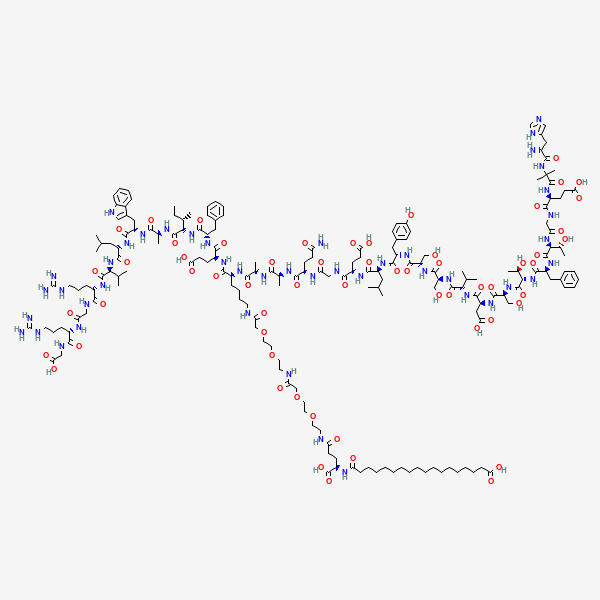
Semaglutide vs Setmelanotide: the two molecules
The 2D chemical structures, straight from PubChem — a quick way to see how similar (or not) the two actually are.

Which one fits which goal?
There's no universal winner here — the honest answer depends on what you're after. These picks are framed by goal, and each says why.
Long-term weight management without an Imcivree-eligible diagnosis
Leans toward Semaglutide
Semaglutide has large randomized trials and a broad weight-management indication; setmelanotide is not indicated for general polygenic obesity.
Treating obesity from POMC, PCSK1, or LEPR deficiency or Bardet-Biedl syndrome
Leans toward Setmelanotide
Setmelanotide directly activates MC4R downstream of the disrupted signaling and is FDA-approved for these diagnosis-defined groups.
Treating acquired hypothalamic obesity
Leans toward Setmelanotide
Imcivree gained a specific FDA indication for acquired hypothalamic obesity in 2026; this is a diagnosis-based use, not ordinary BMI-based obesity treatment.
References
- 1.WEGOVY (semaglutide) prescribing information — DailyMed
- 2.STEP 1: once-weekly semaglutide in adults with overweight or obesity
- 3.IMCIVREE (setmelanotide) prescribing information — DailyMed, version 14
- 4.GLP-1 analogs in MC4R-deficient obesity — International Journal of Obesity (2026)
- 5.FDA proposal on semaglutide and the 503B bulks list (April 2026)