Semaglutide vs Tesamorelin for belly fat
Semaglutide vs Tesamorelin: broad weight loss versus targeted visceral-fat reduction, with human evidence, FDA limits, and by-goal picks.
Semaglutide vs Tesamorelin is not a true weight-loss showdown: Semaglutide fits broad, clinically significant weight reduction, while Tesamorelin is the specialist for excess visceral abdominal fat in adults with HIV-associated lipodystrophy. No trial has compared them directly, so this comparison weighs their separate human randomized trials.
Are semaglutide and tesamorelin really rivals?
Semaglutide and tesamorelin do different jobs, despite clinic menus placing both under “belly fat.” Semaglutide copies the GLP-1 fullness signal, lowering appetite and food intake. Tesamorelin copies growth-hormone-releasing hormone, prompting the pituitary to release growth hormone and raising IGF-1. One changes whole-body energy intake; the other changes a specific fat compartment in a specific studied population.
That distinction turns the common tesamorelin vs semaglutide sales pitch on its head. Tesamorelin is not “superior for weight loss.” The current EGRIFTA WR label explicitly calls the drug weight-neutral and says it is not indicated for weight-loss management. That is not fine print; it is the comparison.
What do the human trials actually show?
Semaglutide moves total body weight; tesamorelin moves visceral adipose tissue, or VAT, with little movement on the scale. STEP 1 randomized 1,961 adults with obesity or overweight and no diabetes. At 68 weeks, semaglutide 2.4 mg weekly produced a 14.9% mean body-weight reduction versus 2.4% with placebo (STEP 1).
Tesamorelin’s pivotal trials enrolled adults with HIV-associated lipodystrophy, a disorder of fat distribution. Participants received the older 2 mg daily formulation. At 26 weeks, mean VAT fell by roughly 14% to 18%, depending on the trial, while average weight changes were about half a kilogram or less. VAT was measured by computed tomography, not inferred from a tape measure. The current label’s trial tables show both the fat loss and the nearly flat scale.
Putting 14.9% beside 14% to 18% invites a bad comparison. Semaglutide’s number is percent of total body weight. Tesamorelin’s number is percent of visceral-fat area. Same percent sign, different denominator. Spreadsheet neatness is not biological equivalence.
Which peptide for belly fat fits which goal?
Semaglutide fits generalized obesity; tesamorelin fits the FDA-approved HIV-lipodystrophy goal. For someone asking which peptide for belly fat, the first question is not “Which is stronger?” It is “Is the goal substantial whole-body weight loss, or selective reduction of excess VAT caused by HIV-associated lipodystrophy?”
Semaglutide also reduces waist size and body fat as weight comes down, so this is not a claim that GLP-1 drugs somehow miss the abdomen. The difference is what the strongest trials were designed to prove. The broader peptides for weight loss guide places that evidence in context.
Tesamorelin is the by-goal pick for its labeled HIV indication, especially where losing more subcutaneous fat or scale weight is not the aim. Evidence outside that population exists, but FDA approval does not follow the molecule into med-spa body recomposition. For general obesity, calling tesamorelin a replacement for semaglutide outruns both its label and its pivotal evidence.
Does tesamorelin preserve muscle better than semaglutide?
Tesamorelin increased lean body mass modestly in its HIV trials, while semaglutide causes some absolute lean-mass loss alongside much larger fat loss. That does not prove tesamorelin is the better obesity drug or that semaglutide “eats muscle.” Weight loss by diet, surgery, or medication usually includes some lean tissue, and lean mass on a scan is not identical to skeletal muscle.
Semaglutide’s practical muscle question belongs inside an overall weight-loss plan: resistance training, adequate protein, rate of loss, age, and starting muscle mass all matter. Our review of GLP-1 drugs and muscle loss separates measured lean mass from the scarier claims. Tesamorelin’s lean-mass signal came from a different condition and cannot be pasted onto a general-obesity head-to-head that never happened.
How do the side effects differ?
Semaglutide’s trade-offs are mainly gastrointestinal, while tesamorelin’s follow from raising growth hormone and IGF-1. Semaglutide commonly causes nausea, vomiting, diarrhea, or constipation; gallbladder disease and pancreatitis are less common concerns, and the label carries thyroid-tumor precautions. Tesamorelin can cause fluid retention, joint pain, tingling, and injection-site reactions, while also worsening glucose tolerance or pushing IGF-1 too high.
Tesamorelin is contraindicated with active malignancy, pregnancy, or disruption of the hypothalamic-pituitary axis. Semaglutide and tesamorelin therefore need different screening and monitoring. A “visceral fat peptide vs GLP-1” menu that lists only benefits leaves out half the decision.
What happens after tesamorelin stops?
Tesamorelin’s visceral-fat benefit did not persist after withdrawal in the extension trials. Participants who continued therapy largely maintained the reduction, while those switched to placebo gained VAT again over the next 26 weeks. The current EGRIFTA label reports increases of about 16% to 22% from the week-26 level in the switch-to-placebo groups.
Semaglutide also belongs to chronic weight-management medicine, not a one-and-done fat eraser. The important comparison is not that only one drug has rebound. The honest point is that neither trial program supports a short “cycle” followed by permanent results. EGRIFTA’s rebound data are unusually direct because withdrawal was built into the randomized extension.
Egrifta vs Ozempic: what is actually FDA-approved?
Egrifta and Ozempic are brand names with narrower labels than social media gives them. Egrifta vs Ozempic is also slightly mismatched: EGRIFTA WR is tesamorelin for excess abdominal fat in adults with HIV-associated lipodystrophy, while Ozempic is semaglutide for type 2 diabetes and specified cardiovascular risk reduction. Wegovy is the semaglutide brand approved for chronic weight reduction.
The 2026 formulation detail matters. Pivotal tesamorelin studies used 2 mg daily, but current EGRIFTA WR uses 1.28 mg daily. EGRIFTA WR and EGRIFTA SV are not dose-for-dose substitutes. STEP 1 used semaglutide 2.4 mg weekly after gradual escalation. Those are labeled and studied regimens, not personal dosing instructions.
The semaglutide vs tesamorelin decision is a by-goal split, not a podium. Semaglutide has the stronger fit for broad weight loss and a SELECT-backed cardiovascular benefit in the studied population. Tesamorelin has the sharper fit for its FDA-approved HIV-lipodystrophy job. Different endpoints, different patients, different jobs—and no invented winner.
Semaglutide vs Tesamorelin for belly fat, point by point
Every dimension side by side — the honest differences, not a scoreboard.
| Dimension | Semaglutide | Tesamorelin for belly fat |
|---|---|---|
| Drug class | GLP-1 receptor agonist that reduces appetite and slows stomach emptying. | Growth-hormone-releasing hormone analog that raises pulsatile growth hormone and IGF-1. |
| FDA-approved job (2026) | Wegovy is approved for long-term weight reduction and cardiovascular risk reduction in specified patients; other semaglutide brands have different indications. | EGRIFTA WR is approved only to reduce excess abdominal fat in adults with HIV-associated lipodystrophy. The label says it is not indicated for weight-loss management. |
| Outcome the pivotal trials measured | Total body-weight change in adults with obesity or overweight. | Computed-tomography-measured visceral adipose tissue in adults with HIV-associated lipodystrophy. |
| Headline human result | STEP 1: 14.9% mean body-weight reduction at 68 weeks with 2.4 mg once weekly, versus 2.4% with placebo. | EGRIFTA trials: about 14-18% mean visceral-fat reduction at 26 weeks, with little change in scale weight. |
| Effect on the scale | Large average reduction in total body weight. | Weight-neutral on average; waist and visceral fat can change while body weight barely moves. |
| Cardiovascular outcome evidence | SELECT found a 20% relative reduction in major cardiovascular events in adults with established cardiovascular disease and overweight or obesity, without diabetes. | Long-term cardiovascular safety has not been established; the EGRIFTA WR label says so directly. |
| Studied and labeled format | STEP 1 used 2.4 mg subcutaneously once weekly after dose escalation. | Pivotal trials used 2 mg subcutaneously daily; current EGRIFTA WR is labeled at 1.28 mg daily and is not substitutable with EGRIFTA SV. |
| Main trade-offs | Nausea, vomiting, diarrhea, constipation, gallbladder problems, and labeled thyroid-tumor precautions. | Fluid retention, joint pain, injection-site reactions, glucose intolerance, and IGF-1-related monitoring and contraindications. |
| After treatment stops | Weight regain after withdrawal is a known concern across obesity treatment; ongoing treatment and maintenance planning matter. | In EGRIFTA extension trials, visceral fat increased again after participants switched from tesamorelin to placebo. |
- Outcome the pivotal trials measured: No trial has compared semaglutide and tesamorelin directly; these are separate placebo-controlled programs with different populations and endpoints.
- Headline human result: These percentages are not interchangeable: one is total body weight and the other is an imaging measurement of one fat compartment.
Semaglutide vs Tesamorelin for belly fat: the two molecules
The 2D chemical structures, straight from PubChem — a quick way to see how similar (or not) the two actually are.
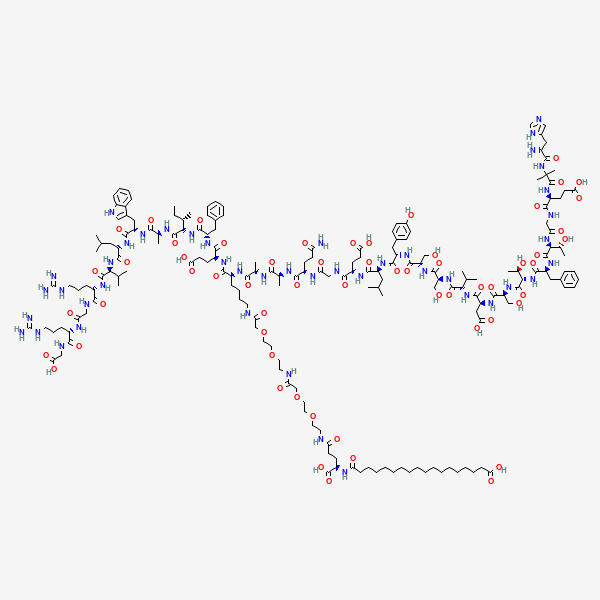
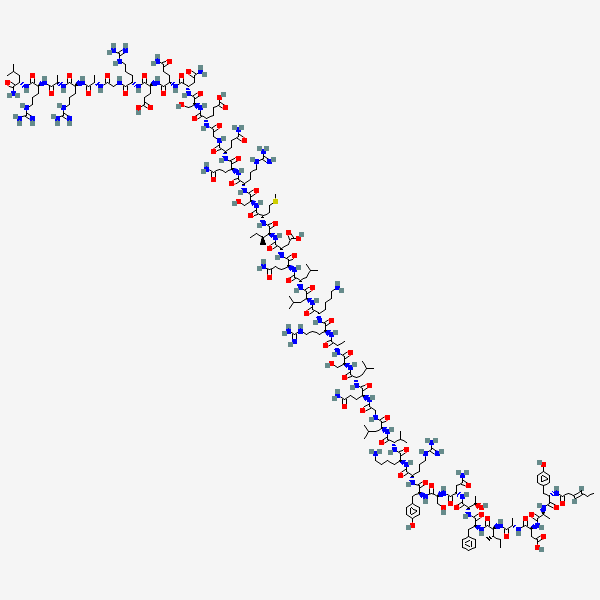
Which one fits which goal?
There's no universal winner here — the honest answer depends on what you're after. These picks are framed by goal, and each says why.
Broad, clinically significant weight reduction
Leans toward Semaglutide
Semaglutide has large obesity RCTs with total body weight as the endpoint; tesamorelin is labeled weight-neutral and is not indicated for weight-loss management.
Cardiovascular risk reduction in an eligible adult with established cardiovascular disease and overweight or obesity
Leans toward Semaglutide
Wegovy has an FDA indication backed by SELECT; long-term cardiovascular safety has not been established for tesamorelin.
Excess abdominal fat from HIV-associated lipodystrophy
Leans toward Tesamorelin for belly fat
This is tesamorelin's specific FDA-approved use, supported by randomized trials that measured visceral adipose tissue directly.
Reducing visceral fat without aiming for major scale-weight loss in HIV-associated lipodystrophy
Leans toward Tesamorelin for belly fat
Tesamorelin reduced visceral fat while average body weight changed little in its pivotal trials; that narrow, scale-neutral job is the point.