Sermorelin vs Somatropin
How Sermorelin and Somatropin compare — what each is, how strong the human evidence is for each, doses reported in research, the key risks, and 2026 US legal status. No universal winner.
Sermorelin and Somatropin come up together when people are weighing similar options. Here's the honest side-by-side: what each is, how strong the human evidence is for each, the doses reported in research, the risks, and where each stands with the FDA as of 2026. There's no universal winner — scroll to the by-goal picks for which one fits which goal.
Sermorelin vs Somatropin, point by point
Every dimension side by side — the honest differences, not a scoreboard.
| Dimension | Sermorelin | Somatropin |
|---|---|---|
| What it is | Synthetic 29-amino-acid peptide — GHRH(1-29), the biologically active fragment of human growth hormone-releasing hormone | Recombinant human growth hormone (a 191-amino-acid protein hormone) |
| Class / category | GH secretagogues | GH secretagogues |
| Evidence tier | Human (controlled) · Mixed | Human RCT · Helped |
| Studied / approved for | Diagnosing growth hormone deficiency (GHRH stimulation test); Age-related decline in growth hormone / body composition; Adult and childhood growth hormone deficiency | Pediatric growth failure due to growth hormone deficiency; Adult growth hormone deficiency; Short stature associated with Turner syndrome; Short stature associated with Noonan syndrome; Short stature in children born small for gestational age without catch-up growth; Idiopathic short stature; Growth failure associated with Prader-Willi syndrome |
| US regulatory status (2026) | withdrawn (as of Jul 2026) | fda approved (as of Jul 2026) — approved for Growth hormone deficiency and product-specific pediatric growth disorders |
| Doses reported in research | No established study doses | No established study doses |
| Registered trials (ClinicalTrials.gov) | 27 | No data |
| Banned in sport (WADA) | Yes — on the WADA prohibited list | Yes — on the WADA prohibited list |
| Key risks | Sermorelin was generally well tolerated across its years as an approved drug. The most common issues are injection-site reactions (redness, swelling, pain), with flushing, headache, and occasional dizziness or nausea also reported. Because sermorelin raises your own GH and IGF-1, it carries the theoretical growth-hormone-axis caution shared by all GH therapies — it is not for use in active cancer or pregnancy — and there is no long-term human safety data for the anti-aging use. | Somatropin has extensive human safety data in approved populations, but the risk depends on diagnosis, age and dose. Fluid retention, joint or muscle pain, tingling and impaired glucose tolerance are established adverse effects. Serious warnings include intracranial hypertension, pancreatitis, worsening diabetic retinopathy and tumor progression or recurrence in susceptible patients. |
- Evidence tier: A tier reflects how human the evidence is, not a promise the compound works.
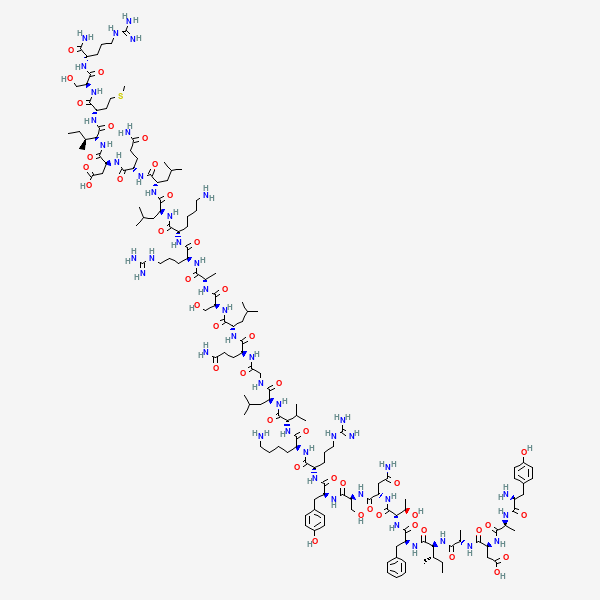
Sermorelin vs Somatropin: the two molecules
The 2D chemical structures, straight from PubChem — a quick way to see how similar (or not) the two actually are.
Which one fits which goal?
There's no universal winner here — the honest answer depends on what you're after. These picks are framed by goal, and each says why.
If you want the option with more human evidence behind it
Leans toward Somatropin
Somatropin's evidence sits at human rct, a more human tier than Sermorelin's human (controlled). That reflects how the data was gathered, not a guarantee it works.
If you want an FDA-approved, prescribable option
Leans toward Somatropin
Somatropin is FDA-approved (as of Jul 2026); Sermorelin is withdrawn in the US, so it isn't available as an approved prescription.
References
- 1.Sermorelin — indexed human research (PubMed, National Library of Medicine)
- 2.Sermorelin — registered clinical studies (ClinicalTrials.gov)
- 3.Growth hormone releasing hormone — review (Grossman, Savage & Besser, 1986)
- 4.Advances in the detection of GHRH synthetic analogs (Memdouh et al., 2021)
- 5.Therapeutic Peptides in Orthopaedics: Applications, Challenges, and Future Directions (Rahman et al., 2026)
- 6.FDA — drug approval and market-status information