SS-20 vs SS-31 (elamipretide)
How SS-20 and SS-31 (elamipretide) compare — what each is, how strong the human evidence is for each, doses reported in research, the key risks, and 2026 US legal status. No universal winner.
SS-20 and SS-31 (elamipretide) come up together when people are weighing similar options. Here's the honest side-by-side: what each is, how strong the human evidence is for each, the doses reported in research, the risks, and where each stands with the FDA as of 2026. There's no universal winner — scroll to the by-goal picks for which one fits which goal.
SS-20 vs SS-31 (elamipretide), point by point
Every dimension side by side — the honest differences, not a scoreboard.
| Dimension | SS-20 | SS-31 (elamipretide) |
|---|---|---|
| What it is | Synthetic mitochondria-targeting tetrapeptide (a four-amino-acid Szeto-Schiller peptide) | Synthetic mitochondria-targeting tetrapeptide (a Szeto–Schiller peptide; the drug form is called elamipretide) |
| Class / category | Longevity / mitochondrial | Longevity / mitochondrial |
| Evidence tier | Animal-only · Helped · none in humans | Human (controlled) · Mixed |
| Studied / approved for | Ischemia-reperfusion injury; Chemotherapy-induced peripheral neuropathy; Neuroprotection in Parkinson's disease models | Barth syndrome (a rare, inherited mitochondrial disorder) — as Forzinity |
| US regulatory status (2026) | research use only (as of Jul 2026) | fda approved (as of Jul 2026) — approved for Barth syndrome (as Forzinity / elamipretide) |
| Doses reported in research | No established study doses | No established study doses |
| Registered trials (ClinicalTrials.gov) | No data | 21 |
| Banned in sport (WADA) | Yes — on the WADA prohibited list | Unknown |
| Key risks | SS-20 has no established human safety profile. Published experiments use cells, isolated organs, mice, or rats and do not answer questions about long-term toxicity, immune reactions, interactions, fertility, pregnancy, or a safe human dose. Research-market product identity and sterility add separate uncertainty. | Here SS-31 is unusual for a "longevity peptide": because elamipretide went through full clinical trials and FDA review, its short-term human safety is far better characterized than something like BPC-157. The most common problem across trials was injection-site reactions. What still doesn't exist is long-term data in healthy people taking it purely for anti-aging. |
- Evidence tier: A tier reflects how human the evidence is, not a promise the compound works.
SS-20 vs SS-31 (elamipretide): the two molecules
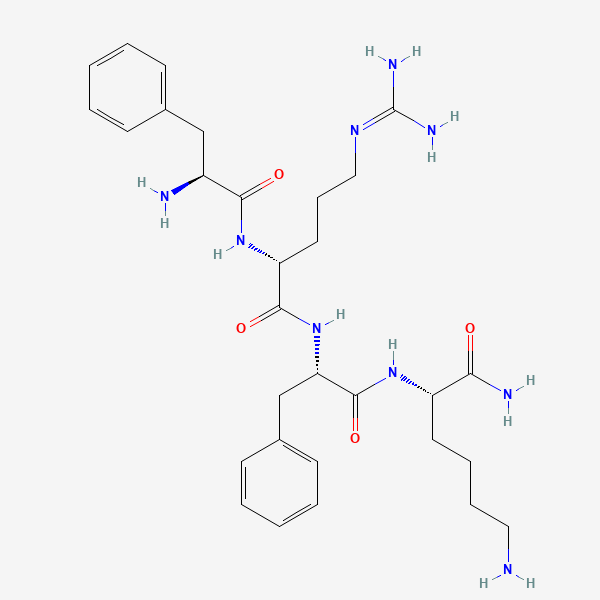
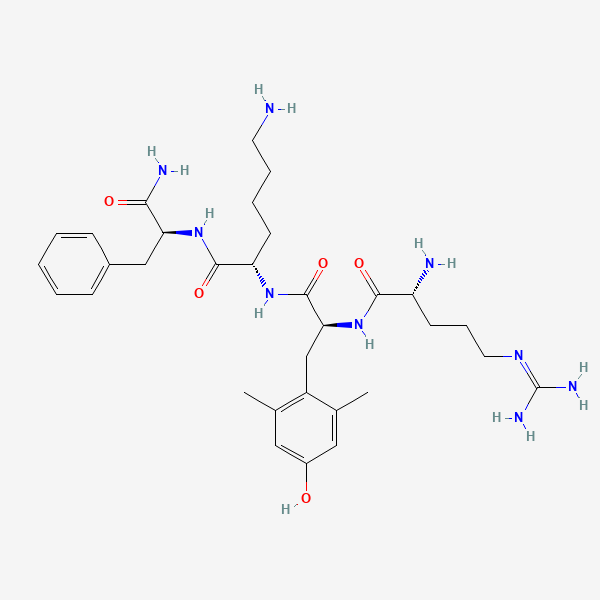
The 2D chemical structures, straight from PubChem — a quick way to see how similar (or not) the two actually are.
Which one fits which goal?
There's no universal winner here — the honest answer depends on what you're after. These picks are framed by goal, and each says why.
If you want the option with more human evidence behind it
Leans toward SS-31 (elamipretide)
SS-31 (elamipretide)'s evidence sits at human (controlled), a more human tier than SS-20's animal-only. That reflects how the data was gathered, not a guarantee it works.
If you want an FDA-approved, prescribable option
Leans toward SS-31 (elamipretide)
SS-31 (elamipretide) is FDA-approved (as of Jul 2026); SS-20 is research use only in the US, so it isn't available as an approved prescription.
References
- 1.SS-20 compound record (PubChem CID 10008657)
- 2.Birk et al., 2015 — SS-20, cardiolipin, and cytochrome c (PMID 26071084)
- 3.Toyama et al., 2018 — oxaliplatin neuropathy in mice (PMID 29660270)
- 4.Itoh et al., 2023 — paclitaxel neuropathy in mice (PMID 36513390)
- 5.Cho et al., 2007 — myocardial infarction in rats (PMID 17429296)
- 6.Szeto et al., 2015 — kidney ischemia in rats (PMID 25339695)