TB-500 vs Thymosin Beta-4
TB-500 vs Thymosin Beta-4: the fragment and full peptide compared by structure, evidence, reported use, and US research-only status.
TB-500 vs Thymosin Beta-4 is a comparison between a synthetic seven-amino-acid fragment and its natural 43-amino-acid parent peptide, not two names for one molecule. Both are discussed for tissue repair, but neither has human randomized-trial proof for muscle or tendon healing. Full thymosin beta-4 has separate human trials in eye, heart, and skin research.
Is TB-500 the same as thymosin beta-4?
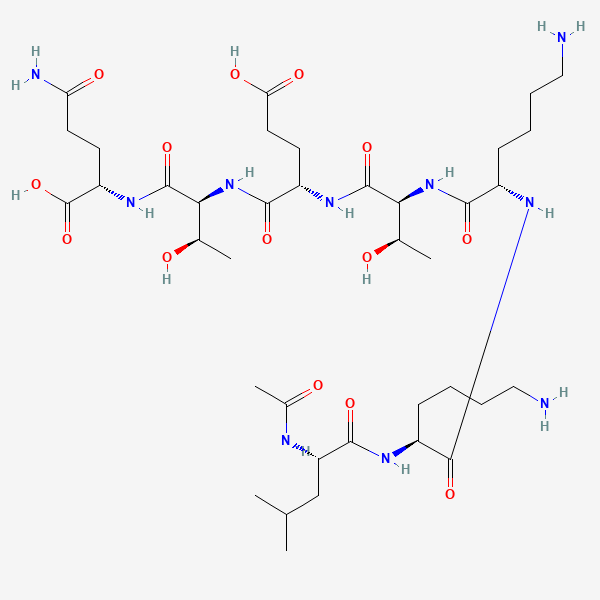
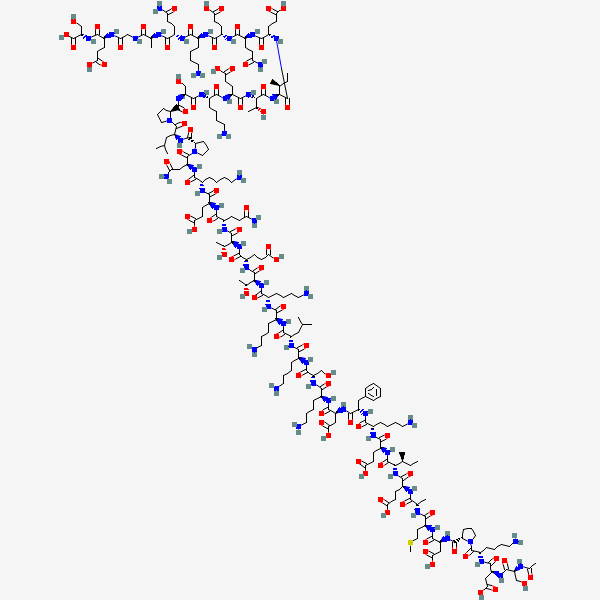
TB-500 is not the same molecule as thymosin beta-4. TB-500 is the acetylated sequence Ac-LKKTETQ, a seven-amino-acid fragment corresponding to residues 17–23 of thymosin beta-4. Thymosin beta-4 is the complete 43-amino-acid peptide. The relationship is parent peptide and fragment, not brand name and generic name.
That distinction is more than chemistry trivia. Researchers identified Ac-LKKTETQ in a product sold as TB-500, while the full peptide contains other regions with biological activity. Calling the fragment “thymosin beta-4” quietly transfers every study on the 43-amino-acid molecule to a seven-amino-acid product. Evidence does not work by family resemblance.
The search phrasing reflects the confusion: tb-500 vs tb4 and is tb-500 the same as thymosin beta-4 often ask the same question. The short answer stays no: related, mechanistically connected, and routinely conflated, but not identical.
What is actually sold as TB-500?
TB-500 has been analytically identified as the N-terminally acetylated thymosin beta-4 17–23 fragment, Ac-LKKTETQ. That is the clearest verified meaning of the name. A research-market label still cannot establish a vial’s identity, purity, dose accuracy, or sterility; “TB-500” describes what the product claims to be, not a pharmaceutical quality guarantee.
This matters when reading claims about thymosin beta 4 vs tb 500. A seller may use “TB-500,” “TB4,” and “thymosin beta-4” loosely, even though the contents described by those names can differ by 36 amino acids. The label should never be treated as proof that a vial contains the full endogenous peptide.
The site profiles keep those records separate for exactly that reason. The healing peptides guide groups them by research interest without pretending they are interchangeable.
Do they work through the same mechanism?
TB-500 and thymosin beta-4 overlap at the central LKKTETQ actin-binding region, but they should not be assigned identical whole-molecule effects. Full thymosin beta-4 sequesters G-actin, the loose building blocks cells use to rebuild their internal scaffolding and move. The fragment preserves a relevant motif; it does not preserve the parent’s entire sequence.
Short thymosin beta-4 sequences have shown distinct biological activities in laboratory research, including activity associated with cell migration, angiogenesis, and wound repair. Those findings explain why the fragment attracts recovery research. They do not establish how injected TB-500 behaves in a human body, how long it remains active, or whether it reproduces the full peptide’s effects.
Think of TB-500 as one copied paragraph from a 43-line instruction sheet. The paragraph may contain useful instructions, but nobody should cite the whole sheet as proof that the excerpt performs every job.
Which one has better evidence for healing?
Neither compound has human randomized controlled trial evidence for muscle, tendon, or systemic injury recovery. For that shared goal, this comparison is animal-only, with community reports adding anecdote rather than proof. No trial has compared TB-500 and thymosin beta-4 directly; the comparison weighs their separate evidence and keeps each studied molecule attached to its own results.
TB-500’s published human-tagged literature is dominated by analytical work: identifying the fragment and detecting doping-related peptides. That is human-sample science, not a healing trial. Full thymosin beta-4 has a broader record, including randomized topical-eye studies and early heart and skin programs. Those trials make the parent molecule better studied in people overall, but they cannot answer whether either injected compound repairs a shoulder, Achilles tendon, or knee.
The useful evidence verdict is therefore goal-specific. Full thymosin beta-4 leads for human clinical development outside sports recovery. TB-500 remains the fragment more commonly named in anecdotal recovery use. Neither earns a human-efficacy badge for musculoskeletal healing; the site’s evidence-grading guide explains why.
How do reported doses compare?
Neither TB-500 nor thymosin beta-4 has a clinically validated injected dose for muscle or tendon healing. Community reports describe milligram-range subcutaneous use, but those accounts are uncontrolled, products may be mislabeled, and no human efficacy trial establishes an effective schedule. A topical eye-study regimen for full thymosin beta-4 cannot be converted into an injury-recovery injection protocol.
That leaves a clean boundary: reported use explains what people discuss; it does not create a recommended dose. The same number on two vials would not make the molecules equivalent anyway. Seven amino acids and 43 amino acids can differ in distribution, breakdown, binding, and biological activity. Human pharmacokinetic data needed to compare those points are missing.
Are TB-500 and thymosin beta-4 legal?
TB-500 and thymosin beta-4 are not FDA-approved drugs or legal dietary supplements in the United States. Both appear in the research market under “for research use only” labeling, which does not authorize human use or turn the product into a medicine. The research-use-only explainer covers what that label does and does not mean.
Both compounds are also prohibited at all times in tested sport. Anti-doping rules name thymosin beta-4 and derivatives such as TB-500 among prohibited growth factors affecting tissue regeneration. The restriction follows the relationship between them without declaring them chemically identical. Regulatory status can change, so the dated regulatory-status reference is the right place to re-check it.
Which one fits which research goal?
TB-500 fits questions specifically about the Ac-LKKTETQ fragment and the compound commonly described in anecdotal research-market recovery reports. Thymosin beta-4 fits questions about the natural full-length peptide, actin sequestration, and clinical programs in the eye and other non-musculoskeletal settings. Those are research matches, not a universal winner or a recommendation for human use.
For injury recovery, the honest by-goal table has to preserve the weak evidence: TB-500 is the closer match to what people usually report using, while full thymosin beta-4 is the closer match to the molecule tested in clinical programs. If the goal is human-RCT-backed tendon or muscle repair, neither option currently qualifies. That answer is less tidy than crowning a winner, but it is the comparison the evidence can actually support.
TB-500 vs Thymosin Beta-4, point by point
Every dimension side by side — the honest differences, not a scoreboard.
| Dimension | TB-500 | Thymosin Beta-4 |
|---|---|---|
| What it is | A synthetic 7-amino-acid fragment identified as Ac-LKKTETQ, corresponding to residues 17–23 of thymosin beta-4. | The full 43-amino-acid peptide produced naturally in human cells; research products may contain a synthesized copy of that full sequence. |
| Sequence size | 7 amino acids; sequence Ac-LKKTETQ. | 43 amino acids; the LKKTETQ region sits within the full sequence. |
| Actin biology | Built around the parent peptide's central actin-binding region; the fragment's behavior in humans is not established. | Sequesters monomeric G-actin, helping regulate actin assembly and cell migration. |
| Muscle and tendon evidence | Animal-only; efficacy unknown; None-in-humans for healing, with anecdotal reports outside trials. | Animal-only; efficacy unknown; None-in-humans for musculoskeletal recovery, with anecdotal reports outside trials. |
| Human research outside recovery | Published human literature is largely analytical anti-doping work rather than efficacy testing. | Human trials exist for topical eye treatment and early cardiac and skin research, but those studies do not validate injected injury recovery. |
| Validated musculoskeletal dose | None. Community-reported injectable dosing is anecdotal and not clinically validated. | None. Clinical eye-study dosing cannot be transferred to injected muscle or tendon use. |
| US regulatory status (2026) | Research-use-only; not FDA-approved and not a legal dietary supplement. | Research-use-only; not FDA-approved and not a legal dietary supplement. |
| Banned in sport | Yes. TB-500 is prohibited at all times as a thymosin beta-4 derivative. | Yes. Thymosin beta-4 is prohibited at all times as a growth factor affecting tissue regeneration. |
- What it is: Related does not mean identical: TB-500 contains one short region of the parent peptide.
- Actin biology: The fragment preserves a relevant motif, not every active region or function of the full peptide.
TB-500 vs Thymosin Beta-4: the two molecules
The 2D chemical structures, straight from PubChem — a quick way to see how similar (or not) the two actually are.
Which one fits which goal?
There's no universal winner here — the honest answer depends on what you're after. These picks are framed by goal, and each says why.
Matching the compound commonly named in research-market injury-recovery reports
Leans toward TB-500
TB-500 is the name commonly attached to the short 17–23 fragment in that market. The recovery case remains animal-only and anecdotal, with no human efficacy evidence.
Following the molecule with human clinical research outside musculoskeletal recovery
Leans toward Thymosin Beta-4
Full thymosin beta-4 has been studied in people as an eye drop and in early heart and skin programs. Those trials belong to the full peptide and do not prove injury recovery.