Community report · What Reddit says
Petrelintide reddit: Amylin Without GLP-1?
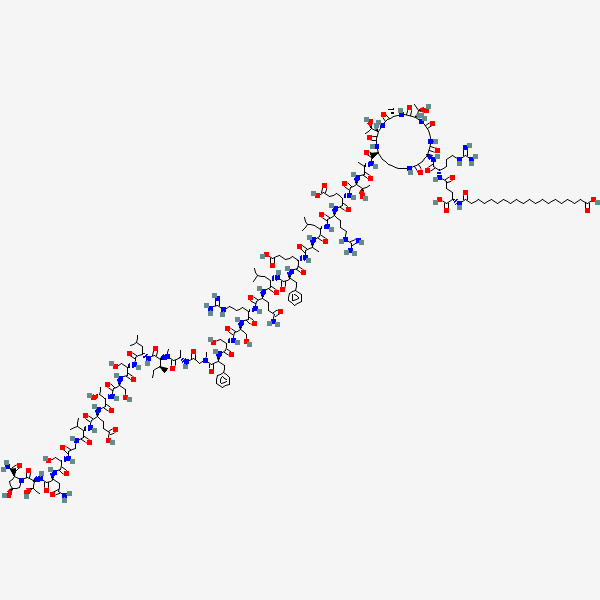
Petrelintide Reddit discussion centers on a serious idea: an amylin-only drug might produce useful weight loss without copying the full gastrointestinal burden associated with GLP-1 drugs. Phase 2 results make that thesis worth testing, but they do not prove less nausea than a GLP-1, and petrelintide remains investigational.
Why is petrelintide drawing Reddit interest?
Petrelintide draws interest because it offers a different appetite pathway, not another variation on GLP-1. Readers compare trial percentages, ask whether amylin could be easier to tolerate, and debate whether a smaller weight-loss number could still matter if more people stay on treatment.
The conversation is pipeline analysis, not a library of user experiences. There is no established community taking a verified commercial version. Threads in r/GLP1ResearchTalk place petrelintide among emerging metabolic drugs; a longer discussion of ZUPREME-1 weighs efficacy against tolerability. Those are opinions about data, not treatment outcomes.
Petrelintide is a long-acting synthetic copy of human amylin, a hormone released with insulin after meals. Amylin helps signal that a meal is over. The plain-English guide to amylin analogs explains why that pathway can reduce food intake without activating the GLP-1 receptor.
What do the petrelintide results actually show?
Petrelintide produced up to 10.7% estimated mean weight loss at week 42 versus 1.7% with placebo in ZUPREME-1. That is randomized human evidence from a Phase 2 dose-finding trial, not an animal result or a company forecast. It is also one trial, and the 42-week figure was a secondary endpoint rather than Phase 3 confirmation.
The public ZUPREME-1 poster reports 485 randomized and dosed adults without type 2 diabetes. All groups received lifestyle intervention. Estimated mean weight change across five dose groups ranged from 8.7% to 10.7% at week 42, versus 1.7% with placebo. The estimate assumes participants remained on treatment and avoided another obesity medicine.
That earns petrelintide a human RCT · helped evidence tier for weight loss, matching the full petrelintide evidence profile. It does not establish multi-year durability, routine-care results, or superiority over an approved drug.
Does petrelintide cause less nausea than GLP-1 drugs?
Petrelintide may eventually prove easier to tolerate than some GLP-1 treatments, but ZUPREME-1 did not test that comparison. It compared petrelintide with placebo. Nausea occurred in 19.6% of pooled petrelintide participants versus 6.2% on placebo, so “no nausea” and “placebo-like nausea” are both wrong readings of the data.
Most gastrointestinal events were mild, and 1.5% discontinued because of them. Vomiting occurred in 3.0% of pooled petrelintide participants and 6.2% of placebo. Those figures merit larger trials. They do not prove less nausea than semaglutide, tirzepatide, or another GLP-1 drug because no head-to-head trial answered that question.
This is where the Zealand Pharma amylin strategy matters more than a leaderboard. A treatment may not need the largest weight-loss percentage if its mechanism improves persistence. ZUPREME-1 suggests that possibility; Phase 3 must test it at scale.
How does petrelintide vs cagrilintide compare?
Petrelintide vs cagrilintide is an amylin-to-amylin comparison with no direct head-to-head trial. Both have randomized human weight-loss evidence and neither is FDA-approved. Petrelintide is being developed as a human amylin analog, while cagrilintide activates both amylin and calcitonin receptors and is also being developed with semaglutide as CagriSema.
In cagrilintide’s Phase 2 monotherapy trial, average weight loss ranged from 6.0% to 10.8% at 26 weeks versus 3.0% with placebo. Nausea ranged from 20% to 47% across cagrilintide doses versus 18% with placebo (PMID 34798060). Petrelintide’s 10.7% came at 42 weeks, with different participants, escalation, estimands, and placebo response. Putting those peak figures in adjacent cells does not create a fair race.
The honest comparison is strategic. Cagrilintide is further along, especially with semaglutide. Petrelintide tests whether amylin monotherapy can occupy a useful middle ground: double-digit weight loss with a gastrointestinal profile manageable enough for longer persistence.
Where is Reddit right — and where is it off?
Reddit is right that petrelintide represents a real non-GLP-1 bet and that tolerability can matter as much as a peak weight-loss percentage. Reddit is also right to resist comparing trial numbers without their durations. The community gets ahead of the evidence when “promising tolerability” becomes “fewer side effects than GLP-1s” or when 10.7% becomes a guaranteed personal result.
The evidence tiers keep the lanes visible. Weight loss is human RCT · helped because ZUPREME-1 was randomized and placebo-controlled. Better tolerability than GLP-1 therapy is unproved without an active comparator. Long-term safety remains unknown because Phase 2 cannot reliably find rare harms.
Reddit is useful here as a map of the question the market is asking. The controlled trial is what answers it, and so far the answer is only half complete.
Is petrelintide approved or available in 2026?
Petrelintide is not FDA-approved as of July 16, 2026. The FDA substance database recognizes petrelintide and its code name ZP8396, but that database explicitly does not confer regulatory approval. ZUPREME-1 is Phase 2, another Phase 2 trial in people with type 2 diabetes is ongoing, and Phase 3 initiation was scheduled for the second half of 2026.
That status matters when a post drifts into sourcing. A labeled vial does not establish identity, strength, purity, or sterility, and there is no FDA-approved product to use as a benchmark. We sell nothing; the job here is separating human evidence from online product claims.
What is the honest bottom line?
Petrelintide has earned attention as an amylin-only obesity candidate with double-digit Phase 2 weight loss and mostly mild gastrointestinal events. The thesis is coherent: useful efficacy through a different satiety pathway may offer a better long-term experience than simply pushing GLP-1 activity harder. The comparison still needs a proper trial.
For now, petrelintide reddit discussion is strongest when it treats tolerability as a testable strategy, not a settled advantage. Phase 3 replication and an active comparison must measure nausea, discontinuation, persistence, and weight loss under one protocol. Until then, “amylin without GLP-1” is a credible bet, not a verdict.
Where the discussion happens
- 1.r/GLP1ResearchTalk — discussion of investigational metabolic drugs including petrelintide
- 2.r/dkfinance — discussion of Zealand Pharma's ZUPREME-1 results
- 3.ZUPREME-1 trial record (NCT06662539)
- 4.Garvey et al. — ZUPREME-1 ADA 2026 poster and slides
- 5.Munch et al. — development of petrelintide (PMID 41217931)
- 6.Petrelintide — FDA Global Substance Registration System
- 7.Once-weekly cagrilintide Phase 2 trial (PMID 34798060)