Also known as: ZP8396 · ZP-8396 · EX-A12430
Human RCTHelped
On this page
- What is petrelintide?
- How does petrelintide work without GLP-1?
- What do the petrelintide results show?
- Is petrelintide safe? Side effects
- How was petrelintide dosed in research?
- Is petrelintide FDA-approved or banned in sport?
- Petrelintide vs semaglutide: does 10.7% compete?
- What comes next for petrelintide Roche and Zealand Pharma?
- Evidence by outcome
- FDA & legal status
- Reported side effects
- Chemical identifiers
- References
- Related compounds
- More on Petrelintide
Petrelintide is a once-weekly amylin analog being studied for obesity, and one Phase 2 randomized trial found up to 10.7% mean weight loss at 42 weeks versus 1.7% with placebo. That is real human evidence, not a forecast. Petrelintide remains investigational, with no FDA-approved use and no long-term safety record.
What is petrelintide?
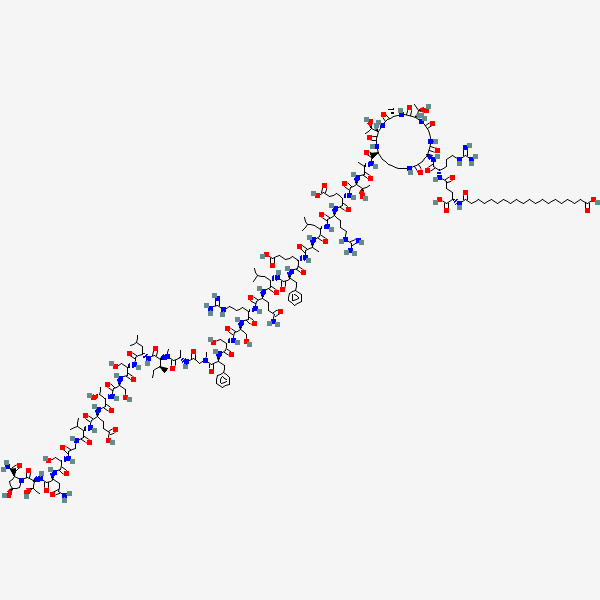
Petrelintide is a 36-residue synthetic version of human amylin, a hormone the pancreas releases with insulin after a meal. Zealand Pharma developed the molecule as ZP8396; Roche and Zealand now share development. PubChem lists the formula C185H305N49O61, molecular weight 4,192 g/mol, CAS 2766385-23-1, and CID 172915807.
The useful distinction is that petrelintide is not a GLP-1 receptor agonist. Petrelintide sits in the site’s GLP-1 and metabolic hub because of its intended use, but its biological lane is amylin. That makes the petrelintide amylin story more than another renamed incretin.
How does petrelintide work without GLP-1?
Petrelintide copies amylin’s meal-ending signal. Amylin-receptor activity helps the brain register fullness, slows gastric emptying, and restrains glucagon after food. Picture two separate volume knobs for appetite: GLP-1 drugs turn one; petrelintide turns the amylin knob. The goal is less hunger and smaller meals without directly switching on GLP-1 receptors.
The molecule is engineered to last much longer than natural amylin and remain stable around neutral pH. The development paper describes a potent, stable, long-acting analog suitable for combination research (Munch et al., 2025). That chemistry explains weekly dosing; it does not, by itself, prove weight loss. ZUPREME-1 supplies that human test.
What do the petrelintide results show?
The petrelintide results are promising but narrower than the headlines. ClinicalTrials.gov records ZUPREME-1 as a completed, randomized, double-blind Phase 2 dose-finding trial that enrolled 493 adults across 33 sites in the United States, Poland, and Romania. The ADA 2026 congress poster reports a full analysis set of 485: 404 on petrelintide and 81 on pooled placebo.
At week 42, estimated mean weight change ranged from 8.7% to 10.7% across the five petrelintide dose arms, versus 1.7% with placebo. The 10.7% arm had a 95% confidence interval of 9.4% to 12.1%, and the comparison was statistically significant. All groups also received a reduced-calorie diet and increased-activity program.
That is a human randomized result, so the evidence tier is human RCT. Still, 10.7% was a secondary week-42 endpoint in one sponsor-run dose-finding study. The poster calls the calculation an “efficacy estimand”: an estimate of what would happen if everyone stayed on treatment and avoided another obesity drug. Useful, yes. Final word, no.
Is petrelintide safe? Side effects
Petrelintide looked reasonably tolerable through the trial’s 51-week safety window, but “placebo-like” needs the actual numbers beside it. Any adverse event occurred in 70.8% of pooled petrelintide participants and 69.1% of placebo participants; serious events occurred in 3.5% and 3.7%. Most gastrointestinal events were mild.
Nausea tells the less polished part: 19.6% with pooled petrelintide versus 6.2% with placebo. Pooled vomiting was 3.0% versus 6.2%, and the dose arm producing 10.7% weight loss recorded no vomiting, although nausea in that arm was 22.9%. “No vomiting at the maximally effective dose” is true; “no gastrointestinal signal” would not be.
ZUPREME-1 cannot detect very rare harms or establish multi-year safety. Petrelintide also has no approved label, so formal contraindications have not been established. The empty contraindication field means unknown, not none.
How was petrelintide dosed in research?
Petrelintide was injected under the skin once weekly, with escalation every four weeks for up to 16 weeks. The public ZUPREME-1 poster labels the groups Dose 1 through Dose 5 but does not disclose their milligram amounts. Reporting a guessed dose would turn an evidence page into fan fiction, so no number belongs here until a primary source publishes it.
This is study design, not a personal protocol. Petrelintide is not an approved pharmacy product, and there is no standard clinical dose or approved reconstitution instruction.
Is petrelintide FDA-approved or banned in sport?
Petrelintide is investigational in the United States as of July 16, 2026. The FDA substance database recognizes the molecule, but a database record is not approval. No FDA-approved indication, branded product, or prescribing information exists; the dated regulatory reference should be rechecked as the program moves.
WADA’s 2026 S0 rule prohibits pharmacological substances in clinical development that lack human therapeutic approval, at all times. Petrelintide is not named separately, but its investigational status places it under that catch-all for athletes subject to WADA rules.
Petrelintide vs semaglutide: does 10.7% compete?
Petrelintide vs semaglutide is not settled because no trial has compared them directly. Petrelintide’s 10.7% at 42 weeks came from ZUPREME-1; approved semaglutide and tirzepatide results come from different trials, durations, populations, doses, and statistical plans. Lining up percentages as a podium would create precision the evidence does not have.
The honest answer is that 10.7% makes a non-GLP-1 amylin monotherapy competitive enough to keep testing, not enough to crown it over semaglutide or tirzepatide. Its possible advantage is a different appetite pathway and tolerability profile. Whether that trade produces better persistence or comparable long-term health outcomes requires Phase 3 and direct comparisons. Cagrilintide is the closest internal amylin reference.
What comes next for petrelintide Roche and Zealand Pharma?
The petrelintide Roche/Zealand program has two near-term tests, neither finished. ZUPREME-2 is an active, not-recruiting Phase 2 trial in 221 adults with overweight or obesity and type 2 diabetes; its registry estimates completion on August 13, 2026. Roche says topline results are due in the second half of 2026.
Roche’s June 2026 presentation says Phase 3 studies are scheduled to start in the second half of 2026. That is a plan, not a Phase 3 result. The next useful evidence will show whether the weight-loss signal repeats in diabetes, whether larger trials preserve the safety pattern, and whether amylin without GLP-1 earns a durable place in weight-loss peptide research.
Evidence by outcome
Each outcome Petrelintide has been studied for, with the honest evidence grade and what the studies actually found. A tier never stands alone — the verdict rides with it.
| Outcome | Evidence | What was found |
|---|---|---|
| Weight loss in adults with obesity or overweight | Human RCTHelped | In the randomized, double-blind Phase 2 ZUPREME-1 trial, the best-performing petrelintide dose produced an estimated 10.7% mean weight reduction at week 42 versus 1.7% with placebo. The result is human randomized evidence, but it comes from one dose-finding trial and is not yet a Phase 3 confirmation. |
| Weight loss in adults with type 2 diabetes | Human RCTUnclear | ZUPREME-2 is a randomized Phase 2 trial in adults with overweight or obesity and type 2 diabetes. The trial is active but no results were posted as of July 16, 2026, so efficacy in this population remains unknown. |
FDA & legal status
- United States: investigational (as of Jul 2026)
Petrelintide is being studied in FDA-regulated clinical trials but is not an FDA-approved drug. Roche said Phase 3 studies were scheduled to begin in the second half of 2026.
Reported side effects
| Effect | Frequency | Severity |
|---|---|---|
| Nausea | 19.6% pooled petrelintide versus 6.2% pooled placebo in ZUPREME-1 | Most gastrointestinal events were mild |
| Fatigue | 7.7% pooled petrelintide versus 4.9% pooled placebo in ZUPREME-1 | — |
| Injection-site reactions | 7.2% pooled petrelintide versus 6.2% pooled placebo in ZUPREME-1 | — |
Chemical identifiers
References
More on Petrelintide
Everything else we've written about Petrelintide — what the community reports, the explainers that cover it, and the terms it keeps running into.