Community report · What Reddit says
Ss31 peptide Reddit: energy, mitochondria & evidence
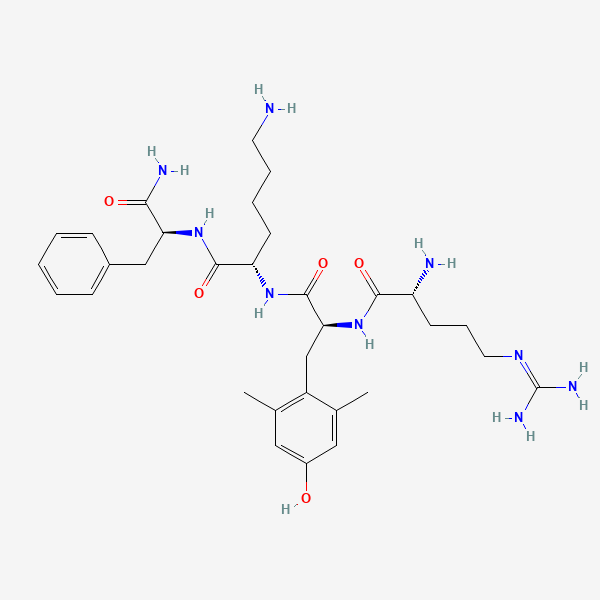
Ss31 peptide Reddit discussions usually frame elamipretide as a mitochondrial energy and longevity compound, but the evidence is more specific: a small human trial found a short-lived ATP-production signal, a larger disease trial missed its endpoints, and FDA approval covers Barth syndrome—not anti-aging.
Why does SS-31 attract the longevity community?
SS-31 attracts longevity discussion because the peptide targets mitochondria, the structures that turn fuel into usable cellular energy. General conversation on r/Peptides tends to connect that mechanism with energy, exercise tolerance, recovery and healthy aging. Those are sensible questions to investigate, but a mechanism is not a measured longevity outcome.
SS-31 is also called elamipretide, MTP-131 and Bendavia. The molecule binds cardiolipin, a fat in the inner mitochondrial membrane that supports the cell’s energy machinery. A useful analogy is a workbench: stabilizing the bench may help the tools operate, but that does not prove the whole workshop will run longer. The SS-31 evidence profile explains the mechanism and keeps the disease evidence separate from the anti-aging claim.
Does SS-31 improve mitochondrial energy in humans?
SS-31 has produced a real human mitochondrial-energy signal, although the study was small and the functional payoff was limited. In a randomized, placebo-controlled trial of 39 older adults, one elamipretide infusion increased one measure of mitochondrial ATP-production capacity immediately after treatment. The difference was gone by day seven, and fatigue resistance did not improve (PMID 34264994).
That result is more useful than a vague report of “better energy.” ATP is the chemical currency cells spend, while fatigue resistance is something a person can actually do. The trial moved the first measure without moving the second. Our longevity grading therefore stays Human controlled · Mixed, with None-in-humans: false. Human testing exists; a demonstrated healthy-aging benefit does not.
Does SS-31 work for fatigue, performance or anti-aging?
SS-31 is not established as a fatigue, performance or anti-aging treatment in healthy people. Community reports about steadier energy or better exercise can describe an individual’s experience, but they cannot isolate the peptide from training, sleep, expectation or an uncertain vial. The controlled disease record also prevents a simple “mitochondria improved, therefore performance improved” story.
The 218-participant MMPOWER-3 phase 3 trial tested elamipretide in primary mitochondrial myopathy. After 24 weeks, the drug did not improve the six-minute walk test or the trial’s fatigue score versus placebo (PMID 37268435). Our profile grades that outcome Human RCT · No effect. The broader longevity use remains Human controlled · Mixed. The proof is being tested in people, but Reddit’s energy vocabulary currently reaches farther than the measured outcomes.
What does FDA approval actually prove?
SS-31 is FDA-approved as Forzinity for a narrow medical use: improving muscle strength in adults and children with Barth syndrome who weigh at least 30 kilograms. The September 2025 decision was an accelerated approval based on an intermediate endpoint, with a confirmatory trial required. FDA approval does not extend to longevity, general mitochondrial support or athletic recovery.
The Barth syndrome result belongs in its own evidence box. Molecular Reference grades that use Human RCT · Helped, while noting that the pivotal randomized trial was tiny and its main endpoints were debated. The FDA describes Forzinity as the first approved treatment for this rare mitochondrial disorder and lists injection-site reactions as the most common adverse effects (FDA approval notice). For current boundaries, use the site’s regulatory-status reference, not the shorthand “FDA-approved peptide.”
Are SS-31 Reddit reports and online vials reliable?
SS-31 Reddit reports are anecdotal, and an online vial adds a second unknown: the product itself. A personal account cannot establish how often an effect happens, whether elamipretide caused it, or whether the labeled material had the stated identity, strength and sterility. Approved Forzinity and research-market SS-31 may name the same molecule, but they are not equivalent supply chains.
The documented short-term safety picture is clearer than it is for many research peptides because elamipretide went through human trials and FDA review. Injection-site redness, itching and irritation are the recurring established problem. Long-term use by healthy adults for longevity has not been mapped. That leaves community safety claims in the Anecdotal tier even though the molecule has controlled human safety data in clinical populations. The guide to reading peptide evidence shows why those two statements can coexist.
Where is Reddit right — and where is it off?
SS-31 Reddit discussion is right that elamipretide has an unusually serious human research program for a compound discussed in longevity circles. The community is also right to focus on mitochondria: cardiolipin binding is central to the mechanism, and a randomized older-adult trial measured an immediate ATP-capacity change. That is a legitimate signal, not merely animal or test-tube evidence.
Reddit is off when “more ATP capacity after one infusion” becomes “more daily energy,” then quietly becomes “slower aging.” Each step changes the claim. The larger mitochondrial-myopathy trial missed its walking and fatigue endpoints, and Barth syndrome approval cannot be borrowed for healthy adults. This is why evidence grading matters: one molecule can earn Human RCT evidence for a rare disease and still have mixed evidence for longevity.
What is the honest bottom line?
SS-31 has more clinical substance than the usual longevity-thread compound, but the result is nuanced rather than magical. Human research supports a mitochondrial energy effect under specific test conditions, FDA approval supports a narrow Barth syndrome use, and a large phase 3 miss argues against treating every mitochondrial claim as interchangeable.
The useful way to read ss31 peptide Reddit discussion is as a map of questions: Does a laboratory energy signal become something a person feels? Does benefit in one rare disease transfer to healthy aging? Are online products what their labels claim? The longevity peptide hub puts SS-31 beside other mitochondrial ideas; the controlled trials decide how far any of them can be carried.