CJC-1295 vs GHRP-2
CJC-1295 vs GHRP-2 compares two GH levers usually paired, not substituted: human evidence, side effects, synergy, andundefinedcompounding status.
cjc-1295 vs ghrp-2 is usually the wrong either-or question: CJC-1295 amplifies the GHRH signal, while GHRP-2 pulls the ghrelin-receptor lever and reduces somatostatin’s brake on growth-hormone release. That makes the pair complementary, not interchangeable. Both raise GH in human studies, but no trial has compared them directly or tested the exact stack for physique or recovery outcomes.
What is the GHRH vs GHRP difference?
The ghrh vs ghrp difference is signal versus pulse: CJC-1295 acts at the growth-hormone-releasing-hormone receptor, while GHRP-2 activates the growth-hormone secretagogue receptor, GHS-R1a, used by ghrelin. CJC-1295 presses the pituitary’s “release GH” control. GHRP-2 approaches the same gland through a separate circuit and counteracts some of the somatostatinergic restraint that normally holds GH release down.
That two-switch model is the useful answer, but the labels need care. The human CJC-1295 trial studied the DAC form, whose albumin binding stretched its half-life to 5.8–8.1 days. One injection raised mean GH two- to tenfold for at least six days and mean IGF-1 1.5- to threefold for 9–11 days (Teichman et al.). “CJC-1295 without DAC” is much shorter-acting and cannot simply borrow those duration numbers.
GHRP-2 produces a shorter GH response and also carries ghrelin-pathway baggage, most obviously hunger. For a fuller pathway map, see GHRH vs GHRP in plain English.
Is one peptide better supported in humans?
Neither compound wins the evidence comparison outright; both earn a human-RCT badge for raising hormones, not for changing a healthy person’s body. CJC-1295 DAC has a randomized, double-blind, placebo-controlled study showing sustained GH and IGF-1 elevation. GHRP-2 has controlled human pharmacology showing a strong, dose-responsive GH release and enough diagnostic utility to be used as pralmorelin in GH stimulation testing outside the United States.
The endpoints are the catch. Neither evidence base proves more muscle, less fat, faster recovery, or better sleep in healthy adults. There is also no direct head-to-head trial of cjc-1295 vs ghrp-2. This comparison weighs separate studies, not a comparative result that does not exist.
The same restraint applies to growth hormone peptide pairing. Human experiments with GHRH plus GHRP-2 show that the two classes can produce a synergistic GH response under some dosing conditions (Bowers et al.). Those experiments used GHRH, not a finished consumer blend of CJC-1295 and GHRP-2, and measured hormone secretion rather than body composition. The mechanism is supported; the promised gym outcome is still an extrapolation.
Should I stack CJC-1295 and GHRP-2?
The honest answer to “should i stack cjc-1295 and ghrp-2” is that the pairing is mechanistically coherent but not clinically validated as a stack. A GHRH analog and a GHRP work different receptors, so combining them can amplify GH release more than treating them as substitutes. That is why these compounds are usually paired, not chosen between.
The trade-off is that synergy does not erase side effects. In a small human comparison using 1 and 2 µg/kg intravenously, GHRP-2 stimulated prolactin, ACTH, and cortisol as well as GH. The paper describes prolactin activity as lower than the response to thyrotropin-releasing hormone, while ACTH/cortisol activity was similar to the response to human corticotropin-releasing hormone (Arvat et al.). That is more honest than copying a vendor’s tidy percentage: the magnitude depends on dose, route, population, comparator, and sampling window.
CJC-1295 adds its own uncertainties: injection-site reactions and flushing were the clearest short-term trial complaints, while long-term repeated-use safety was not established. Adding compounds adds unknowns too. The site’s CJC-1295 and ipamorelin stack explains the same two-pathway logic with a more selective GHRP; it does not serve as proof for a CJC-1295 and GHRP-2 blend.
What does the 2026 regulatory record change?
The 2026 record says neither compound is FDA-approved, and their compounding histories are not interchangeable. CJC-1295 was removed from FDA’s Category 2 in September 2024 because its nominations were withdrawn. That procedural removal was not a safety clearance: in December 2024, the Pharmacy Compounding Advisory Committee voted against placing every reviewed CJC-1295 form on the 503A Bulks List, with votes ranging from 12–1 to 13–0 against inclusion (FDA meeting minutes).
GHRP-2 differs. FDA’s 503A nomination list, updated May 14, 2026, places GHRP-2 in Category 3, meaning the nomination lacked adequate support (current 503A list). Injectable and nasal GHRP-2 also remains in 503B Category 2, a bucket for nominated bulk substances that may present significant safety risks. FDA specifically flags aggregation, peptide-related impurities, immunogenicity, and characterization complexity (FDA Category 2 list). Category language concerns compounding policy; it is not an approval grade for personal use.
Both compounds are also prohibited at all times in sport. WADA’s 2026 list names CJC-1295 among GHRH analogs and GHRP-2, or pralmorelin, among GH-releasing peptides. So the practical ghrp-2 vs cjc-1295 choice is by goal and trade-off, never a single winner: sustained DAC evidence points toward CJC-1295, an acute pulse and appetite effect point toward GHRP-2, and the popular pairing remains plausible biology rather than a proven physique protocol.
CJC-1295 vs GHRP-2, point by point
Every dimension side by side — the honest differences, not a scoreboard.
| Dimension | CJC-1295 | GHRP-2 |
|---|---|---|
| Peptide class | GHRH analog that activates the pituitary GHRH receptor. | Ghrelin mimetic and growth-hormone-releasing peptide that activates GHS-R1a. |
| Main GH lever | Strengthens the GHRH signal telling pituitary cells to make and release GH. | Triggers GH through the ghrelin receptor and counteracts somatostatinergic restraint. |
| Human evidence | A randomized, placebo-controlled trial found sustained, dose-dependent GH and IGF-1 increases with CJC-1295 DAC. | Controlled human studies show a strong GH response; GHRP-2 has also been used as a diagnostic GH stimulus. |
| Release pattern | CJC-1295 DAC produced sustained GH elevation for at least six days and IGF-1 elevation for 9–11 days in one trial. | GHRP-2 produces an acute GH pulse; its human endocrine studies used intravenous doses and short observation windows. |
| Research doses behind the evidence | The DAC trial used single and repeated weight-based subcutaneous doses; 30 and 60 µg/kg were described as relatively well tolerated. | A human endocrine comparison tested 1 and 2 µg/kg intravenously. |
| Distinct trade-offs | Injection-site reactions and flushing were the clearest short-term trial complaints; long-term safety remains untested. | Appetite stimulation plus prolactin, ACTH, and cortisol activity; long-term repeated-use safety remains untested. |
| US compounding status (2026) | Not FDA-approved. CJC-1295 left Category 2 in September 2024 after nominations were withdrawn, but FDA's advisory committee later voted against adding every reviewed form to the 503A Bulks List. | Not FDA-approved. GHRP-2 is in 503A Category 3, while injectable and nasal GHRP-2 remains in FDA's 503B Category 2 for potential significant safety risks. |
| Banned in sport | Yes. The 2026 WADA list names CJC-1295 among prohibited GHRH analogs. | Yes. The 2026 WADA list names GHRP-2 (pralmorelin) among prohibited GHRPs. |
- Main GH lever: Different receptors explain why GHRH and GHRP stimulation can be synergistic rather than redundant.
- Human evidence: No trial has compared CJC-1295 with GHRP-2 directly, and no trial has tested the exact stack for muscle, fat loss, or recovery.
- Release pattern: CJC-1295 without DAC is shorter-acting and should not inherit the DAC trial's pharmacokinetic numbers.
- Research doses behind the evidence: These are study exposures, not interchangeable community protocols or personal dosing advice.
- US compounding status (2026): Removal from Category 2 was not an FDA clearance or approval for CJC-1295.
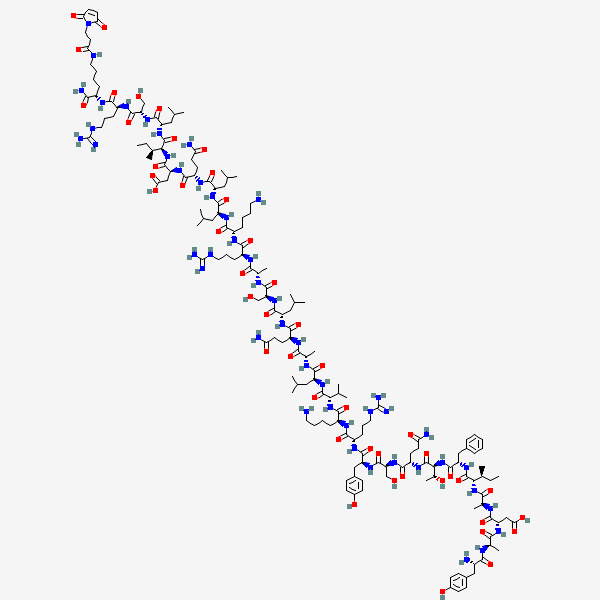
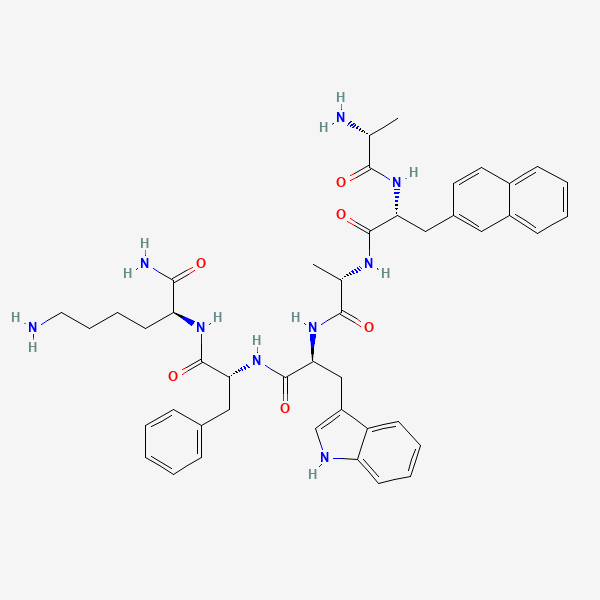
CJC-1295 vs GHRP-2: the two molecules
The 2D chemical structures, straight from PubChem — a quick way to see how similar (or not) the two actually are.
Which one fits which goal?
There's no universal winner here — the honest answer depends on what you're after. These picks are framed by goal, and each says why.
Longest documented GH and IGF-1 elevation from one studied dose
Leans toward CJC-1295
The CJC-1295 DAC randomized trial measured sustained GH elevation for at least six days and IGF-1 elevation for 9–11 days after one injection.
A short GH pulse with a measured appetite effect
Leans toward GHRP-2
GHRP-2 has controlled human evidence for an acute GH response and increased food intake, making appetite a real effect rather than marketing copy.
Avoiding GHRP-2's ghrelin-pathway appetite and pituitary-adrenal effects
Leans toward CJC-1295
CJC-1295 works through the GHRH receptor; the human GHRP-2 literature additionally records appetite, prolactin, ACTH, and cortisol activity.
References
- 1.Teichman et al., 2006 — CJC-1295 in healthy adults (PubMed)
- 2.Arvat et al., 1997 — GHRP-2 effects on GH, prolactin, ACTH and cortisol in humans (PubMed)
- 3.FDA — December 2024 PCAC vote on CJC-1295-related bulk substances
- 4.FDA — Category 2 compounding safety risks, including GHRP-2
- 5.WADA — 2026 List of Prohibited Substances and Methods