Dihexa vs Selank
Dihexa vs Selank compared by goal, mechanism, human evidence, safety, and the 2025 Dihexa retraction—without pretending there is one winner.
Dihexa vs Selank is not a close evidence match: Selank is an anxiolytic tuftsin analog with small Russian human studies, while Dihexa is a synaptogenesis candidate supported only by animal and cell work. No trial has compared them directly, and Dihexa’s central HGF/c-Met mechanism paper was retracted in April 2025.
What is the core difference between Dihexa and Selank?
Dihexa aims at structural plasticity; Selank aims at anxiety and stress signaling. That makes this an anxiolytic vs synaptogenic peptide comparison, not two versions of the same nootropic. Dihexa was designed from angiotensin IV research, while Selank is a seven-amino-acid analog of the immune peptide tuftsin.
Dihexa’s proposed job is to encourage neurons to form synapses, the junctions they use to exchange signals. Rodent studies therefore ask questions about maze learning, memory deficits, and Alzheimer’s-like models. Selank’s clinical question is narrower and more human: can an intranasal peptide reduce anxiety without the fog commonly associated with a benzodiazepine?
That goal split matters more than the usual route-and-dose chart. A person searching selank vs dihexa is often shown two “brain peptides” as if the choice were calm versus stronger cognition. The studies do not support that neat ladder. Selank has human anxiety evidence; Dihexa does not have human evidence for cognition, safety, or dosing.
Which compound has stronger evidence?
Selank has the stronger evidence for its headline goal because people with anxiety-spectrum disorders have actually received it in clinical research. A 2014 Russian study compared Selank with phenazepam in 60 patients and reported anxiolytic effects plus better tolerability. That is useful human evidence, though one small, single-country literature base is not the same as broad independent confirmation.
Dihexa remains animal-only. The original rat work reported improved water-maze performance and increased synapse-related measures, while a later Chinese study found better spatial learning and synaptophysin expression in APP/PS1 Alzheimer’s-model mice (Sun et al., 2021). Mice are not tiny clinical-trial participants. Those results keep Dihexa scientifically interesting, but they cannot establish a human benefit or a human dose.
This is why the shared badge on this comparison is animal-only, the weaker tier. The guide to reading peptide evidence explains why a mechanism, an animal result, and a controlled human outcome answer different questions. Among nootropic peptides compared, Dihexa and Selank make that distinction unusually visible.
What does the Dihexa retraction change?
The Dihexa retraction weakens the most specific story about how the compound works. On April 29, 2025, the journal retracted the 2014 paper tying Dihexa’s procognitive and synaptogenic effects to HGF/c-Met activation after a Washington State University investigation found falsified or fabricated data in multiple figures and an erratum (PMID 40312093).
The retraction does not prove that Dihexa has no biological activity. The separate 2021 APP/PS1 mouse paper still reported cognitive and molecular effects through a PI3K/AKT pathway. It does mean the confident claim that Dihexa is a validated HGF/c-Met synaptogenic amplifier no longer deserves to be repeated as settled fact. “Proposed mechanism” is the honest label.
That correction is the piece most comparison pages miss. They repeat the famous synaptogenesis pitch, add an unvalidated human dose, then rank Dihexa by theoretical potency. Molecular Reference sells neither compound, so the evidence tier gets to stay inconvenient. For another animal-only cognition comparison, see Dihexa vs Noopept.
How do safety and US regulatory status compare in 2026?
Neither compound is FDA-approved in the United States, and neither has an FDA-reviewed product with established quality, effectiveness, and dosing. FDA’s page on nominated compounding substances says it found no human exposure data for drug products containing dihexa acetate. For selank acetate, FDA flags peptide-impurity and immune-reaction concerns and says important safety information is lacking.
Selank still has the more developed human safety record because Russian clinical use and studies provide actual exposure data. The limits are short follow-up, modest study size, and little independent Western replication. Dihexa has no published human safety record. Its growth-factor mechanism also creates a theoretical tumor-signaling concern, but no human trial can quantify that risk.
Both sit in the US research market rather than ordinary medical practice. “Research use only” is not an approval category or a purity guarantee. The broader nootropic and mental-health peptide hub keeps those regulatory and evidence differences visible instead of treating every nasal spray or capsule as equivalent.
Which one fits which goal?
Selank is the evidence-based pick between these two for anxiety or stress because that is the goal studied in humans. Dihexa is the relevant pick only for a laboratory question about synaptic density or cognition in an animal model, with the retraction attached to the hypothesis. Neither earns a universal-win label, and no evidence supports combining them as a proven stack.
For anxiety, Selank’s human comparison data beats a mechanistic guess. For synaptogenesis research, Dihexa is the purpose-built tool, but the answer belongs in a preclinical protocol, not a personal treatment plan. For anyone prioritizing the smaller evidence gap, Selank is again the clearer choice. The structured by-goal picks below preserve those boundaries without pretending separate studies form a head-to-head trial.
Dihexa vs Selank, point by point
Every dimension side by side — the honest differences, not a scoreboard.
| Dimension | Dihexa | Selank |
|---|---|---|
| What it is | A synthetic, orally active angiotensin IV analog developed as a synaptogenesis and cognition research compound. | A synthetic 7-amino-acid tuftsin analog developed as an intranasal anxiolytic. |
| Primary research goal | Synaptic-density, memory, and neurodegeneration models. | Anxiety, stress, and anxiety-related cognitive symptoms. |
| Proposed mechanism | Proposed to potentiate HGF/c-Met signaling and promote new synapses; the central 2014 mechanism paper was retracted in April 2025 for falsified or fabricated data. | May slow enkephalin breakdown and influence GABA-linked, serotonin, and BDNF signaling; the exact human mechanism remains unsettled. |
| Human evidence | None. Dihexa has no published human efficacy or safety trial. | Small Russian clinical studies, including a 60-patient comparison with phenazepam for anxiety-spectrum disorders. |
| Evidence tier | Animal-only, none in humans; foundational papers also carry reliability flags. | Human-RCT tier for anxiety in the Selank profile, with small, geographically concentrated studies and limited independent replication. |
| US regulatory status (2026) | Research-use-only; not FDA-approved. FDA reports no identified human exposure data for compounded dihexa acetate. | Research-use-only; not FDA-approved, despite medicinal use in Russia. FDA says safety information for compounded selank acetate is insufficient. |
- Human evidence: No trial has compared Dihexa and Selank directly; this page weighs their separate evidence.
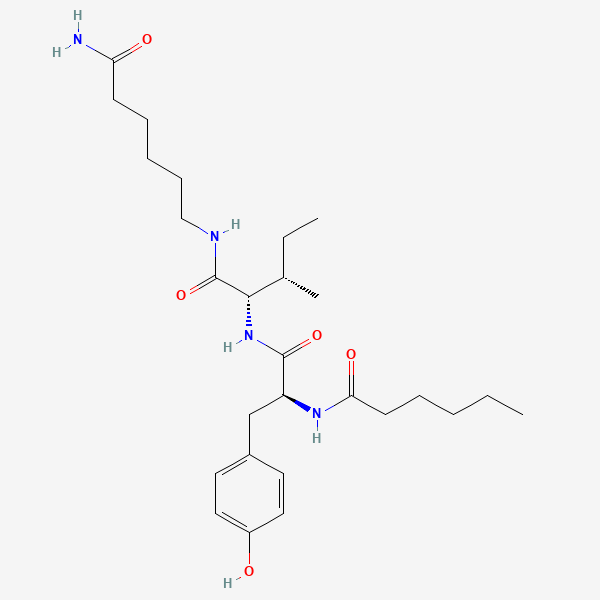
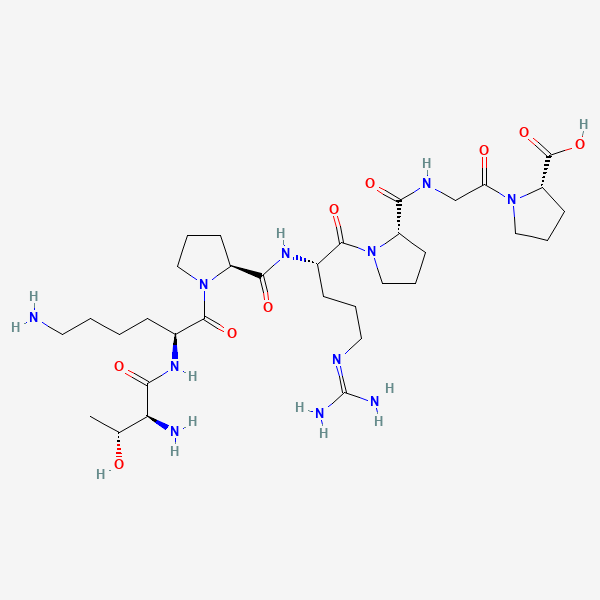
Dihexa vs Selank: the two molecules
The 2D chemical structures, straight from PubChem — a quick way to see how similar (or not) the two actually are.
Which one fits which goal?
There's no universal winner here — the honest answer depends on what you're after. These picks are framed by goal, and each says why.
Anxiety or stress without a sedative-style goal
Leans toward Selank
Selank is the compound with direct human anxiety data; Dihexa has not been tested for this goal in people.
Studying synaptic density in a preclinical model
Leans toward Dihexa
Dihexa is the purpose-built synaptogenesis candidate, but this pick is limited to preclinical research and must carry the April 2025 mechanism-paper retraction up front.
Choosing the option with less evidence uncertainty
Leans toward Selank
Selank has human exposure and comparative clinical data; Dihexa has neither human efficacy nor human safety data.
References
- 1.Medvedev et al., 2014 — Selank versus phenazepam in 60 patients with anxiety-spectrum disorders
- 2.Sun et al., 2021 — Dihexa in the APP/PS1 Alzheimer's mouse model
- 3.Retraction notice for the Dihexa HGF/c-Met mechanism paper (PMID 40312093)
- 4.FDA — bulk substances for compounding that may present significant safety risks
- 5.Dihexa and Selank — registered clinical studies search