Dihexa vs Noopept
Dihexa vs Noopept compares animal-only synaptogenesis research with limited human cognitive data, including mechanisms, doses, risks and legal status.
Dihexa vs Noopept is a comparison between an animal-only HGF/c-Met synaptogenesis candidate and a racetam-adjacent nootropic with limited controlled human data in cognitively impaired patients. No trial has compared them directly; this page weighs their separate evidence. Noopept has the more mature human record, while Dihexa remains a preclinical research question.
What separates Dihexa and Noopept?
Dihexa and Noopept differ most in evidence maturity, not in marketing claims about potency. Dihexa is an angiotensin IV analog studied for HGF/c-Met-driven synapse formation. Noopept, also called omberacetam, is a dipeptide-derived small molecule developed as a racetam-adjacent cognitive drug. Neither is a classic peptide medicine, despite both living in the peptide-and-nootropic conversation.
Dihexa has produced memory signals in rats and mice, including maze performance and an Alzheimer’s-model mouse study. Dihexa has no published human efficacy trial, no human safety trial and no validated human dose. The foundational 2013 rat paper also carries a journal expression of concern, so dramatic claims built on that research deserve restraint.
Noopept has controlled comparative human evidence in patients with mild cognitive disorders linked to vascular disease or head injury. That study compared Noopept with piracetam rather than placebo. Noopept’s record is therefore more mature than Dihexa’s, but it does not establish cognitive enhancement in healthy students, programmers or biohackers.
Which has better evidence for memory?
Noopept has the stronger human evidence for a narrow patient goal; neither compound has human proof for improving memory in healthy adults. That distinction answers the useful version of the dihexa vs noopept memory question. A patient study and an enhancement study are not interchangeable simply because both measure cognition.
Noopept improved memory, attention and related symptoms about as much as piracetam in a controlled comparative study of cognitively impaired patients. The study lacked a placebo arm, was not a modern healthy-volunteer randomized controlled trial, and comes from a relatively concentrated research tradition. The result is a legitimate human signal with clear limits.
Dihexa improved learning or memory measures in rodent work, but the jump from a maze-performing rat to a person is large. Dihexa’s evidence grade remains animal-only, none-in-humans. On the site’s evidence-grading scale, that makes Noopept the by-goal pick when human evidence maturity matters, without turning Noopept into a universal winner.
How do their mechanisms differ?
Dihexa centers on HGF/c-Met synaptogenesis, while Noopept has a broader and less settled mechanism involving nerve-growth signals, a natural dipeptide metabolite and glutamate signaling. Both mechanisms are mapped mainly through animal or laboratory work. Mechanistic detail can explain why researchers are interested; it cannot substitute for a human outcome trial.
Dihexa appears to amplify hepatocyte growth factor (HGF) signaling at the c-Met receptor. In plain English, that pathway tells cells to grow, move and repair. Animal and cell research connects the signal with new synapses, the junctions neurons use to communicate. The same growth pathway also creates a theoretical safety concern because abnormal c-Met activity is linked with cancers. Dihexa has not been shown to cause cancer in humans; there are no human data capable of settling the question.
Noopept appears to increase nerve growth factor (NGF) and brain-derived neurotrophic factor (BDNF) in rats. Noopept is also metabolized to cycloprolylglycine and may influence AMPA and NMDA glutamate signaling involved in learning. No single human receptor-level explanation has been established, so tidy diagrams should not be mistaken for clinical certainty.
How do route and reported doses compare?
Noopept has oral doses reported in human patient research, while Dihexa’s cited oral dose comes from rats. Dihexa is often described as “oral-ish” because oral activity is part of its preclinical design, but that phrase should not imply proven absorption, effectiveness or safety in people. Neither compound requires the injection framing associated with classic peptide drugs.
Dihexa was given orally in rat research at about 2 mg/kg per day. The source profile does not convert that figure into a human regimen, and neither does this comparison. Animal milligrams per kilogram are not instructions for a person, especially when the foundational paper has a reliability flag.
Noopept was given orally at 10 mg twice daily, sometimes up to 30 mg daily, for roughly one-and-a-half to three months in cognitively impaired patients. Those figures describe a cited study population. They do not establish a dose for healthy-person enhancement. If the question is dihexa or noopept based on a documented human oral regimen, only Noopept has one, and only for the studied patient context.
How do safety and US status compare?
Neither compound is FDA-approved in the United States, and both sit outside lawful dietary-supplement status as of July 2026. Dihexa has no human safety record at all. Noopept has limited tolerability data from clinical use, with irritability, sleep disturbance, headache and increased blood pressure reported, particularly the blood-pressure issue in patients who already had hypertension.
Dihexa is sold as a research chemical, and its HGF/c-Met mechanism raises an unresolved theoretical concern about growth signaling. Noopept is federally unscheduled and is a prescription medicine in Russia, but US sellers cannot turn that foreign history into FDA approval. Research-market sourcing adds a separate problem for both: a label cannot guarantee identity, purity or dose accuracy.
The regulatory-status reference explains why “legal to possess,” “approved medicine” and “lawful supplement” are different claims. Athletes face another split: Dihexa fits the World Anti-Doping Agency’s S0 catch-all for non-approved substances, while Noopept is not specifically named as prohibited in the source profile. Current rules still need checking before competition.
Which compound fits which research goal?
Noopept fits the goal of choosing the more mature human evidence base; Dihexa fits the narrower goal of studying HGF/c-Met synaptogenesis before human translation. Neither is the evidence-based winner for healthy-person memory enhancement because that direct evidence does not exist. The useful choice depends on the question being asked, not on a potency slogan.
For noopept vs dihexa in cognitively impaired patients, Noopept is the defensible evidence pick because humans with vascular or post-traumatic mild cognitive disorders were actually studied. For experimental synapse-formation research, Dihexa is the relevant compound because HGF/c-Met is its defining preclinical mechanism. That is a laboratory rationale, not a recommendation for personal use.
The broader nootropic compounds hub puts both beside alternatives with different routes and evidence tiers. The bottom line stays deliberately unsensational: Noopept has limited human patient data, Dihexa has animal and cell data, and no direct trial tells us which works better. This comparison is educational information, not medical advice.
Dihexa vs Noopept, point by point
Every dimension side by side — the honest differences, not a scoreboard.
| Dimension | Dihexa | Noopept |
|---|---|---|
| What it is | A synthetic, orally active angiotensin IV analog derived from a stabilized tripeptide fragment; functionally a small molecule rather than a classic peptide drug. | A synthetic dipeptide-derived, racetam-adjacent nootropic (omberacetam); also a small-molecule drug rather than a classic peptide. |
| Proposed mechanism | Amplifies HGF/c-Met signaling and promotes synapse formation in animal and cell research; the mechanism has not been confirmed in humans. | May raise NGF and BDNF, form the metabolite cycloprolylglycine, and modulate AMPA/NMDA glutamate signaling; the precise human mechanism is unresolved. |
| Evidence for cognition | Animal-only. Rat and mouse studies report memory effects, but there is no published human trial; the foundational rat paper carries an expression of concern. | Limited controlled human evidence in patients with vascular or post-traumatic mild cognitive impairment, without a placebo arm; healthy-adult enhancement remains untested. |
| Oral use and reported doses | Oral dosing appears in rat research at about 2 mg/kg per day; that animal dose is not a validated human dose. | Human patient studies used oral 10 mg twice daily, sometimes up to 30 mg daily, for roughly 1.5 to 3 months. |
| Human safety record | No human safety or long-term toxicology data. HGF/c-Met growth signaling creates a theoretical cancer-pathway concern, not a demonstrated human risk. | Thin but real clinical tolerability data; reported issues include irritability, disturbed sleep, headache and increased blood pressure in some patients with hypertension. |
| US regulatory status (2026) | Research-use-only; not FDA-approved and not a lawful dietary supplement. | Research-use-only in the US; federally unscheduled, but neither FDA-approved nor a lawful dietary supplement. |
| Sport status (2026) | Treated as prohibited under WADA S0 because it lacks government approval for human therapeutic use. | Not specifically named on the WADA Prohibited List; tested athletes should still verify current status and product contamination risk. |
- Evidence for cognition: No trial has compared Dihexa and Noopept directly; this comparison weighs their separate evidence bases.
- Oral use and reported doses: These are doses reported in cited research, not personal dosing guidance.
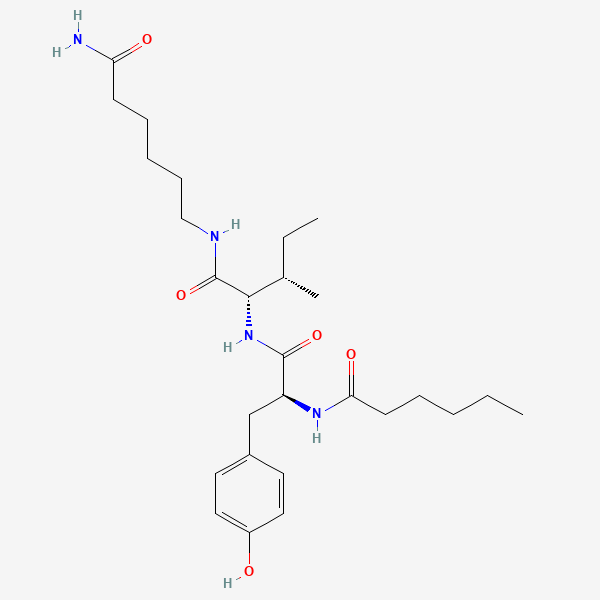
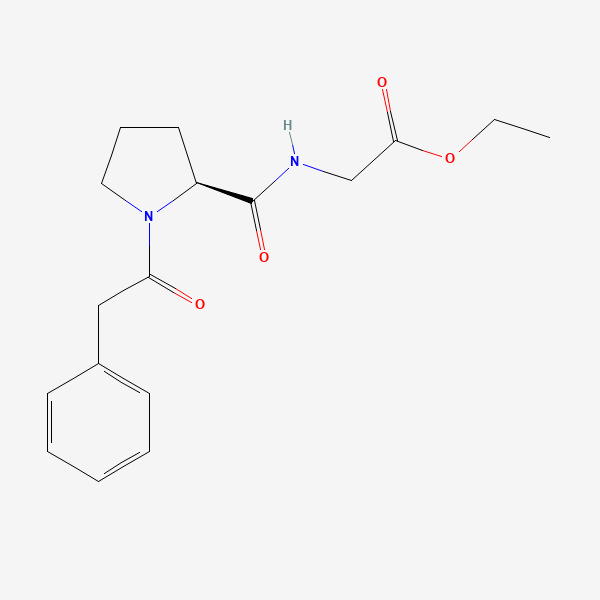
Dihexa vs Noopept: the two molecules
The 2D chemical structures, straight from PubChem — a quick way to see how similar (or not) the two actually are.
Which one fits which goal?
There's no universal winner here — the honest answer depends on what you're after. These picks are framed by goal, and each says why.
Choosing on the maturity of human cognitive evidence
Leans toward Noopept
Noopept has limited controlled human data in cognitively impaired patients, while Dihexa has no published human efficacy or safety trial.
Studying HGF/c-Met synaptogenesis as a preclinical research question
Leans toward Dihexa
Dihexa is the compound built around HGF/c-Met signaling and synapse formation, but this is an animal-and-cell research rationale rather than a human-use advantage.
References
- 1.Dihexa — indexed research (PubMed, National Library of Medicine)
- 2.McCoy et al., 2013 — metabolically stabilized angiotensin IV analogs in rats (J Pharmacol Exp Ther)
- 3.Notice of Concern (2021) for McCoy et al., 2013 (J Pharmacol Exp Ther)
- 4.Neznamov & Teleshova, 2009 — Noopept vs piracetam in mild cognitive disorders (Neurosci Behav Physiol)
- 5.Ostrovskaya et al., 2008 — Noopept and NGF/BDNF in rat hippocampus (Bull Exp Biol Med)