Epitalon vs SS-31 (elamipretide)
Epitalon vs SS-31 (elamipretide) compares telomere and circadian research with mitochondrial cardiolipin targeting, including the evidence and FDA-status gap.
Epitalon vs SS-31 (elamipretide) is a choice between two different research questions: telomere and circadian biology for Epitalon, or mitochondrial cardiolipin for SS-31 (elamipretide). SS-31 has far stronger human evidence and a narrow FDA approval; Epitalon remains animal-and-cell research. No trial has compared them directly, so this weighs their separate records by goal.
What is the core telomere vs mitochondria aging difference?
The core telomere vs mitochondria aging difference is where each compound aims. Epitalon is a synthetic four-amino-acid peptide studied for telomerase activation, telomere length, and pineal signaling. SS-31, also called elamipretide, enters mitochondria and binds cardiolipin, a membrane lipid that supports the machinery used to make cellular energy.
Epitalon’s telomere claim comes from cells, not treated people. A 2025 study found longer telomeres and increased telomerase activity after Epitalon exposure in normal human cell lines; the researchers also observed an alternative telomere-lengthening pathway in cancer cell lines (Al-Dulaimi et al., 2025). That result makes the mechanism worth studying, but a culture dish cannot show longer life, better sleep, or acceptable long-term risk in humans.
SS-31’s mechanism has traveled much farther. The FDA label describes elamipretide as a mitochondrial cardiolipin binder that localizes to the inner mitochondrial membrane and improves mitochondrial structure and function (DailyMed). That is a direct molecular target, not proof that SS-31 slows ordinary human aging.
Does FDA approval make SS-31 the winner?
SS-31 crossed the FDA finish line, but only inside a narrow lane. On September 19, 2025, the agency granted Forzinity accelerated approval to improve muscle strength in people with Barth syndrome who weigh at least 30 kg. The approval used knee-extensor strength as an intermediate endpoint, and a confirmatory trial must verify clinical benefit (FDA).
That distinction stops a common bait-and-switch. FDA approval establishes a regulated elamipretide product for one rare mitochondrial disease. It does not validate research-grade SS-31 powder, general “mitochondrial support,” or longevity use. Epitalon has not come close to that regulatory record: no FDA-approved indication, no validated human dose, and no controlled human trial of the synthetic peptide for telomeres, sleep, or lifespan.
The answer to ss-31 vs epitalon is therefore not “approved beats unapproved” for every goal. Approval makes SS-31 the evidence-based pick when the goal is the strongest human and regulatory footing. It says nothing about whether SS-31 is the better tool for studying telomerase, because that is not its target.
What does the separate evidence actually show?
The separate evidence shows a wide tier gap and no comparative trial. Epitalon earns the shared animal-only badge because that is the weaker headline record. SS-31 has randomized human research, yet its results depend heavily on the disease and endpoint. Keeping those records separate prevents Forzinity’s approval from being borrowed as credibility for Epitalon.
Epitalon’s lifespan evidence includes a 2003 experiment in 108 female mice. Epitalon did not change mean lifespan or overall spontaneous tumor incidence, although the last-surviving animals lived longer and some aging markers changed (Anisimov et al., 2003). Older Russian work on pineal extracts is often folded into Epitalon marketing, but the extract epithalamin is not the same preparation as synthetic Epitalon.
SS-31 has the opposite problem: plenty of human testing, but not a clean sweep. MMPOWER-3 randomized 218 people with primary mitochondrial myopathy to 40 mg/day elamipretide or placebo for 24 weeks. Elamipretide did not improve the six-minute walk or fatigue primary endpoints (Karaa et al., 2023). The miss does not erase the Barth approval; it shows that one mitochondrial success cannot be stretched across every mitochondrial condition.
How do dose and safety claims compare?
The dose comparison is lopsided because only SS-31 has an FDA label. Forzinity specifies 40 mg subcutaneously once daily for its approved population, with renal-adjustment instructions and a ready-to-use solution. That number belongs to Barth syndrome care, not a longevity protocol. Epitalon has no validated human dose; the 5-10 mg daily courses discussed online are community reports, not clinical evidence.
SS-31 also has the clearer safety file. Injection-site redness, pain, itching, hardening, bruising, and hives were more common with Forzinity than placebo, and the label warns about serious hypersensitivity reactions. Epitalon’s profile is mostly blank where a human safety dataset should be. Cell and mouse findings cannot establish long-term safety, while unregulated vials add separate questions about identity, dose accuracy, and sterility.
Neither dose column supports self-experimentation by analogy. A labeled rare-disease dose is not a biohacking template, and a repeated forum number does not become validated through repetition. The longevity-peptides overview is the better place to compare targets before comparing milligrams.
Which compound fits which research goal?
SS-31 fits cardiolipin, mitochondrial membrane, and cellular-energy research; Epitalon fits telomerase, telomere, and circadian-mechanism research. Readers comparing longevity peptides often want one universal ranking, but these compounds ask different biological questions. The structured picks above choose by goal, while the evidence tier tells you how much confidence each pick can carry.
Choose SS-31 when human pharmacology, regulated manufacturing, or mitochondrial disease research matters most. Choose Epitalon only when the research question specifically concerns telomeres or pineal/circadian signaling, with the animal-and-cell limitation kept in view. For a closer mitochondrial comparison, Humanin vs SS-31 keeps the target class more consistent.
The phrase epithalon vs elamipretide names the same matchup with alternate spellings, not different compounds. Likewise, searching “longevity peptides compared” does not turn separate mechanisms into a studied stack. No direct trial has tested epitalon vs ss-31, and no trial shows that combining them produces broader anti-aging effects. Two plausible mechanisms are still two unproven longevity outcomes, not automatic synergy.
What should researchers watch next?
The next useful evidence is different for each peptide. Epitalon needs a registered, controlled human study that uses synthetic AEDG, measures telomere or circadian outcomes, and reports safety. SS-31 needs its required post-approval Barth trial plus successful studies outside that rare disease. Until then, approval is a milestone with boundaries, not a universal longevity verdict.
The fairest epitalon vs ss-31 conclusion is therefore split by goal and by certainty. SS-31 leads on human evidence, regulatory review, and cardiolipin research. Epitalon owns the telomere-and-circadian hypothesis, but its weaker tier remains the page’s badge for a reason. We sell neither compound, so there is no need to blur that gap.
Epitalon vs SS-31 (elamipretide), point by point
Every dimension side by side — the honest differences, not a scoreboard.
| Dimension | Epitalon | SS-31 (elamipretide) |
|---|---|---|
| Primary aging target | Telomerase and telomere maintenance in cultured cells, plus proposed pineal melatonin and circadian signaling in animals. | Cardiolipin in the inner mitochondrial membrane, where cellular energy machinery is organized. |
| Best evidence for the longevity use | Animal-only overall: telomere results come from cultured human cells, while lifespan and circadian findings come from animals. | Human-controlled and mixed: studied in people, but no trial has established slower aging or longer healthspan in healthy adults. |
| Direct human evidence | No controlled human trial of synthetic Epitalon for longevity, telomeres, or sleep. | Multiple clinical trials across mitochondrial and cardiac diseases, including randomized Phase 2 and Phase 3 studies. |
| US regulatory status (2026) | Not FDA-approved for any use; sold as a research chemical rather than an approved drug or dietary supplement. | FDA accelerated approval as Forzinity for Barth syndrome in patients weighing at least 30 kg; not approved for longevity or general mitochondrial support. |
| What the larger trial record says | No comparable Phase 3 program exists. The synthetic peptide's record is mainly older Russian animal work plus cell studies. | MMPOWER-3 enrolled 218 people with primary mitochondrial myopathy and missed both primary endpoints. |
| Dose context | No validated human dose. The profile records community reports of 5-10 mg daily for 10-20 days, not a clinical regimen. | The Forzinity label specifies 40 mg subcutaneously once daily for its approved Barth-syndrome population; that is not a longevity dose. |
| Known safety picture | Long-term human safety is unknown; online research vials add purity and sterility uncertainty. | Human safety is better characterized; injection-site reactions are most common, and serious hypersensitivity reactions have been reported. |
- Best evidence for the longevity use: The comparison badge uses Epitalon's weaker animal-only tier; SS-31's stronger record must not upgrade Epitalon.
- US regulatory status (2026): Forzinity was approved September 19, 2025, on an intermediate endpoint; continued approval may depend on confirmatory clinical benefit.
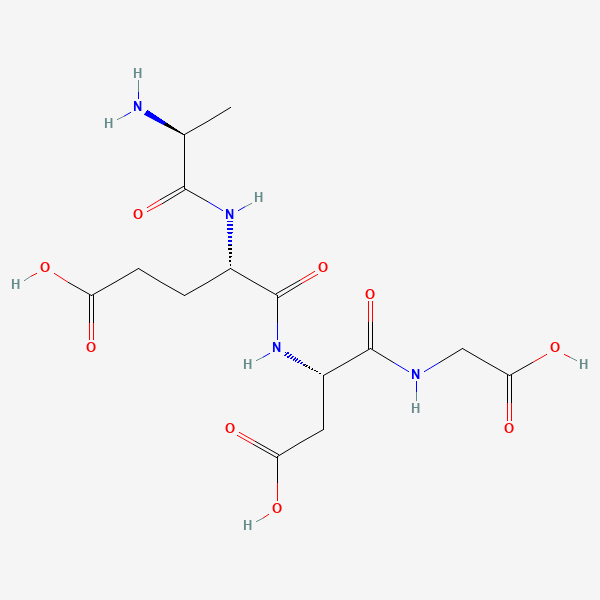
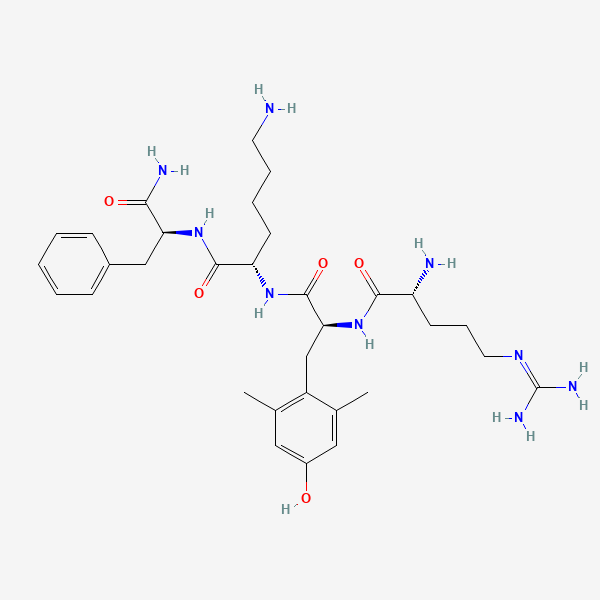
Epitalon vs SS-31 (elamipretide): the two molecules
The 2D chemical structures, straight from PubChem — a quick way to see how similar (or not) the two actually are.
Which one fits which goal?
There's no universal winner here — the honest answer depends on what you're after. These picks are framed by goal, and each says why.
Cardiolipin or mitochondrial-function research
Leans toward SS-31 (elamipretide)
SS-31 directly binds mitochondrial cardiolipin and has human clinical data, although results outside Barth syndrome are mixed.
Telomere or circadian-mechanism research
Leans toward Epitalon
Epitalon's research question is telomerase, telomere length, and pineal signaling, while SS-31 does not target those pathways.
Strongest human and regulatory evidence
Leans toward SS-31 (elamipretide)
Elamipretide has randomized human trials and a narrow FDA accelerated approval; Epitalon has no controlled human trial of the synthetic peptide.
References
- 1.FDA - accelerated approval of Forzinity for Barth syndrome
- 2.Forzinity (elamipretide) - FDA prescribing information
- 3.Karaa et al. 2023 - MMPOWER-3 randomized Phase 3 trial
- 4.Al-Dulaimi et al. 2025 - Epitalon and telomere length in human cell lines
- 5.Anisimov et al. 2003 - Epitalon lifespan study in mice