Humanin vs MOTS-c
Humanin vs MOTS-c compares two mitochondrial peptides: Humanin for cell protection and MOTS-c for metabolic and exercise research, with evidence graded.
Humanin vs MOTS-c is mainly cytoprotection versus metabolic signaling: Humanin is studied as a cell-survival and neuroprotective signal, while MOTS-c is studied for insulin sensitivity, energy sensing, and exercise biology. Both remain animal-only for administered efficacy, and no trial has compared them directly, so the useful answer depends on the research goal.
What is the core difference between Humanin and MOTS-c?
Humanin and MOTS-c are both signals encoded within mitochondrial DNA, but researchers follow them down different paths. Humanin is primarily a survival signal: the cell and animal work asks whether stressed neurons, heart tissue, and other cells resist programmed death. MOTS-c is primarily a metabolic signal: its research asks how cells sense low energy, handle glucose, respond to metabolic stress, and adapt to exercise.
That split makes the mots-c vs humanin question more useful than a generic “which is better?” matchup. Humanin is the more natural candidate for a laboratory question about cytoprotection or neuroprotection. MOTS-c is the more natural candidate for a question about insulin sensitivity or exercise biology. Those are research alignments, not proof that either peptide improves those outcomes in people.
How do their origins and mechanisms differ?
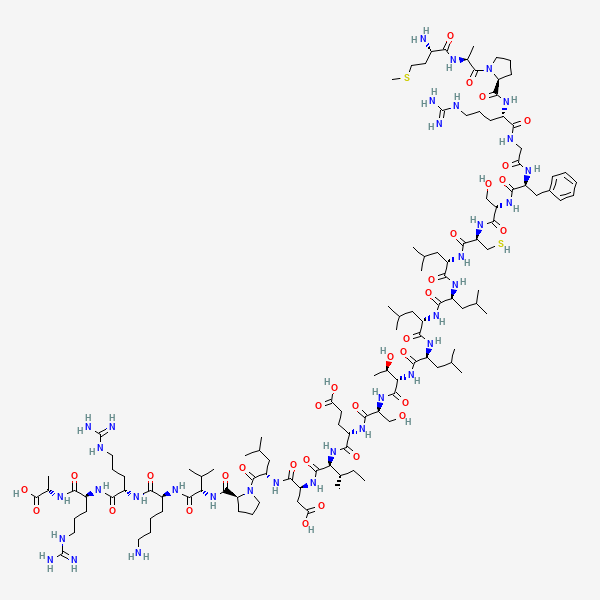
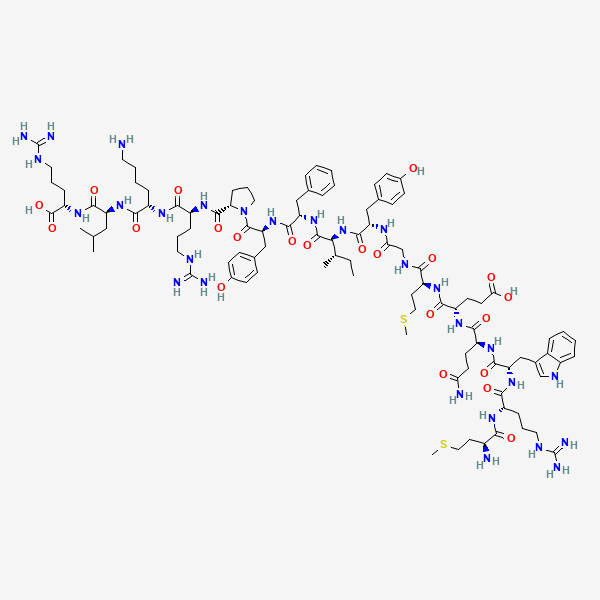
Humanin is a 24-amino-acid peptide encoded in the mitochondrial 16S rRNA region, while MOTS-c is a 16-amino-acid peptide encoded within the mitochondrial 12S rRNA gene. Both belong to the group called mitochondrial derived peptides, more commonly hyphenated as mitochondrial-derived peptides (MDPs): short messages produced from the small genome inside mitochondria rather than from nuclear DNA.
Humanin acts like a cellular “hold the demolition” message in preclinical research. Humanin can interfere with pro-death proteins such as Bax and activate protective signaling associated with cell survival. MOTS-c acts more like a low-fuel alert. MOTS-c is linked to AMPK, an energy sensor that shifts cellular fuel use, and it can enter the nucleus during metabolic stress to influence stress-response genes. The precise therapeutic mechanism of either peptide in humans remains unestablished.
What does the evidence actually show?
Humanin and MOTS-c both earn an animal-only evidence tier for the benefits of administering the peptide. Humanin has cell and rodent findings across amyloid-beta toxicity, insulin sensitivity, and ischemia-reperfusion injury. MOTS-c has cell and mouse findings across insulin sensitivity, diet-induced metabolic dysfunction, and running capacity. These separate programs are promising enough to justify human testing, but they are not a direct contest.
No trial has compared Humanin with MOTS-c directly. Human studies often measure the peptides people make naturally, which can show an association with age, exercise, or disease but cannot show that an injection causes a benefit. Humanin has not been administered to people in a treatment study. MOTS-c entered an efficacy trial in adults with prediabetes in 2026, but an ongoing trial is a question being tested, not a positive result. The shared badge therefore stays animal-only.
Should a research project choose humanin or mots-c?
Humanin fits projects centered on cell survival, neuronal stress, or protection from interrupted and restored blood flow; MOTS-c fits projects centered on AMPK, glucose handling, metabolic stress, or exercise adaptation. The frontmatter picks below follow those lanes and deliberately avoid a universal winner. A peptide can be better aligned with one hypothesis without being better medicine overall.
For neuroprotective signaling, Humanin has the closer founding literature because researchers discovered and developed it around neuronal survival. For ischemia-reperfusion models, Humanin again has the more direct research focus. For metabolic signaling, MOTS-c has the cleaner mechanistic match through AMPK and the relevant early human trial. For exercise-mimetic research, MOTS-c is the clearer pick because mouse studies examine running capacity and human observational work connects the body’s own MOTS-c with exercise.
Is either peptide proven for anti-aging?
Humanin and MOTS-c are not proven anti-aging treatments. Both appear in longevity research because mitochondrial stress signaling, insulin sensitivity, and cellular resilience change with age, and observational studies can measure the body’s own peptide levels. None of that demonstrates a longer human lifespan, a longer healthspan, or reversal of aging after taking either compound.
The useful longevity angle is narrower. Humanin gives researchers a model for how mitochondria may send a survival signal during cellular stress. MOTS-c gives researchers a model for how mitochondria may coordinate energy use and stress responses. The longevity peptide hub places both in that larger family without turning a biological hypothesis into a treatment claim.
How do dosing, safety, and legal status compare?
Humanin and MOTS-c have no validated human dose and no established long-term safety profile for self-administration. Humanin lacks any administered human study. MOTS-c has an early trial underway, but no completed efficacy or safety result supports a clinical protocol. Animal doses cannot simply be copied into people, and community regimens remain anecdotal rather than validated dosing evidence.
Both compounds are research-use-only in the United States as of 2026. Neither is FDA-approved or a legal dietary supplement, and research-market vials do not come with an approved manufacturing or dosing label. The practical risks include uncertain purity, dose accuracy, and sterility, on top of biological unknowns. If a researcher already has a sourced amount and needs only concentration arithmetic, the reconstitution calculator converts vial mass and water volume into syringe units; it does not choose a dose.
Where does this comparison fit among mitochondrial peptides?
Humanin vs MOTS-c covers two peptides made from mitochondrial genes; SS-31 belongs in the same research conversation but works differently by targeting the mitochondrial inner membrane rather than being encoded as an MDP. That distinction matters because “mitochondrial peptide” describes a neighborhood, not one interchangeable mechanism.
Readers focused on metabolism can compare MOTS-c vs SS-31 next. Humanin remains the cytoprotective member of this pairing, while MOTS-c remains the metabolic and exercise-oriented member. The clean conclusion is by research area: Humanin for survival signaling, MOTS-c for energy signaling, and neither as a universal anti-aging winner.
Humanin vs MOTS-c, point by point
Every dimension side by side — the honest differences, not a scoreboard.
| Dimension | Humanin | MOTS-c |
|---|---|---|
| Origin and size | A 24-amino-acid peptide encoded in the mitochondrial 16S rRNA (MT-RNR2) region. | A 16-amino-acid peptide encoded within the mitochondrial 12S rRNA gene. |
| Proposed mechanism | Acts as a cytoprotective survival signal in cells and animals, including blocking pro-death signaling and activating protective pathways. | Activates AMPK energy-sensing pathways in cells and mice and can move into the nucleus during metabolic stress. |
| Main research focus | Cell survival, neuroprotection, insulin sensitivity and protection from ischemia-reperfusion injury. | Insulin sensitivity, metabolic health, exercise capacity and stress-response biology. |
| Human evidence | Human observational studies measure the body's own humanin; no study has administered humanin as a treatment. | Human studies mostly measure the body's own MOTS-c; an efficacy trial in prediabetes began recruiting in 2026, with no completed result yet. |
| Evidence tier for administered benefits | Animal-only, with cell studies and human biomarker observations. | Animal-only, with cell studies, human biomarker observations and an early human trial underway. |
| Human dosing evidence | No validated human dose; the profile contains no dose from an administered human study. | No validated human dose; the ongoing trial has not reported an efficacy or safety result. |
| US regulatory status (2026) | Research-use-only; not FDA-approved and not a dietary supplement. | Research-use-only; not FDA-approved and not a dietary supplement. |
| Human safety record | No human safety data from administered humanin; long-term effects are unknown. | Human safety data on injected MOTS-c are essentially nonexistent; long-term effects are unknown. |
- Origin and size: Both are endogenous mitochondrial-derived peptides; research-market versions are synthetic.
- Proposed mechanism: Neither mechanism has been established as a therapeutic effect in humans.
- Human evidence: No trial has compared humanin and MOTS-c directly; this comparison weighs their separate evidence.
Humanin vs MOTS-c: the two molecules
The 2D chemical structures, straight from PubChem — a quick way to see how similar (or not) the two actually are.
Which one fits which goal?
There's no universal winner here — the honest answer depends on what you're after. These picks are framed by goal, and each says why.
Studying cell survival or neuroprotective signaling
Leans toward Humanin
Humanin's founding research and proposed mechanisms center on blocking programmed cell death and protecting stressed neurons.
Studying ischemia-reperfusion or broad cytoprotection
Leans toward Humanin
Humanin has the more directly aligned animal research on survival signaling and protection during heart and blood-vessel injury.
Studying insulin sensitivity or metabolic stress
Leans toward MOTS-c
MOTS-c's AMPK-centered animal work and current prediabetes trial make metabolism its clearest research lane.
Studying exercise adaptation or exercise-mimetic biology
Leans toward MOTS-c
MOTS-c has the more relevant mouse evidence for running capacity and the clearer connection to exercise-responsive signaling.