Ipamorelin vs Modified GRF 1-29
Ipamorelin vs mod grf 1-29 compares two complementary GH-release signals, their thin human evidence, risks, and 2026 compounding status.
Ipamorelin vs mod grf 1-29 is a comparison of two mechanisms, not two proven results: neither has a published human efficacy RCT for the recovery, physique, sleep, or anti-aging outcomes people seek. Ipamorelin activates the ghrelin receptor; Mod GRF 1-29 activates the GHRH receptor. Neither is a universal winner.
What is the core difference?
Ipamorelin supplies a ghrelin-like signal, while Mod GRF 1-29 supplies a growth-hormone-releasing hormone signal. Both routes meet at the pituitary and can promote growth hormone (GH) release, but they approach the gland through different receptors. Think of two fingers pressing separate doorbells wired to the same room. That is why mod grf vs ipamorelin is often the wrong framing.
Ipamorelin is a selective growth-hormone secretagogue, sometimes grouped under the broad GHRP label. A controlled study in healthy men measured ipamorelin concentrations and a single, short-lived GH-release episode. That study supports one narrow statement: ipamorelin can raise GH in people. It did not test added muscle, reduced fat, faster recovery, better sleep, or slower aging.
Mod GRF 1-29 is the short-acting peptide commonly called CJC-1295 without DAC. Mod GRF 1-29 copies the GHRH side of normal GH signaling, with amino-acid changes intended to resist rapid breakdown. The mechanism is coherent, but the exact compound has no published human trial measuring its GH pulse or any downstream benefit. For a plain-English map of these two families, see GHRH vs GHRP.
Which one has better human evidence?
Ipamorelin has the better exact-compound human evidence, but only for causing a GH pulse. Mod GRF 1-29 remains a mechanistic hypothesis for that first step as well as for every outcome beyond it. The shared badge is therefore mechanistic-hypothesis, none in humans for the headline outcomes readers are trying to improve.
This distinction keeps a small pharmacology study in its lane. Ipamorelin’s GH measurement does not become a muscle or recovery trial by association. Mod GRF 1-29 cannot borrow the human results of GHRH itself, sermorelin, or long-acting CJC-1295 with DAC and call them exact-compound proof. Related molecules explain why researchers are interested; they do not fill an empty results column.
No trial has compared ipamorelin and Mod GRF 1-29 directly. No human efficacy trial has tested the exact pair for body composition, recovery, sleep, or anti-aging either. This page weighs separate evidence and class-level biology, not a comparative result that does not exist.
Should you stack Mod GRF and ipamorelin?
Should you stack Mod GRF and ipamorelin is an evidence question before it is a protocol question. Human experiments with older GHRH and GHRP compounds found a larger GH response when the two classes were given together, supporting the two-receptor idea. That does not establish the safety, dose, or efficacy of the exact Mod GRF 1-29 and ipamorelin stack.
The classic GHRH plus GHRP pairing is therefore biologically grounded and clinically unproven for the outcomes that drive online interest. Stacking also adds two unapproved compounds, two sets of product-quality uncertainties, and a larger unknown around repeated GH and insulin-like growth factor 1 signaling. Mechanisms can complement each other without producing a proven real-world benefit. Biology is allowed to be promising and unfinished at the same time.
The CJC-1295 and ipamorelin stack separates the pairing rationale from what has actually been studied. The phrase cjc-1295 no dac vs ipamorelin usually points to this same complement-versus-competition confusion: no-DAC CJC naming commonly refers to Mod GRF 1-29, the GHRH side, not a substitute for ipamorelin’s ghrelin-receptor side.
Does either one win for muscle, fat loss, recovery, or sleep?
Neither compound wins on human efficacy because neither has demonstrated those outcomes in a human trial. Ipamorelin is the by-goal pick when direct evidence of an exact-compound GH pulse matters most. Mod GRF 1-29 is the by-goal pick only when the goal is specifically the GHRH-receptor half of the mechanistic pairing.
That is a narrower answer than most comparison pages give, and more useful than a made-up scorecard. A measured hormone pulse is a biomarker, meaning a signal in blood; it is not automatically a change someone can feel or see. Until trials measure body composition, recovery, or sleep, claims about those outcomes remain hypotheses or anecdotes. The structured picks above answer different goals without pretending one molecule is best at everything.
What is the 2026 FDA and sport status?
Neither peptide is FDA-approved, and neither has an approved dose or indication. Ipamorelin acetate was removed from 503A Category 2 in September 2024 because its nomination was withdrawn, but FDA’s current page still lists it in active 503B Category 2. FDA places CJC-1295 in the withdrawn-nomination table rather than active 503B Category 2. Removal is paperwork, not approval.
Mod GRF 1-29 adds a naming problem: sellers often use “CJC-1295 no DAC,” while FDA has documented inconsistent CJC-1295 terminology. A category entry for the CJC umbrella should not be read as a precise green light for every vial bearing that nickname. For tested athletes, the answer is cleaner: WADA’s 2026 S2 class prohibits growth-hormone secretagogues such as ipamorelin and GHRH analogs such as CJC-1295 at all times.
Ipamorelin vs mod grf 1-29 ends where the evidence ends. The compounds make more sense as complementary research mechanisms than as rivals, but the exact stack still lacks a human efficacy result. The most defensible pick depends on which receptor signal is missing from the question, not on a universal winner.
Ipamorelin vs Modified GRF 1-29, point by point
Every dimension side by side — the honest differences, not a scoreboard.
| Dimension | Ipamorelin | Modified GRF 1-29 |
|---|---|---|
| What it is | A five-amino-acid growth-hormone secretagogue that activates the ghrelin receptor (GHSR-1a). | A 29-amino-acid growth-hormone-releasing hormone (GHRH) analog that activates the GHRH receptor. |
| Part of the GH signal | Provides the ghrelin-receptor signal that can trigger a short GH pulse. | Provides the GHRH-receptor signal that tells pituitary cells to make and release GH. |
| Exact-compound human evidence | Controlled human pharmacology confirms a short GH pulse after intravenous ipamorelin; no human trial proves muscle, fat-loss, recovery, sleep, or anti-aging benefits. | No published human trial has measured GH release or downstream efficacy for Modified GRF 1-29 itself. |
| Evidence badge for headline use | Mechanistic hypothesis; none in humans for body composition, recovery, sleep, or anti-aging outcomes. | Mechanistic hypothesis; none in humans for GH release or downstream outcomes with this exact peptide. |
| Validated dose for the searched use | None. Human pharmacology used intravenous research dosing, not a validated subcutaneous recovery or physique protocol. | None. Online subcutaneous protocols are community practice, not doses established by an exact-compound human efficacy trial. |
| US compounding status (2026) | Not FDA-approved. Ipamorelin acetate left 503A Category 2 in September 2024 after its nomination was withdrawn, but remains in active 503B Category 2. | Not FDA-approved. FDA's CJC-1295 umbrella entry left 503A Category 2 after nomination withdrawal and appears in the current withdrawn table, not active 503B Category 2. |
| Banned in tested sport | Yes. WADA class S2 covers ipamorelin as a growth-hormone secretagogue. | Yes. WADA class S2 covers GHRH analogs, including CJC-1295. |
- Part of the GH signal: They are complementary pathways, not two versions of the same compound. Human studies with older GHRH and GHRP compounds support class-level synergy, but the exact ipamorelin plus Mod GRF 1-29 combination has no human efficacy trial.
- US compounding status (2026): Removal after a withdrawn nomination is not FDA approval or blanket permission to compound. FDA also warns that CJC-1295 naming is inconsistent, so a broad CJC entry should not be mistaken for a clean ruling on every product sold as Mod GRF 1-29.
Ipamorelin vs Modified GRF 1-29: the two molecules
The 2D chemical structures, straight from PubChem — a quick way to see how similar (or not) the two actually are.
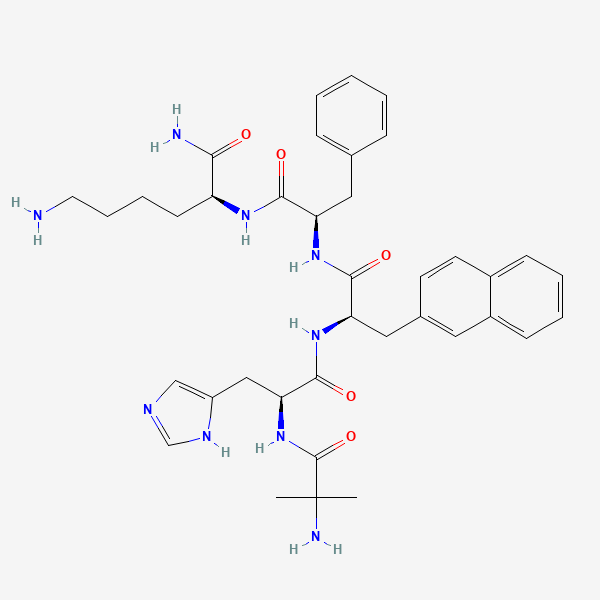
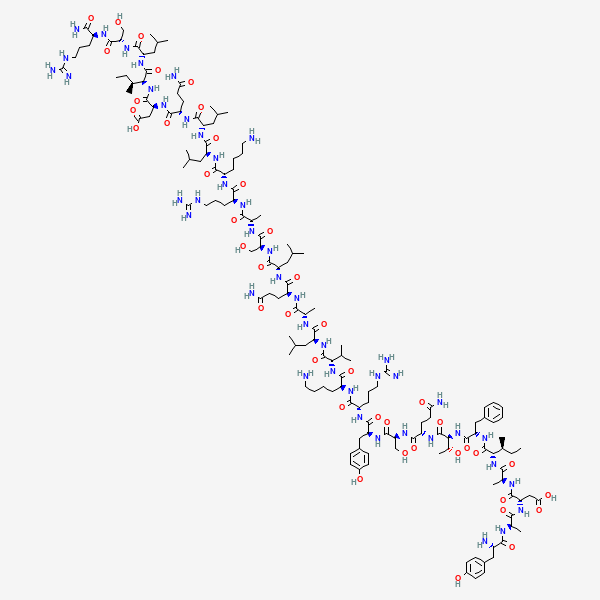
Which one fits which goal?
There's no universal winner here — the honest answer depends on what you're after. These picks are framed by goal, and each says why.
Choosing the exact compound with direct human GH-release measurements
Leans toward Ipamorelin
Ipamorelin has controlled human pharmacology showing a brief GH pulse. That does not prove the recovery or body-composition payoff, but it is more direct evidence than Mod GRF 1-29 has.
Adding the GHRH-receptor side to an existing ghrelin-receptor strategy
Leans toward Modified GRF 1-29
Mod GRF 1-29 supplies the GHRH-analog half of the two-pathway hypothesis. The pick is mechanistic, not a claim that the exact pairing improves human outcomes.
Adding the ghrelin-receptor side to an existing GHRH-analog strategy
Leans toward Ipamorelin
Ipamorelin supplies the complementary GHSR-1a signal and has human evidence for producing a short GH pulse, although the combined stack remains untested for efficacy.
References
- 1.Gobburu et al., 1999 - Human pharmacokinetic and GH-response modeling of ipamorelin
- 2.Bowers et al., 1990 - Human GHRH plus GHRP class-level GH-release synergy
- 3.Modified GRF 1-29 - registered clinical studies search
- 4.FDA - Category 2 bulk substances and withdrawn nominations for compounding
- 5.WADA - 2026 Prohibited List