Noopept vs Selank
Noopept vs selank compared for focus, memory, anxiety, route, evidence and safety—with honest by-goal picks and no universal winner.
The noopept vs selank choice depends on the goal: Noopept is the focus-and-memory option, while Selank is the calm-and-anxiety option. No trial has compared them directly, so this weighs separate, mostly Russian evidence—not a head-to-head result. Neither is FDA-approved in the United States.
What is the main difference between Noopept and Selank?
Noopept and Selank sit in the same nootropic category, but they are different tools rather than close substitutes. Noopept is an oral, dipeptide-derived small molecule built for cognitive symptoms. Selank is a seven-amino-acid peptide normally used intranasally and studied mainly for anxiety. One aims at sharper cognition; the other aims at quieter background noise.
Noopept is often described as a peptide because its chemistry grew from a two-amino-acid structure. That shorthand is technically wrong. Noopept is a modified small molecule, sometimes discussed beside racetams because of its nootropic purpose, while Selank is an actual peptide based on tuftsin. The route makes the distinction tangible: Noopept is swallowed; Selank is sprayed or dropped into the nose.
Which has better evidence: Noopept or Selank?
Selank has the stronger headline study design for anxiety, while Noopept has controlled human evidence for cognitive symptoms. Neither evidence base settles what healthy biohackers usually want to know. Both literatures are small, concentrated largely in Russian research, and short on broad independent replication. The evidence grades therefore need an outcome attached to them, not just a shiny badge.
Noopept reached the Human-controlled tier through a comparative study in patients with mild cognitive impairment caused by vascular disease or head injury. Noopept performed roughly comparably to piracetam for memory and attention, but the study had no placebo arm. That finding does not prove an advantage for healthy adults seeking more focus.
Selank reaches the Human-RCT tier for anxiety because small randomized studies reported benefit in people with generalized anxiety. Selank’s evidence for everyday cognition is much thinner: the focus case leans on animal findings and proposed effects on signaling systems such as BDNF, serotonin and GABA. For both compounds, “studied in humans” does not mean “shown to enhance healthy people.”
Noopept and Selank also answer different clinical questions, which makes a simple tier-to-tier score misleading. A controlled cognition study cannot tell us which compound better treats anxiety, and a randomized anxiety study cannot establish better memory enhancement. The shared Human-controlled badge on this comparison follows the weaker headline tier, while the rows preserve the outcome-specific difference. A combined PubMed search does not supply a direct comparative trial, so any claim that one broadly outperforms the other would outrun the record.
Should you choose Noopept or Selank by goal?
Noopept is the evidence-aligned pick for memory or attention symptoms; Selank is the evidence-aligned pick for anxiety and calm. That is not a universal winner. The cleaner question is whether the main obstacle is weak focus itself or anxiety that keeps hijacking focus. The structured picks below make that split explicit.
Noopept has the closer match when the goal is cognitive performance, especially if an oral format matters. The honest boundary is that its controlled evidence comes from impaired patients, not healthy students, programmers or athletes. Irritability, headache, disturbed sleep and increased blood pressure in people with hypertension are the profile’s main cautions.
Selank has the closer match when the goal is lowering anxiety without aiming for sedation. Small trials and Russian clinical use support that direction, while reported adverse effects are mostly mild nasal irritation, unpleasant taste, occasional fatigue or lightheadedness. Long-term safety data and pregnancy data remain thin for both compounds.
Does a Noopept and Selank stack make sense?
A noopept and selank stack has a tidy theory—pair focus with calm—but no controlled human trial has tested the combination. Community discussion is anecdote, not evidence of extra benefit or acceptable long-term safety. The different routes also mean this is not a question of mixing both compounds in one vial: Noopept is oral and Selank is intranasal.
The rationale is easy to see. Noopept may appeal to someone chasing memory or attention, while Selank may appeal when anxiety is the thing scattering attention. The missing piece is the important one: nobody has shown that using both beats choosing the compound that matches the primary goal. Combination use also makes side effects harder to attribute. If sleep worsens or irritability appears, two moving parts are less informative than one.
Are Noopept and Selank FDA-approved or legal in 2026?
Noopept and Selank are not FDA-approved drugs or lawful dietary-supplement ingredients in the United States as of 2026. Both appear in the US research market and both have pharmaceutical status in Russia, but foreign approval does not carry across borders. The dated regulatory status guide explains why “available online” and “approved medicine” are not synonyms.
For selank vs noopept, regulatory status does not break the tie: both are research-use-only in the US, and product quality is not assured like an FDA-approved medicine. The practical decision remains goal-specific, with the evidence limits kept in view. This comparison is educational information, not medical advice.
Noopept vs Selank, point by point
Every dimension side by side — the honest differences, not a scoreboard.
| Dimension | Noopept | Selank |
|---|---|---|
| What it is | A synthetic dipeptide-derived small molecule, often grouped with racetam-adjacent nootropics; technically not a true peptide. | A synthetic seven-amino-acid peptide based on tuftsin, an immune-signaling peptide. |
| Primary aim | Focus, memory and attention, with controlled human evidence limited to patients with mild cognitive impairment. | Anxiety relief and calm without sedation, supported by small randomized human studies. |
| Typical route | Oral; human studies reported 10 mg twice daily, sometimes up to 30 mg daily. | Intranasal; the Russian pharmaceutical product is a 0.15% nasal solution, while community reports commonly describe 250–300 mcg per spray. |
| Headline evidence | Human-controlled: a comparative study against piracetam in people with vascular or post-traumatic mild cognitive impairment, without a placebo arm. | Human-RCT: small randomized anxiety trials, mostly from Russian research groups and not widely replicated by Western teams. |
| Evidence for healthy cognitive enhancement | Mechanistic hypothesis: no controlled human trial has shown that Noopept sharpens an already-healthy brain. | Mechanistic hypothesis: Selank's focus claims rely mainly on animal biology rather than a controlled trial in healthy people. |
| US regulatory status (2026) | Research-use-only; not FDA-approved and not a lawful dietary-supplement ingredient. | Research-use-only; not FDA-approved and not a lawful dietary-supplement ingredient. |
| Commonly discussed stack | Sometimes paired with Selank to combine a focus-oriented oral nootropic with a calming nasal peptide. | Sometimes paired with Noopept when anxiety is thought to interfere with focus. |
- Typical route: These are reported study or community-use figures, not a personal protocol.
- Headline evidence: No trial has compared Noopept and Selank directly; this page weighs their separate evidence.
- US regulatory status (2026): Both are medicines in Russia, but that status does not transfer to the United States.
- Commonly discussed stack: The Noopept and Selank stack is anecdotal: no controlled human trial has tested the combination, its safety or whether it outperforms either compound alone.
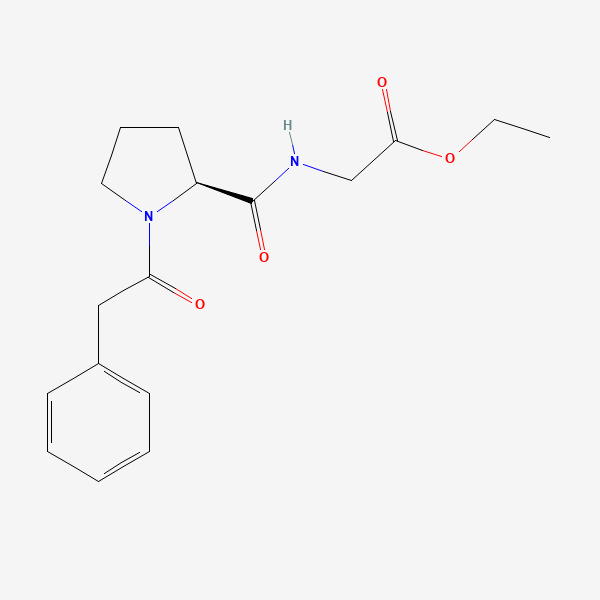
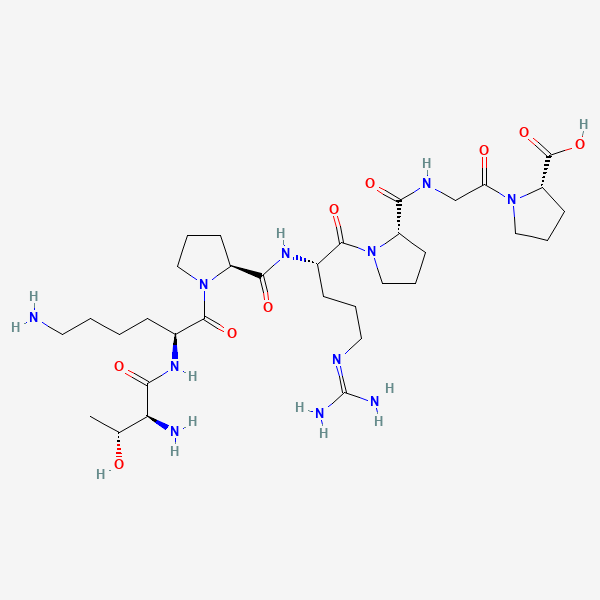
Noopept vs Selank: the two molecules
The 2D chemical structures, straight from PubChem — a quick way to see how similar (or not) the two actually are.
Which one fits which goal?
There's no universal winner here — the honest answer depends on what you're after. These picks are framed by goal, and each says why.
Focus or memory support
Leans toward Noopept
Noopept is the more direct fit because its controlled patient evidence and intended use center on memory and attention, though healthy-person enhancement remains unproven.
Anxiety relief or calm without a sedative aim
Leans toward Selank
Selank is the closer fit because anxiety is its headline use and the outcome supported by its small randomized human trials.
Avoiding intranasal use
Leans toward Noopept
Noopept is taken orally, while Selank is generally delivered as nasal drops or spray.
Choosing the stronger headline study design
Leans toward Selank
Selank reaches the Human-RCT tier for anxiety; Noopept's headline evidence is Human-controlled and lacks a placebo arm.