PT-141 vs Setmelanotide
PT-141 vs setmelanotide compares two FDA-approved melanocortin drugs: one for low sexual desire, the other for genetic or hypothalamic obesity.
PT-141 vs Setmelanotide is not a close substitute decision: both are FDA-approved melanocortin agonists that engage MC4R, but PT-141 targets sexual desire while setmelanotide targets defined forms of obesity. No trial has compared them directly; this comparison weighs separate human randomized trials, current labels, dosing, and risks.
Why can the same receptor family produce two opposite jobs?
PT-141 and setmelanotide reach into the same melanocortin signaling family, but receptor preference, dosing pattern, and the patients studied steer them toward different outcomes. MC4R helps regulate both appetite and sexual response. That does not make every MC4R agonist interchangeable, any more than two keys touching the same lock guarantee the same trip.
PT-141, also called bremelanotide, activates several melanocortin receptor subtypes. The current Vyleesi label calls it nonselective and says MC1R and MC4R binding are most relevant at therapeutic doses. Its approved clinical endpoint is sexual desire and the distress caused by low desire, not body weight.
Setmelanotide is more MC4R-focused: its label reports 20-fold less activity at MC3R and MC1R. Setmelanotide presses the downstream hunger-control switch when disease has disrupted the signal feeding into it. The result is a useful MC4R agonist comparison only when the diagnosis stays attached to the drug.
For the family map, see the melanocortin peptide hub and our plain-English guide to what a melanocortin agonist is.
What does the human evidence actually show?
PT-141 and setmelanotide both have Human RCT evidence, but for different outcomes and different populations. The bremelanotide vs setmelanotide evidence cannot support a direct efficacy ranking because no head-to-head trial exists. Separate placebo-controlled programs show that each drug can do its assigned job; they do not show which molecule is “stronger” in general.
Vyleesi was tested in two 24-week Phase 3 trials involving 1,267 randomized premenopausal women with acquired, generalized HSDD. Bremelanotide improved desire scores and reduced distress versus placebo. The effect was modest, and the label reports no significant treatment difference in satisfying sexual events, a secondary endpoint (Vyleesi prescribing information).
Imcivree has randomized evidence across rare genetic and syndromic obesity, plus the newer acquired hypothalamic obesity indication. In that 142-patient randomized trial, the label reports a -18.40% placebo-adjusted change in BMI after 52 weeks and a significant hunger reduction. FDA approved the expanded indication on March 19, 2026 for patients aged 4 years and older (FDA approval letter).
How do Vyleesi and Imcivree differ in use?
Vyleesi is an as-needed 1.75 mg autoinjector for one narrow HSDD population; Imcivree is a daily, titrated medicine for defined obesity diagnoses. A vyleesi vs imcivree comparison therefore starts with diagnosis and schedule, not a dose-number contest. Milligrams across different molecules and indications are not exchange rates.
The Vyleesi label says to inject 1.75 mg under the skin at least 45 minutes before anticipated sexual activity, no more than once in 24 hours, and no more than eight times per month. The approved product remains marketed by Cosette Pharmaceuticals as of July 2026.
Imcivree is injected under the skin once daily. Starting doses vary by age and indication, followed by titration; the usual maintenance dose for adults and children aged 6 years and older is 3 mg daily when tolerated. Acquired hypothalamic obesity starts at 0.5 mg daily. Those are label facts, not a self-directed protocol (Imcivree prescribing information).
Do they share side effects?
PT-141 and setmelanotide overlap on nausea, injection-site reactions, headache, pigmentation, and occasional sexual-arousal effects, yet their safety priorities differ. Vyleesi raises blood pressure temporarily and is contraindicated in uncontrolled hypertension or known cardiovascular disease. Imcivree requires attention to skin changes, mood, hypersensitivity, and diagnosis-specific endocrine risks.
Vyleesi caused nausea in 40% of treated patients in its Phase 3 trials. Its label also reports focal hyperpigmentation, sometimes involving the face or gums, because bremelanotide activates MC1R as well as MC4R.
Imcivree makes the melanocortin family connection even harder to miss: generalized or focal hyperpigmentation occurred in most treated patients across trials, and the label calls for skin examinations. The same pigment biology pursued with Melanotan II becomes an adverse effect in an obesity medicine. Our Melanotan II vs PT-141 comparison shows how one receptor family keeps changing the job description.
Which drug fits which goal?
PT-141 fits the approved goal of treating acquired, generalized HSDD in premenopausal women; setmelanotide fits specified genetic, syndromic, or acquired hypothalamic obesity. Neither wins outside those lanes. The by-goal picks are deliberately narrow because both drugs are prescriptions built around diagnoses, not general-purpose “libido” and “fat-loss” peptides.
Choose the PT-141 evidence lane for HSDD, where the outcome is desire and distress. Do not stretch that approval to men, postmenopausal women, sexual performance, or weight loss.
Choose the setmelanotide evidence lane for POMC, PCSK1, or LEPR deficiency obesity, Bardet-Biedl syndrome, or acquired hypothalamic obesity. Setmelanotide is not approved for ordinary polygenic obesity, and its label says it is not expected to work for unrelated forms.
The list of melanocortin drugs approved by FDA is short, which makes this pairing look closer than it is. PT-141 vs setmelanotide is best understood as shared receptor biology split into two precision jobs: desire on one side, pathological hunger and weight regulation on the other.
PT-141 vs Setmelanotide, point by point
Every dimension side by side — the honest differences, not a scoreboard.
| Dimension | PT-141 | Setmelanotide |
|---|---|---|
| Approved job | Treats acquired, generalized hypoactive sexual desire disorder (HSDD) in premenopausal women. | Reduces excess body weight in acquired hypothalamic obesity, Bardet-Biedl syndrome, and obesity due to POMC, PCSK1, or LEPR deficiency. |
| Receptor pharmacology | A nonselective melanocortin agonist; the FDA label lists MC1R and MC4R as the most relevant targets at therapeutic doses. | An MC4R agonist with 20-fold less activity at MC3R and MC1R. |
| Human evidence | Two Phase 3 randomized, placebo-controlled trials found improved sexual desire and reduced distress in premenopausal women with HSDD. | Randomized trials support its approved obesity indications; in acquired hypothalamic obesity, the 52-week placebo-adjusted BMI change was -18.40%. |
| Approved dosing format | Vyleesi is a 1.75 mg subcutaneous autoinjector used as needed at least 45 minutes before anticipated sexual activity, with label frequency limits. | Imcivree is a once-daily subcutaneous injection titrated by age, indication, tolerability, and kidney function. |
| Signature risks | Nausea, flushing, injection-site reactions, headache, temporary blood-pressure increases, and focal hyperpigmentation. | Hyperpigmentation and mole changes, injection-site reactions, gastrointestinal effects, headache, sexual-arousal changes, and depression warnings. |
| US regulatory status (2026) | FDA-approved since 2019 as Vyleesi; the current DailyMed label identifies Cosette Pharmaceuticals as marketer. | FDA-approved as Imcivree; the indication expanded on March 19, 2026 to acquired hypothalamic obesity in patients aged 4 years and older. |
- Approved job: These are narrow prescription indications, not general libido enhancement or general weight loss.
- Human evidence: Both earn a Human RCT badge, but no trial has compared PT-141 with setmelanotide directly.
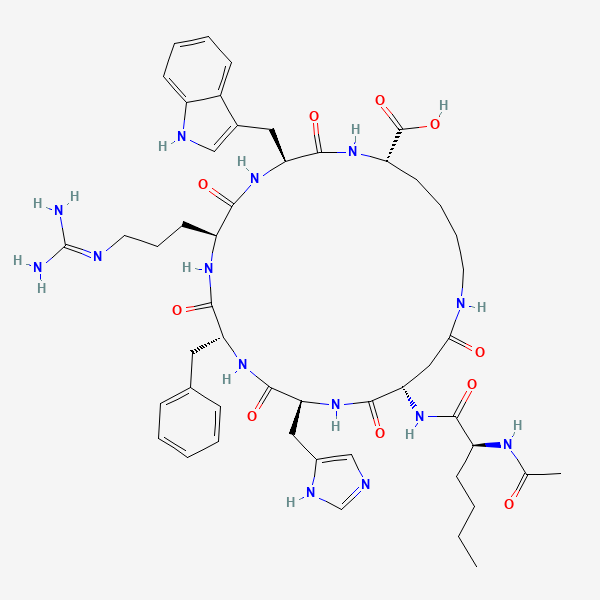
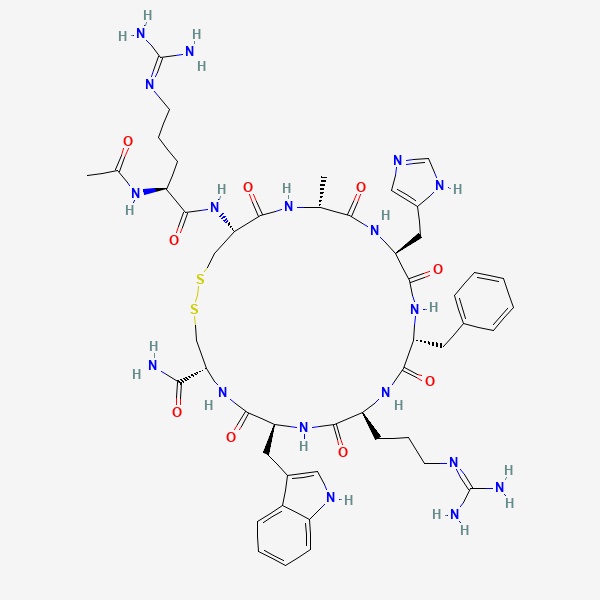
PT-141 vs Setmelanotide: the two molecules
The 2D chemical structures, straight from PubChem — a quick way to see how similar (or not) the two actually are.
Which one fits which goal?
There's no universal winner here — the honest answer depends on what you're after. These picks are framed by goal, and each says why.
Treating acquired, generalized HSDD in a premenopausal woman
Leans toward PT-141
PT-141 is the drug studied and FDA-approved for this specific sexual-desire disorder; setmelanotide is not an HSDD treatment.
Treating POMC, PCSK1, or LEPR deficiency obesity or Bardet-Biedl syndrome
Leans toward Setmelanotide
Setmelanotide directly targets the underactive MC4R pathway and carries FDA approvals for these defined rare-disease populations.
Treating acquired hypothalamic obesity
Leans toward Setmelanotide
The FDA added this indication in March 2026 after a randomized trial found a -18.40% placebo-adjusted change in BMI at 52 weeks.