Semax vs Selank
Semax vs Selank compares two Russian intranasal peptides: Selank for anxiety and calm, Semax for focus and cognition, with honest evidence grades.
semax vs selank comes down to the job: Selank is the calmer, anxiety-focused option, while Semax is the focus-and-cognition option. No trial has compared them directly; this weighs their separate evidence. Selank has small human anxiety trials, while Semax’s healthy-adult focus case rests mainly on animal work and Russian clinical experience.
What is the main difference between Selank and Semax?
Selank and Semax point in different directions despite sharing the same Russian nootropic-peptide neighborhood. Selank was designed from tuftsin and is studied mainly as a non-sedating anxiolytic, meaning an anxiety-reducing compound. Semax was designed from a fragment of adrenocorticotropic hormone (ACTH) and is studied more for attention, learning and neurological recovery. One leans toward quieting the noise; the other leans toward turning up the signal.
That difference matters more than asking which peptide is “stronger.” Someone comparing selank or semax for presentation nerves is asking a different question from someone looking for help through a long study session. Both belong on the nootropic peptides hub, but they are not interchangeable versions of the same compound.
How do Selank and Semax work?
Selank may preserve more of the body’s enkephalins, opioid-like signaling peptides involved in stress regulation, while also influencing GABA-linked, serotonin and dopamine signaling. Semax’s best-known mechanism is different: rat studies report higher brain-derived neurotrophic factor (BDNF) and TrkB-receptor signaling, especially in brain regions tied to memory. Neither exact mechanism has been mapped cleanly in humans.
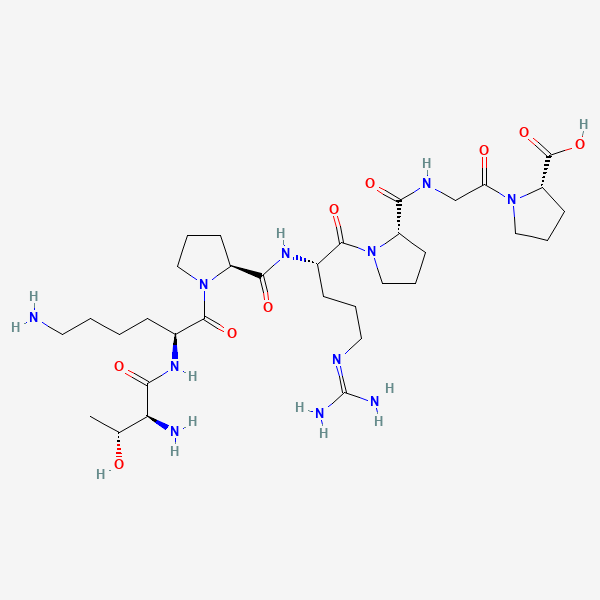
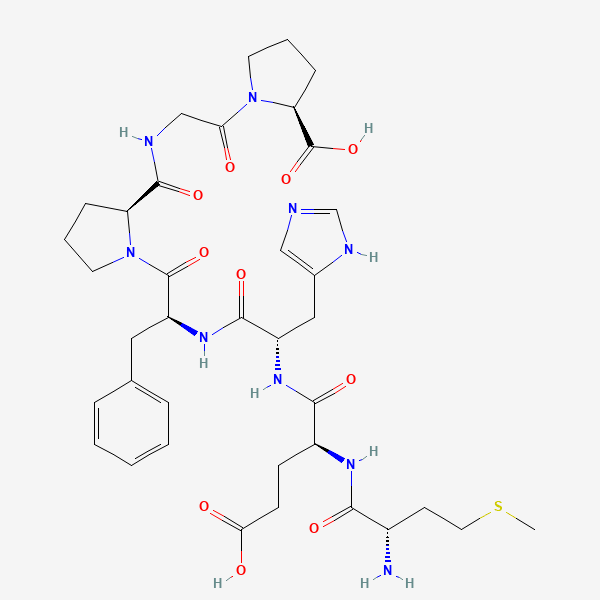
Selank is a seven-amino-acid analog of tuftsin with a Pro-Gly-Pro tail added for stability. Semax is also seven amino acids long, but starts from ACTH(4-10) and uses the same stabilizing tail. The shared engineering helps explain why the pair gets grouped together; the starting molecules explain why their research stories split. For the underlying literature, see the indexed Selank research and Semax research.
What does the evidence actually show?
Selank has the stronger direct human evidence for its headline goal, while Semax has the clearer animal mechanism for its popular nootropic goal. Small randomized human studies, mostly from Russian groups, reported anxiety improvement with Selank. Semax has human clinical history in Russia, including neurological use, but focus and cognitive enhancement in healthy adults remain animal-only by this site’s grading.
The evidence badge needs context. Selank earns Human-RCT for anxiety, yet those trials are small, concentrated in one country and not broadly replicated by Western teams. Semax earns Animal-only with an Unknown verdict for healthy-adult focus, even though Russian clinical use supplies a separate human signal. The evidence-grading guide explains why a study design and a verdict are separate questions.
No direct head-to-head trial was identified in the source profiles or the combined PubMed search for Selank and Semax. Any claim that one beat the other in a comparative trial would be fiction. The table above instead compares two separate bodies of evidence, which is less dramatic and far more useful.
How are Semax and Selank used?
Semax and Selank are both associated with intranasal delivery as drops or sprays. The Russian pharmaceutical forms are nasal products, while US research material may arrive as freeze-dried powder. Neither source profile lists a source-backed study dose in its structured dosing field, so this page does not relabel community amounts as research doses or turn them into a protocol.
That restraint matters. Both profiles describe community use in the few-hundred-microgram range, but anecdotes cannot establish the effective amount, frequency or long-term safety for a healthy person. Route similarity also does not prove that semax and selank can be mixed, alternated or stacked safely. No controlled combination evidence appears in the cited records.
Which peptide fits which goal?
Selank is the evidence-led pick for anxiety and calm; Semax is the mechanism-led pick for focus, learning and cognitive work. Those are by-goal choices, not a podium. Selank’s small human anxiety trials make the first match more direct. Semax’s BDNF, learning and attention research makes the second match coherent, with the clear caveat that healthy-adult human proof is thin.
For anxiety, read the full Selank profile, including its Human-RCT badge, limitations and nasal-use context. For cognition, read the full Semax profile, including the Animal-only grade for healthy-adult focus and the separate Russian neurological history. The honest answer to semax vs selank changes when the goal changes.
Are Selank and Semax FDA-approved or risk-free?
Selank and Semax are not FDA-approved drugs or legal dietary supplements in the United States as of 2026; both profiles classify them as research-use-only. Russian approval or clinical use does not transfer to the US. Short-term reports are fairly reassuring, but neither compound has the large, independent Western trial base or long-term safety record needed to call the risks settled.
Selank’s profile notes nasal irritation, an unpleasant taste, fatigue or lightheadedness as reported possibilities. Semax’s profile describes minor nasal irritation or headache in the surrounding literature, while its structured adverse- event list is empty. For both, unregulated research material adds separate questions about identity, purity, dose accuracy and sterility. The broader regulatory-status reference explains why “sold online” and “approved medicine” are not synonyms. This comparison is educational information, not medical advice.
Semax vs Selank, point by point
Every dimension side by side — the honest differences, not a scoreboard.
| Dimension | Semax | Selank |
|---|---|---|
| Primary goal | Anxiety relief and a calm-but-alert state. | Focus, learning and cognitive support. |
| Peptide design | A synthetic 7-amino-acid analog of tuftsin, an immune-signaling peptide. | A synthetic 7-amino-acid analog of the ACTH(4-10) fragment. |
| Proposed mechanism | May slow enkephalin breakdown and influence GABA-linked, serotonin, dopamine and BDNF signaling. | Raises BDNF and TrkB signaling in rat brains and may influence dopamine and serotonin systems. |
| Typical route | Intranasal drops or spray. | Intranasal drops or spray. |
| Headline evidence | Human-RCT tier for anxiety: small randomized studies, mostly from Russian groups, reported benefit. | Animal-only tier for focus in healthy adults; human stroke evidence is observational and mostly Russian. |
| US regulatory status (2026) | Research-use-only; not FDA-approved and not a dietary supplement. | Research-use-only; not FDA-approved and not a dietary supplement. |
| Dose evidence | The profile does not list a source-backed research dose; amounts discussed outside trials are anecdotal. | The profile does not list a source-backed research dose; amounts discussed outside trials are anecdotal. |
- Primary goal: These are different headline uses, not proof that either peptide will produce that result for every person.
- Proposed mechanism: The precise human mechanism of either peptide is not established.
- Headline evidence: No trial has compared Selank and Semax directly; this comparison weighs their separate evidence.
- Dose evidence: A community-reported amount is not a clinically validated dose or a personal protocol.
Semax vs Selank: the two molecules
The 2D chemical structures, straight from PubChem — a quick way to see how similar (or not) the two actually are.
Which one fits which goal?
There's no universal winner here — the honest answer depends on what you're after. These picks are framed by goal, and each says why.
Anxiety relief without aiming for sedation
Leans toward Semax
Selank's headline use is anxiety, and small randomized human studies support that use more directly than Semax's evidence does.
Focus, learning or cognitive work
Leans toward Selank
Semax is the more direct fit for this goal because its research story centers on BDNF, learning and attention, although healthy-adult human proof remains thin.