Also known as: delta sleep-inducing peptide · emideltide · DSIP peptide
Human (controlled)Mixed
On this page
- What is DSIP?
- Does DSIP sleep research show that it works?
- Why did DSIP research go quiet?
- How might DSIP work?
- Is DSIP safe? What are the risks?
- What DSIP dosage was used in human studies?
- Is DSIP FDA-approved or legal in 2026?
- Is DSIP banned in sport?
- What is the honest verdict on DSIP?
- Evidence by outcome
- FDA & legal status
- Chemical identifiers
- References
- Related compounds
- More on DSIP
DSIP is a nine-amino-acid peptide studied for sleep, but the human evidence is small, old, and conflicting. Two controlled insomnia trials found at most weak improvements, and research then largely stopped. DSIP is not FDA-approved; products sold today are research-use-only materials with no established consumer dose or modern long-term safety record.
What is DSIP?
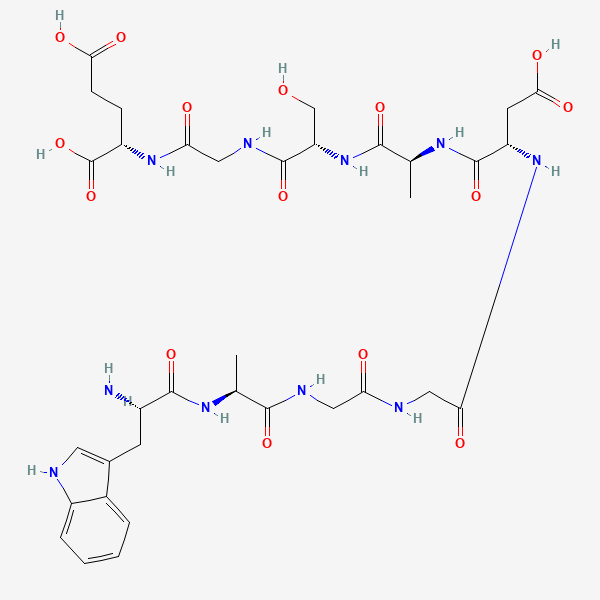
DSIP, short for delta sleep-inducing peptide and also called emideltide, is a nonapeptide: nine amino acids joined in the sequence WAGGDASGE. PubChem lists CAS 62568-57-4, molecular formula C35H48N10O15, molecular weight 848.8 g/mol, and CID 68816. The DSIP peptide sits in the nootropic peptide category, although its clinical value remains unsettled.
Researchers isolated DSIP during rabbit sleep experiments in the 1970s and named it for the delta-wave activity observed. “Sleep-inducing” is a historical name, not a regulatory indication or a guarantee of deep sleep in people.
Does DSIP sleep research show that it works?
DSIP sleep evidence earns a human-controlled, mixed rating: real trials exist, but they are tiny, decades old, and do not support calling DSIP an established insomnia treatment. The clearest story comes from reading the positive open study beside the more controlled studies, rather than counting every paper as equal.
In 1984, an open study of seven people with severe insomnia reported normalized sleep in six after ten injections, with follow-up lasting three to seven months. Without a blinded placebo group, the study could not separate the peptide from expectation or natural variation.
The controlled results were cooler. A 1987 double-blind crossover study used intravenous DSIP at 25 nmol/kg over four nights. Baseline imbalances complicated favorable measures, and the authors judged the improvement of little clinical significance. A 1992 double-blind study in 16 chronic insomniacs found higher sleep efficiency and shorter sleep latency, but effects were weak, partly explainable by placebo-group change, and absent from subjective sleep quality. The authors concluded that short-term DSIP was unlikely to offer major therapeutic benefit.
Why did DSIP research go quiet?
DSIP research did not mature into the large, modern trial program that would normally follow a convincing sleep signal. The main human papers cluster in the 1980s and early 1990s; the favorable open result was followed by controlled findings that were small, inconsistent, or clinically minor. Then the field stopped producing decisive insomnia trials.
That silence does not prove DSIP cannot work. It shows where the evidence ladder ends. FDA’s 2026 emideltide review evaluated the same small studies rather than a contemporary development program. Nearly forty years after the 1987 trial, there is no approved DSIP sleep medicine or modern evidence showing who reliably benefits.
How might DSIP work?
DSIP has no established human receptor or settled mechanism, so confident pathway diagrams get ahead of the science. Researchers have explored sleep architecture, hormone signaling, stress responses, and indirect interaction with the body’s opioid system. Animal and laboratory findings suggest DSIP may alter signaling rather than act like a standard sedative, but those mechanisms have not yielded a validated human treatment model.
Think of the name as a label attached to an early EEG observation, not a known key for a known lock. DSIP clears rapidly in animal work, but an animal clearance result is not a human dosing schedule.
Is DSIP safe? What are the risks?
DSIP safety is not well characterized for present-day use. Small human studies exposed too few people for too little time to find uncommon reactions, chronic effects, or route-specific problems. “Few events reported” in an old pilot is not the same finding as “safe.”
FDA’s 2026 review found intravenous doses of 25–150 nmol/kg had been given to 209 subjects for one to 15 days. FDA found no clinical safety information for the proposed subcutaneous route and flagged immune reactions, aggregation, peptide impurities, and uncertainty about which form a product contains. Research-market vials add identity, dose-accuracy, and sterility risks.
What DSIP dosage was used in human studies?
DSIP dosage in the controlled insomnia papers was 25 nmol/kg by intravenous infusion, not a validated subcutaneous or intranasal bedtime protocol. That distinction matters: route, timing, and formulation can change peptide exposure, and no FDA label supplies a conversion for products sold online.
The number belongs in a research summary, not a personal protocol. There is no approved DSIP dose, titration schedule, or treatment duration. Our guide to when peptides are taken explains why timing matters, but it cannot turn an old intravenous experiment into instructions for a research vial.
Is DSIP FDA-approved or legal in 2026?
DSIP is not FDA-approved for insomnia or any other indication in the United States. FDA says emideltide free base and acetate are not components of approved drugs and were not registered drugs in any country it searched. “Research use only” describes a laboratory product; it does not authorize a product for human treatment.
As of July 16, 2026, FDA was proposing that both forms not be added to the section 503A Bulks List, with an advisory-committee discussion scheduled for July 24. That meeting had not happened when this page was reviewed, so a proposal must not be reported as a final decision. The plain-English guide to research-use-only labeling covers what that phrase does and does not mean.
Is DSIP banned in sport?
DSIP falls under WADA’s 2026 S0 non-approved substances catch-all and is prohibited at all times for athletes governed by the Code. DSIP is not named individually; the classification follows from WADA’s rule covering pharmacological substances without current governmental approval for human therapeutic use. Athletes should still verify a specific product with their anti-doping authority.
What is the honest verdict on DSIP?
DSIP is a real peptide with real human-controlled sleep research, but “human-controlled” does not mean “shown to work.” The best verdict is mixed: an open study looked encouraging, while two double-blind trials found effects that their own authors considered weak or of little clinical importance.
The unusual part is not that the evidence started small. It is that the evidence stayed there for nearly four decades while a research market grew around the name. DSIP remains scientifically interesting as an attempt to study sleep regulation without conventional sedation. For sleep treatment, dosage, and long-term safety, the proof did not catch up.
Evidence by outcome
Each outcome DSIP has been studied for, with the honest evidence grade and what the studies actually found. A tier never stands alone — the verdict rides with it.
| Outcome | Evidence | What was found |
|---|---|---|
| Sleep quality and chronic insomnia | Human (controlled)Mixed | Small controlled human studies from 1987 and 1992 measured sleep after intravenous DSIP. Some objective measures moved in a favorable direction, but the investigators judged the effects weak or of little clinical significance. No modern, well-powered replication has settled the result. |
FDA & legal status
- United States: research use only (as of Jul 2026)
DSIP is not an FDA-approved drug. FDA states that neither emideltide free base nor emideltide acetate is a component of an approved drug; a July 24, 2026 advisory-committee review of whether they should enter the 503A Bulks List was still pending as of this page's review date.
Chemical identifiers
References
- 1.PubChem Compound Summary — Delta Sleep-Inducing Peptide (CID 68816)
- 2.Monti et al., 1987 — DSIP in chronic insomniacs (PMID 3583493)
- 3.Bes et al., 1992 — double-blind DSIP insomnia study (PMID 1299794)
- 4.Kaeser, 1984 — an open clinical trial with DSIP (PMID 6391926)
- 5.FDA 2026 evaluation of emideltide-related bulk drug substances
- 6.WADA 2026 Prohibited List
More on DSIP
Everything else we've written about DSIP — what the community reports, the explainers that cover it, and the terms it keeps running into.