Also known as: NNZ-2566 · ACP-2566 · glycyl-alpha-methyl-L-prolyl-L-glutamic acid
Human RCTHelped
On this page
- What is trofinetide?
- How does trofinetide work?
- What did the LAVENDER trial find?
- What are the trofinetide side effects?
- Is trofinetide FDA-approved in 2026?
- What trofinetide dosing does the label use?
- How much does trofinetide cost?
- Why does trofinetide change the IGF-1 peptide story?
- Does trofinetide correct Rett syndrome or work as a general nootropic?
- Evidence by outcome
- FDA & legal status
- Reported side effects
- Chemical identifiers
- References
- Related compounds
- More on Trofinetide
The peptide trofinetide (Daybue) is an FDA-approved oral treatment for Rett syndrome in patients aged 2 years and older. In the 12-week LAVENDER trial, symptoms improved modestly versus placebo, but diarrhea was common. Unlike gray-market IGF-1 fragments, this glycine-proline-glutamate analog cleared FDA review as a specific prescription product.
Key facts
- Evidence: Human randomized controlled trial; helped.
- FDA status: Daybue approved March 10, 2023; Daybue Stix approved December 11, 2025.
- Use: Weight-based oral dosing twice daily, by mouth or feeding tube.
- Main risks: Diarrhea, vomiting, dehydration, and weight loss.
- Sport: Not named in WADA’s 2026 list; athletes should verify the exact product and prescription with their anti-doping authority.
What is trofinetide?
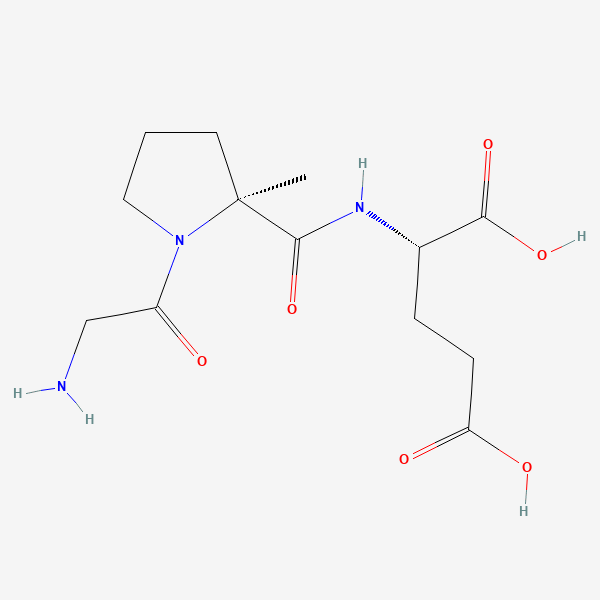
Trofinetide is a synthetic three-amino-acid peptide, previously called NNZ-2566, built as a more stable analog of glycine-proline-glutamate (GPE). GPE is the N-terminal tripeptide cut from insulin-like growth factor 1 (IGF-1). PubChem records trofinetide as C13H21N3O6, molecular weight 315.32 g/mol, CAS 853400-76-7, and CID 11318905.
That family tree is easy to misread. Trofinetide is not full-length IGF-1 and should not be treated as a tiny version with the same receptor effects. Daybue is a prescription medicine for Rett syndrome.
How does trofinetide work?
Trofinetide’s therapeutic mechanism in Rett syndrome remains unknown; that is the FDA label’s answer, not a missing footnote. Researchers have proposed effects involving neuroinflammation and synaptic function, but the approved label does not assign a confirmed molecular target. The honest analogy is ancestry, not identity: sharing three residues with one end of IGF-1 does not make two drugs behave like twins.
This distinction matters for anyone browsing nootropic peptides. Trofinetide has human evidence for one rare disorder, not cognitive enhancement in healthy people.
What did the LAVENDER trial find?
Trofinetide helped on both primary endpoints in LAVENDER, although the average differences from placebo were modest. The phase 3 trial randomized 187 girls and women aged 5 to 20 years for 12 weeks: 93 received trofinetide and 94 received placebo (PMID 37291210; NCT04181723).
On the caregiver-rated Rett Syndrome Behaviour Questionnaire, scores improved by 4.9 points with trofinetide and 1.7 with placebo, a 3.2-point treatment difference. On the clinician-rated Clinical Global Impression-Improvement scale, the week-12 averages were 3.5 and 3.8, respectively. Both results favored trofinetide statistically. They support the verdict human RCT: helped, but they do not mean every patient improved or that Rett syndrome was reversed.
What are the trofinetide side effects?
Trofinetide side effects are dominated by the gut, and the size of that signal deserves the same attention as the efficacy result. In the current DailyMed label, diarrhea occurred in 82% of Daybue patients versus 20% on placebo; vomiting occurred in 29% versus 12%.
Diarrhea was usually mild or moderate, but it caused some patients to stop treatment and can lead to dehydration. The label also reports that 12% lost more than 7% of baseline body weight, compared with 4% on placebo. Vomiting carries an aspiration risk. Daybue is not recommended in severe renal impairment.
Is trofinetide FDA-approved in 2026?
Trofinetide is FDA-approved and prescription-only in the United States for Rett syndrome in adults and children aged 2 years and older. FDA records give March 10, 2023 as Daybue’s approval date. The agency approved Daybue Stix on December 11, 2025, confirming the exact date behind the later powder formulation.
Daybue is a refrigerated 200 mg/mL oral solution. Daybue Stix is a room-temperature powder in 5,000, 6,000, and 8,000 mg packets, dissolved before use. The new format changed preparation, not the indication or evidence tier. FDA also required postmarketing animal carcinogenicity studies in the Stix approval letter; approval does not settle every long-term question.
What trofinetide dosing does the label use?
Trofinetide dosing is oral, twice daily, and based on body weight; this is not an injectable research-peptide protocol. The current label specifies 5,000 mg twice daily for patients weighing 9 to under 12 kg, 6,000 mg for 12 to under 20 kg, 8,000 mg for 20 to under 35 kg, 10,000 mg for 35 to under 50 kg, and 12,000 mg for 50 kg or more.
Those gram-sized amounts look odd beside microgram peptide vials because trofinetide is a small, rapidly cleared oral molecule with an effective half-life of about 1.5 hours. Daybue can be given by mouth or gastrostomy tube. Daybue Stix packets must be mixed as whole packets and used immediately; they are not reconstituted for injection.
How much does trofinetide cost?
Trofinetide cost has no single durable cash figure: the labeled dose changes with body weight, while U.S. coverage, specialty-pharmacy arrangements, and patient assistance change what a family actually pays. FDA labeling does not publish a price. A current benefit investigation is more reliable than a copied online number, especially after the Stix launch added a second formulation.
A cheap “trofinetide” research vial is not Daybue and does not inherit its manufacturing controls, label, or LAVENDER evidence.
Why does trofinetide change the IGF-1 peptide story?
Trofinetide shows what clearing FDA actually requires: a defined formulation, a specific indication, a randomized human trial, a label with quantified harms, and ongoing safety obligations. That is a sharper benchmark than saying a compound is “IGF-1-derived.” Our list of FDA-approved peptides separates product-level approval from molecule-level marketing for exactly this reason.
The contrast with IGF-1 LR3 is useful. IGF-1 LR3 is an 83-amino-acid growth-factor analog sold mainly as a research reagent, with no FDA approval or human muscle-building trial. Trofinetide is a three-residue GPE analog with a successful Rett syndrome RCT. One does not validate the other’s anabolic claims. Same family photo, different passport.
Does trofinetide correct Rett syndrome or work as a general nootropic?
Trofinetide treats symptoms; it does not correct the underlying genetic disorder, and no controlled evidence shows cognitive improvement in healthy people. The “nootropic” category describes the research neighborhood, not an invitation to repurpose Daybue. Trofinetide is not specifically named on the 2026 WADA Prohibited List, but its open-ended classes make an athlete-specific check prudent. That uncertainty is why no definitive WADA badge appears here.
Evidence by outcome
Each outcome Trofinetide has been studied for, with the honest evidence grade and what the studies actually found. A tier never stands alone — the verdict rides with it.
| Outcome | Evidence | What was found |
|---|---|---|
| Core symptoms of Rett syndrome | Human RCTHelped | In the 12-week, randomized, placebo-controlled LAVENDER trial, trofinetide produced statistically significant but modest improvements on caregiver-rated Rett symptoms and a clinician global-improvement scale. The trial supports treatment of Rett syndrome; it does not establish a general cognitive-enhancement effect. |
FDA & legal status
- United States: fda approved (as of Jul 2026) — approved for Rett syndrome in adults and pediatric patients 2 years of age and older
Prescription-only trofinetide is FDA-approved as Daybue oral solution and Daybue Stix powder for oral solution. Approval belongs to these labeled drug products, not to an unapproved research vial carrying the same ingredient name.
Reported side effects
| Effect | Frequency | Severity |
|---|---|---|
| Diarrhea | 82% in Study 1 versus 20% with placebo | Usually mild or moderate; can cause dehydration or treatment discontinuation |
| Vomiting | 29% in Study 1 versus 12% with placebo | Can lead to aspiration or aspiration pneumonia |
| Weight loss | Greater than 7% of baseline weight in 12% versus 4% with placebo | Requires weight monitoring and may require interruption, reduction, or discontinuation |
Chemical identifiers
References
- 1.PubChem Compound Summary for CID 11318905, Trofinetide
- 2.Neul et al., 2023 — LAVENDER phase 3 trial (PubMed PMID 37291210)
- 3.LAVENDER trial record — NCT04181723
- 4.DAYBUE and DAYBUE STIX prescribing information
- 5.FDA Orphan Drug Designations and Approvals — trofinetide
- 6.FDA approval letter — DAYBUE STIX, NDA 219884
- 7.WADA 2026 Prohibited List
More on Trofinetide
Everything else we've written about Trofinetide — what the community reports, the explainers that cover it, and the terms it keeps running into.