Community report · What Reddit says
BPC-157 on Reddit: what users actually report
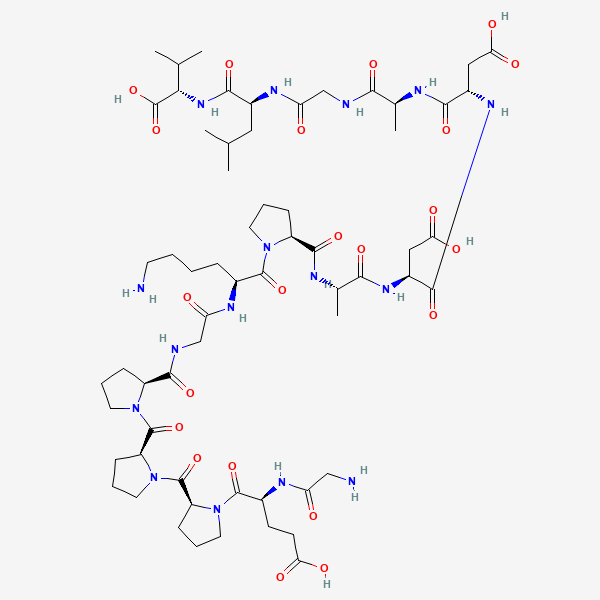
BPC-157 is one of the most-discussed peptides on Reddit, and the community’s take is lopsidedly enthusiastic: on r/Peptides and adjacent forums it’s the default “healing peptide” for stubborn tendon, joint and gut problems. The honest catch the threads themselves keep raising is that no completed human trial has confirmed any of it. The excitement is real; the proof is still mostly anecdote and animal data.
What Redditors use BPC-157 for
Redditors reach for BPC-157 mostly to fix things that won’t heal on their own. The recurring use cases in community threads are soft-tissue injuries — cranky elbows, tweaked knees, rotator-cuff and Achilles trouble — plus gut complaints like reflux, IBS-type symptoms and “leaky gut.” A second large bucket is post-surgery or post-injury recovery, where people want to shorten the downtime. BPC-157 also shows up constantly as the headline half of the “Wolverine stack,” paired with TB-500 for a broader, more systemic healing push. Sort the healing-peptide conversation by sheer volume and BPC-157 sits at or near the top of it.
What users report
What users report about BPC-157 ranges from people crediting it with fixing a years-old injury to others who felt no difference at all — and both ends turn up often. The positive reports — the loud majority — describe pain easing over one to several weeks, usually on a few hundred micrograms injected under the skin near the problem area, and a quicker return to training. The quieter reports matter just as much: people who ran a full course and noticed nothing, or who got relief in a tendon but not a joint. Common practical gripes include stinging on injection (usually blamed on the specific batch) and uncertainty over whether the oral capsule form does anything at all. None of this is data. It’s anecdote, and it’s shaped by survivorship bias — the people who get no result tend to go quiet, so the feed skews sunny.
The concerns that come up most
The concerns that come up most about BPC-157 are less about the molecule and more about what you can actually buy. Sourcing is the number-one recurring worry: because BPC-157 sells only as a research chemical, purity really does vary, and the standing community advice is to demand a batch-specific third-party certificate of analysis before trusting any vendor. The oral-versus-injectable debate is nearly as constant — most threads favor subcutaneous injection because that’s what the animal studies used, and treat oral BPC-157 as unproven. Legality trips up newcomers, since “for research use only” is doing a lot of quiet work (here’s what that phrase actually means). The most-cited safety question is the angiogenesis one — if BPC-157 grows new blood vessels, could it feed something you don’t want fed? — alongside the honest side-effect unknowns and the mundane but real risk of a 1,000× dosing error from confusing micrograms with milligrams.
Where Reddit is right — and where it’s off
Where Reddit is right about BPC-157: the underlying animal evidence really is real, and unusually consistent. Across rodent studies, treated tendons, ligaments and gut linings heal faster than untreated ones — that’s not hype, and the BPC-157 profile walks through those studies. The community is also right that sourcing quality is a genuine gamble, that BPC-157 is not FDA-approved, and that it’s banned in sport by WADA. On those points the threads have it straight.
Where Reddit runs ahead of the evidence is certainty. Threads routinely talk about BPC-157 as though it’s proven in people, and it isn’t — there’s no completed human randomized trial, only small case reports and a Phase 2 study that has just started recruiting. Anecdotes get promoted to proof, the wide safety margin seen in animals gets read as “safe for humans” (not the same thing), and oral efficacy gets assumed when the human evidence for it is thin to nonexistent. That gap between “promising in animals” and “proven in humans” is exactly what our evidence grading is built to show. For the matchup people keep asking about, the BPC-157 vs TB-500 comparison lays out both side by side.
The honest bottom line
The honest bottom line: Reddit is a strong map of what BPC-157 might do and a poor substitute for whether it will. The community has surfaced real signals — the animal data is promising, the healing use-cases are plausible, the sourcing risk is genuine — but the enthusiasm has outrun the human proof, which isn’t in yet. Treat the threads as leads worth investigating, not evidence worth acting on. Then read the evidence-graded BPC-157 profile for what the studies actually show, how strong that evidence is, and where the honest unknowns still sit.