Community report · What Reddit says
Dihexa peptide Reddit: memory claims vs evidence
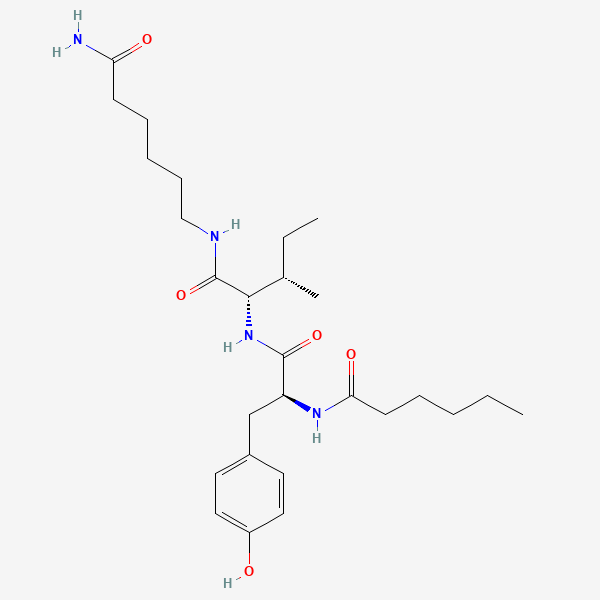
Dihexa peptide Reddit discussions treat memory enhancement as the prize and uncertainty as the price, but the evidence cannot yet tell us whether that trade works in people. Dihexa improved cognition in rodent models; no human trial has established a cognitive benefit, safe dose, side-effect rate, or long-term safety.
Why does Dihexa attract so much nootropic interest on Reddit?
Dihexa attracts nootropic interest because the animal findings connect a clear goal—better memory—to a mechanism involving new neural connections. General discussion on r/Peptides tends to circle memory, learning, “brain repair,” and whether an unusually potent laboratory effect could justify unusually large unknowns. That last question is the honest center of the conversation.
Dihexa is a synthetic analog of angiotensin IV designed to reach the brain. Preclinical work proposes that it strengthens signaling through hepatocyte growth factor and its c-Met receptor, a system involved in cell growth and repair. In plain English, the idea is less like turning up a stimulant and more like encouraging neurons to add connection points. The Dihexa evidence profile explains the mechanism and its limits.
Do dihexa peptide memory claims match the research?
Dihexa memory claims overlap with a real preclinical signal, but Reddit anecdotes do not upgrade that signal into human evidence. Rats showed improved maze learning and reversal of a drug-induced memory deficit in the foundational study, while a later APP/PS1 Alzheimer’s-model mouse study reported rescued memory measures. Those findings support continued investigation, not a prediction of what a person will feel.
The distinction matters because cognition is easy to misread without controls. Sleep, expectation, workload, other compounds, and ordinary good or bad days can all change a self-rating. A forum report has no placebo group and usually no verified product analysis. Our evidence grade therefore remains animal-only, helped, none-in-humans for memory—not “human anecdotal proof.” The peptide evidence-grading framework shows why those labels cannot be swapped.
Is Dihexa really extraordinarily potent?
Dihexa has been described through an extreme in-vitro potency comparison, but that claim is a laboratory finding with serious reliability baggage. Potency in a cell assay means the measured effect occurred at a low concentration under those conditions. It does not show stronger memory, better daily function, or acceptable safety in a person. A small number can make a very large headline; biology still gets the final vote.
The source trail deserves equal billing. The 2013 rat paper now carries a journal notice of concern, and a related 2014 HGF/c-Met synaptogenesis paper was retracted in 2025. A separate mouse study keeps the broader cognition question alive, but the reliability flags weaken any attempt to build certainty around the most dramatic potency language.
What do we know about Dihexa safety in humans?
Dihexa safety in humans is unknown because there are no published human trials, no established adverse-event rate, and no long-term clinical record. That is not a claim that harm is certain. It means neither reassuring experiences nor frightening ones on Reddit can measure risk, identify uncommon effects, or establish who may be especially vulnerable.
Dihexa’s proposed HGF/c-Met action creates a specific theoretical concern: overactive c-Met signaling is associated with several cancers. No human evidence shows that Dihexa causes cancer, and no human evidence clears that concern either. The practical uncertainty begins even earlier with research-market identity, purity, and dose accuracy. A label can name a compound without proving what is inside. Research use only is not a safety certification.
Are there any human trials of Dihexa?
Dihexa has no registered human trial in the sources reviewed for this page, and the existing profile grades the compound none-in-humans. A ClinicalTrials.gov search for Dihexa is the clean checkpoint for that status. The absence covers both efficacy and safety: there is no controlled human evidence showing better memory and no trial-defined human risk profile.
This is where wording earns its keep. The phrase “dihexa peptides” is loose shorthand: Dihexa is a tripeptide-derived small molecule, and a detailed mechanism does not provide clinical proof. “Brain-penetrant,” “synaptogenic,” and “active in rodents” describe preclinical properties; none means “works as a human nootropic.” The nootropic peptide hub helps place Dihexa beside other cognition-focused compounds without pretending they share the same evidence.
Where is Reddit right—and where is it off?
Reddit is right that Dihexa is more than a made-up nootropic name: published rodent research reports cognitive effects, the HGF/c-Met mechanism is specific enough to test, and an independent mouse study gives the memory question a reason to continue. The community is also right to debate safety rather than treating potency as an automatic benefit.
Reddit is off when a vivid personal report becomes proof, an in-vitro potency comparison becomes a human ranking, or mechanism becomes outcome. The strongest honest synthesis is narrower: Dihexa has an animal cognition signal, zero human confirmation, zero human safety characterization, and meaningful reliability warnings in its publication record. That combination calls for curiosity with a firm grip on the evidence tier.
What is the honest bottom line on Dihexa Reddit claims?
The dihexa peptide Reddit claims are useful as a map of what people hope to improve—memory, learning, and cognitive resilience—but not as evidence that the compound delivers those outcomes. The scientific case starts with animals and cells and stops before humans. No anecdote can fill that gap, especially when product identity and study reliability are also in play.
Dihexa remains a testable nootropic idea with a mechanism researchers can investigate. The next meaningful step is not a more enthusiastic forum thread; it is credible human testing that measures cognition and watches safety over time. Until then, the full Dihexa profile is the better place to separate the signal, the uncertainty, and the publication warnings.
Where the discussion happens
- 1.r/Peptides — community discussion of Dihexa
- 2.Dihexa — indexed research (PubMed, National Library of Medicine)
- 3.McCoy et al., 2013 — Evaluation of metabolically stabilized angiotensin IV analogs as procognitive/antidementia agents
- 4.Notice of Concern (2021) for McCoy et al., 2013
- 5.Retraction (2025) of Benoist et al., 2014 — angiotensin IV and HGF/c-Met synaptogenesis paper
- 6.Sun et al., 2021 — Dihexa rescues cognition in the APP/PS1 Alzheimer's mouse
- 7.Dihexa — registered clinical studies (ClinicalTrials.gov)