Argireline vs Palmitoyl Tripeptide-1
Argireline vs Palmitoyl Tripeptide-1 compared by wrinkle type, mechanism and evidence, with honest picks for dynamic lines and static lines.
Argireline vs Palmitoyl Tripeptide-1 is a choice between two topical peptides aimed at different wrinkles: Argireline targets the nerve-signaling route behind expression lines, while Palmitoyl Tripeptide-1 signals fibroblasts to rebuild skin matrix. Argireline has small human trials; isolated palmitoyl tripeptide-1 remains in-vitro. No trial has compared them directly.
What is the real difference between these peptides?
Argireline and palmitoyl tripeptide-1 are separate active ingredients with different jobs. Argireline is the trade name for acetyl hexapeptide-8, a six-amino-acid peptide designed around nerve signaling. Palmitoyl tripeptide-1, also called Pal-GHK, is a three-amino-acid repair signal with a fatty tail added for topical delivery.
The naming is where shopping pages make a small mess. Palmitoyl tripeptide-1 is one ingredient in Matrixyl 3000, which also contains palmitoyl tetrapeptide-7. Argireline is its own trade-named ingredient. This is therefore active versus active, not a clean brand-versus-brand contest, and evidence for Matrixyl 3000 cannot be handed to Pal-GHK alone. The Matrixyl versus palmitoyl tripeptide-1 comparison untangles that family tree.
How do neuro vs signal peptide mechanisms differ?
The neuro vs signal peptide split is simple: Argireline tries to turn down a contraction message, while palmitoyl tripeptide-1 tries to send a rebuilding message. Argireline is modeled on part of SNAP-25 and is proposed to interfere with assembly of the SNARE complex, the machinery nerve cells use to release neurotransmitters. Pal-GHK acts as a matrikine, a small matrix fragment that tells fibroblasts the scaffold needs work.
Picture two maintenance calls. Argireline asks the person folding the fabric to ease up. Palmitoyl tripeptide-1 asks the repair crew to reinforce the fabric after years of folding. Those mechanisms can be complementary, but neither analogy proves that a serum reaches the right cells or produces a visible change.
Which wrinkle type fits each peptide?
Argireline is the closer mechanism match for dynamic expression lines; palmitoyl tripeptide-1 is the closer match for static fine lines and firmness. Dynamic lines appear or deepen when you smile, squint or frown. Static lines remain visible when the face is resting and reflect accumulated creasing plus changes in collagen, hydration and the rest of the skin matrix.
That makes palmitoyl tripeptide-1 vs argireline less of a race than a routing decision. Forehead or eye lines driven by repeated movement point toward Argireline’s proposed nerve-signaling route. Fine texture and lines visible at rest point toward Pal-GHK’s collagen-signaling rationale. The distinction is useful, but the evidence does not support promises that either topical will erase deep, fixed wrinkles. The broader peptides for skin guide covers where these categories fit.
How strong is the evidence?
Argireline has the stronger human evidence, while isolated palmitoyl tripeptide-1 remains an in-vitro ingredient in this site’s grading. A randomized placebo-controlled Argireline study enrolled 60 people, used twice-daily topical treatment for four weeks and reported improvement in periorbital wrinkles (PubMed). That earns Human RCT · mixed, not a blank check: the trial was small, short and does not settle delivery to the neuromuscular target.
Palmitoyl tripeptide-1 has laboratory support for fibroblast and extracellular-matrix signaling, but human studies commonly test a combination rather than isolated Pal-GHK. Matrixyl 3000 combines palmitoyl tripeptide-1 with palmitoyl tetrapeptide-7 (peer-reviewed review). Improvement from that blend cannot identify which ingredient did what.
No published trial found in the combined PubMed search has tested acetyl hexapeptide-8 vs palmitoyl tripeptide under the same conditions. This comparison weighs separate records; it does not invent a winner from a trial that never happened.
Does the “Botox in a bottle” claim hold up?
Argireline shares a proposed signaling target with botulinum toxin, but “Botox in a bottle” outruns the delivery evidence. Botulinum toxin is injected into muscle. In a human-cadaver skin experiment using a 10% acetyl hexapeptide-8 emulsion, 0.22% of the applied amount remained in the stratum corneum, 0.01% reached the epidermis and none was detected in the dermis after 24 hours (PubMed).
That independent penetration work does not prove Argireline is useless; the small human wrinkle study reported a visible effect. It does question whether topical Argireline works by reaching a neuromuscular junction in Botox-like fashion. A cosmetic change and an injectable mechanism are not interchangeable claims. For the neighboring brand comparison, see Argireline versus Matrixyl.
Are their use, safety and legal status different?
Argireline and palmitoyl tripeptide-1 occupy the same practical lane: both are topical cosmetic ingredients used in leave-on serums and creams, not peptides with an established injectable dose. Their profiles describe mild redness, irritation or contact sensitivity as the main topical concerns. Evidence from skin use does not establish safety for swallowing, reconstituting or injecting either compound.
As of July 2026, neither ingredient is an FDA-approved drug. That is normal for cosmetics: FDA says cosmetic ingredients generally do not require pre-market approval, apart from color additives, while the company remains responsible for safety under labeled use (FDA). Claims to treat disease or alter body structure can move a product into drug territory.
Which anti wrinkle peptide fits each goal?
Which anti wrinkle peptide fits best depends on the wrinkle and the evidence standard, not a universal scoreboard. Argireline is the by-goal pick for movement-linked expression lines and for readers prioritizing randomized human evidence. Palmitoyl tripeptide-1 is the mechanism-matched pick for static fine lines, texture and collagen-support goals, with the honest warning that isolated human efficacy has not been established.
- Dynamic forehead, brow or eye lines: Argireline fits the proposed contraction-signaling route.
- Static fine lines or firmer-looking skin: palmitoyl tripeptide-1 fits the fibroblast-signaling route.
- Stronger human evidence: Argireline wins that narrow category, with a mixed verdict.
- A Matrixyl 3000 formula: Pal-GHK is relevant, but judge the whole two-peptide blend rather than crediting one ingredient.
- A Botox-equivalent result: neither topical has evidence for that outcome.
Argireline vs palmitoyl tripeptide-1 has no single winner because the compounds answer different questions. The clean choice starts with whether the line is being folded by movement or remains at rest, then keeps the evidence badge attached to the claim.
Argireline vs Palmitoyl Tripeptide-1, point by point
Every dimension side by side — the honest differences, not a scoreboard.
| Dimension | Argireline | Palmitoyl Tripeptide-1 |
|---|---|---|
| What the name means | Argireline is the trade name for acetyl hexapeptide-8, a synthetic six-amino-acid peptide. | Palmitoyl tripeptide-1 is Pal-GHK, a three-amino-acid signal peptide with a fatty palmitoyl tail. |
| Proposed mechanism | Interferes with SNAP-25/SNARE-dependent neurotransmitter release, aiming to soften repeated facial-contraction signals. | Acts as a matrikine, or repair signal, prompting fibroblasts to make collagen and other extracellular-matrix proteins. |
| Wrinkle type targeted | Dynamic expression lines repeatedly folded by smiling, squinting or frowning. | Static fine lines, texture and loss of firmness associated with changes in the skin matrix. |
| Headline evidence | Human RCT · mixed · humans studied; a small randomized placebo-controlled trial reported improvement in periorbital wrinkles. | In-vitro · unknown · none in humans for the isolated ingredient; human formula studies do not separate its contribution. |
| Skin-delivery question | A human-cadaver skin study found most of a 10% formulation stayed on or in the outer skin layer, with none detected in the dermis. | The palmitoyl tail is intended to improve movement through the oily skin barrier, but isolated human facial efficacy remains unproven. |
| How it is used | Topically in leave-on serums and creams; not reconstituted or injected. | Topically in leave-on serums and creams, commonly inside multi-peptide blends; not reconstituted or injected. |
| US regulatory status (2026) | Legally marketed as a cosmetic ingredient; not an FDA-approved drug. | Legally marketed as a cosmetic ingredient; not an FDA-approved drug. |
| Main evidence limitation | Small cosmetic studies plus uncertainty that a topical dose reaches the proposed neuromuscular target. | The strongest support is from cell and reconstructed-skin work; blend studies cannot prove what Pal-GHK did alone. |
- What the name means: This compares two active ingredients, not two equivalent brand families; palmitoyl tripeptide-1 is also one component of the Matrixyl 3000 blend.
- Proposed mechanism: Argireline targets a nerve-signaling route; palmitoyl tripeptide-1 targets the skin's structural-support route.
- Wrinkle type targeted: These are mechanism-matched targets, not proof that either peptide erases a particular wrinkle type.
- Headline evidence: No trial has compared the two directly; this comparison weighs their separate evidence.
- US regulatory status (2026): FDA does not pre-approve cosmetic ingredients, apart from color additives, but companies remain responsible for product safety.
Argireline vs Palmitoyl Tripeptide-1: the two molecules
The 2D chemical structures, straight from PubChem — a quick way to see how similar (or not) the two actually are.
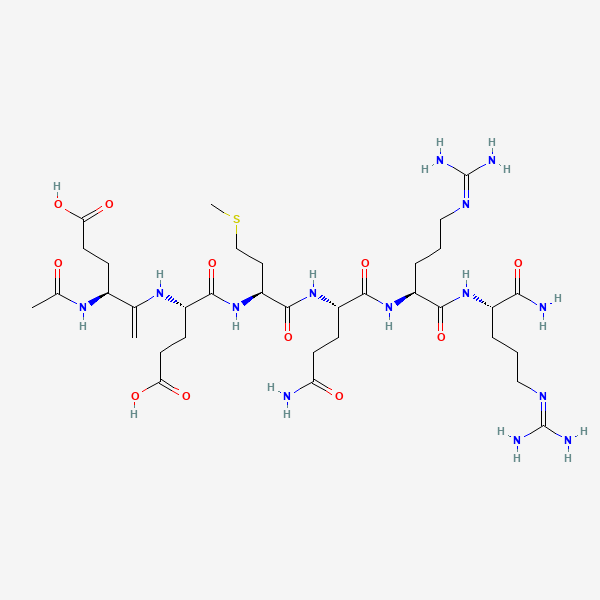
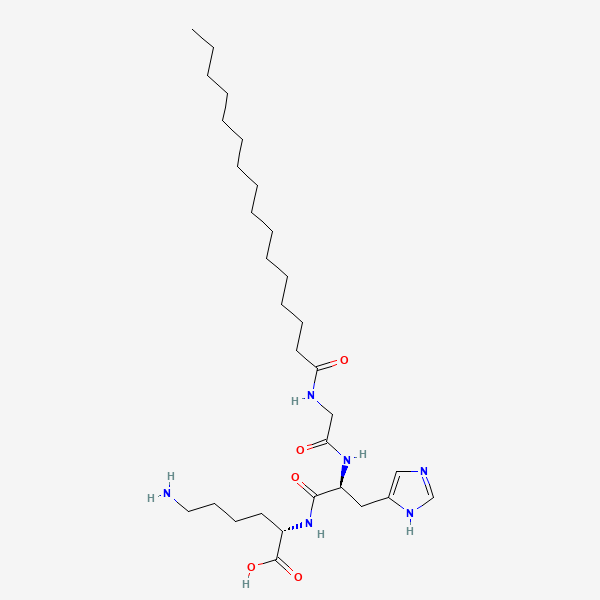
Which one fits which goal?
There's no universal winner here — the honest answer depends on what you're after. These picks are framed by goal, and each says why.
Softening dynamic expression lines
Leans toward Argireline
Argireline is designed around the SNAP-25/SNARE pathway behind repeated facial-contraction signaling, and it has small randomized human wrinkle evidence.
Supporting static fine lines and firmer-looking skin
Leans toward Palmitoyl Tripeptide-1
Palmitoyl tripeptide-1 is designed as a fibroblast repair signal, so collagen-related texture and firmness are the closer mechanism match, although isolated human proof is missing.
Choosing the ingredient with stronger human evidence
Leans toward Argireline
Argireline carries a Human RCT · mixed grade; isolated palmitoyl tripeptide-1 remains In-vitro · unknown · none in humans.
Evaluating the Pal-GHK component of Matrixyl 3000
Leans toward Palmitoyl Tripeptide-1
Palmitoyl tripeptide-1 is the Pal-GHK component, but Matrixyl 3000 also contains palmitoyl tetrapeptide-7, so blend results cannot be assigned to Pal-GHK alone.
References
- 1.Argireline anti-wrinkle efficacy — randomized placebo-controlled study (PubMed, PMID 23417317)
- 2.Acetyl hexapeptide-8 skin penetration from a cosmetic formulation (PubMed, PMID 24754410)
- 3.Palmitoyl tripeptide-1 and Matrixyl 3000 — Current Approaches in Cosmeceuticals (PubMed, PMID 40292641)
- 4.Argireline and palmitoyl tripeptide-1 — direct-comparison search (PubMed)
- 5.FDA — cosmetic ingredients and pre-market approval