Dihexa vs p21
Dihexa vs p21 compares two animal-only nootropics: Dihexa for synaptogenesis models and P021 for neurogenesis, with Dihexa's retractions explained.
Dihexa vs P021 is a comparison between two animal-only cognitive research compounds, not two proven human nootropics. Dihexa is the clearer pick for synaptogenesis models, but its foundational HGF/c-Met papers were retracted in 2025; P021 is the cleaner pick for neurogenesis and BDNF models. No trial has compared them directly.
What is the main difference between Dihexa and P021?
Dihexa and P021 aim at different parts of brain plasticity in preclinical research. Dihexa is framed as a synaptogenic compound: the proposed HGF/c-Met pathway encourages neurons to form new synapses, the junctions that pass signals between cells. P021, often shortened to P21, is framed as neurotrophic and neurogenic: animal studies track new-neuron growth, BDNF signaling, synaptic support and tau pathology.
That distinction makes this a neurogenesis peptide comparison, not a race for one all-purpose winner. Synaptogenesis means adding or strengthening connections between neurons. Neurogenesis means producing new neurons. The processes overlap, but they are not synonyms, and neither compound has shown that either process improves cognition in a person.
The naming causes avoidable confusion. P021 is also written P21 or P-21, but it is not the human p21/CDKN1A cell-cycle protein. In a p021 vs dihexa search, the relevant P021 is the synthetic CNTF-derived research compound.
How strong is the evidence for p21 vs dihexa?
The dihexa vs p21 evidence comparison favors P021 for record quality, but both grades remain animal-only, none-in-humans. A 2017 mouse study reported that dietary P021 boosted neurogenesis, rescued synaptic deficits and reversed cognitive impairment in a triple-transgenic Alzheimer’s model (PubMed). An earlier aged-rat study reported less age-related learning decline alongside increased BDNF expression (PubMed). Those are preclinical results, not clinical benefits.
Dihexa has rodent cognition data outside the two retracted mechanism papers. An independent 2021 APP/PS1 mouse study reported improved memory measures and PI3K/AKT pathway effects (PubMed). That prevents the honest summary from becoming “all Dihexa evidence vanished.” Still, a surviving mouse paper cannot repair falsified or fabricated data in the work used to explain why Dihexa should drive HGF/c-Met synaptogenesis.
ClinicalTrials.gov returned no matching registered study for Dihexa or peptide 021 when checked on July 16, 2026. There is no human dose, human safety profile or comparative outcome to place in a serious head-to-head table. The guide to reading peptide evidence explains why a mouse result cannot simply be promoted to a human claim.
What does the Dihexa retraction change?
The Dihexa retraction changes how confidently its signature mechanism can be repeated. In April 2025, JPET retracted a 2012 paper on angiotensin IV analogs as HGF/Met modifiers (PMID 40312092) and a 2014 paper tying procognitive and synaptogenic effects to HGF/c-Met activation (PMID 40312093). These were not minor wording corrections.
The 2014 notice says a Washington State University investigation found falsified or fabricated data in named figures and later erratum data, with Leen H. Kawas and Joseph W. Harding found solely responsible. That matters because popular comparison pages still repeat “ten million times more potent than BDNF” and definitive c-Met claims as settled fact, often beside a product listing. A retracted assay cannot carry that sales pitch.
Dihexa remains a legitimate research question. The correct wording is narrower: surviving animal work supports continued study of cognitive effects, while the foundational HGF/c-Met case is compromised. P021 has no comparable retraction in the studies cited here. Clean publication history does not make P021 human-proven; it simply removes one large reason for downgrading confidence.
Which compound fits which research goal?
Dihexa fits a synapse-formation model only when the protocol and interpretation state the retraction caveat plainly. P021 fits neurogenesis, BDNF or long-duration brain-aging models more directly because those outcomes were measured in its rodent literature. For a cleaner evidence record, P021 is the by-goal pick. For human cognitive treatment, neither compound earns a pick.
The structured recommendations above are research-model choices, not personal protocols. The animal studies used different species, disease models, schedules and endpoints, so comparing their dose numbers would create false precision. No experiment randomized animals, much less humans, to Dihexa versus P021. Any claim that one “works better” crosses a line the literature has not crossed.
Readers comparing adjacent compounds can also see Dihexa vs Semax, where the human-evidence gap is not symmetrical. The wider nootropic peptide hub separates compounds with clinical work from compounds still living entirely in cages and cell dishes.
Are Dihexa and P021 approved or safe in 2026?
Dihexa and P021 are not FDA-approved drugs, and neither has published human safety data. Drugs@FDA is the agency’s database of approved products (FDA); neither compound has an approved product record. Both profiles therefore use the dated US status research-use-only, not prescription drug, dietary supplement or established compounded medicine.
The main safety fact is the blank human column. Dihexa adds a theoretical concern because HGF/c-Met is a growth pathway involved in cancer biology, but no human trial has measured Dihexa-specific cancer risk. P021 adds a different unknown: long-term manipulation of neurotrophic and BDNF-linked signaling has not been followed in people. Unregulated research products also introduce purity and dose-accuracy risks that animal papers do not answer.
For tested athletes, both fall under the 2026 World Anti-Doping Agency S0 category for pharmacological substances without human therapeutic approval, prohibited at all times (WADA). The plain conclusion remains unsatisfying but useful: promising animal biology, no direct comparison, no human proof, and no established human safety margin.
Dihexa vs p21, point by point
Every dimension side by side — the honest differences, not a scoreboard.
| Dimension | Dihexa | p21 |
|---|---|---|
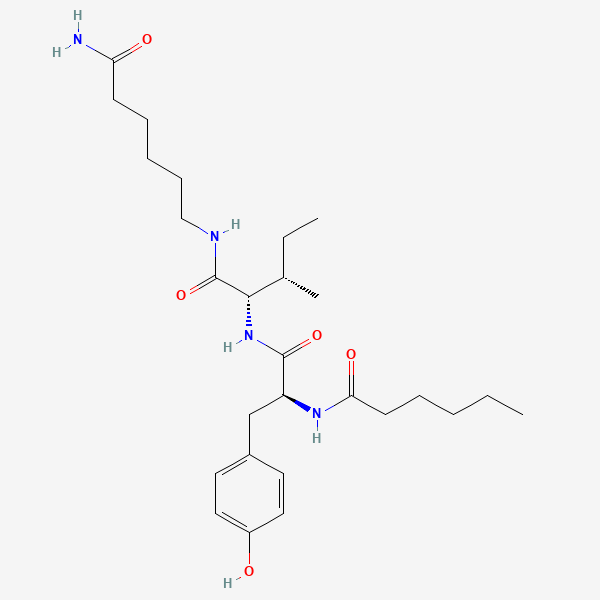
| What it is | A synthetic, orally active angiotensin IV analog derived from a stabilized tripeptide fragment. | A synthetic CNTF-derived peptidomimetic, also written P021, built around an acetylated four-amino-acid core. |
| Main research angle | Synaptogenesis: building new junctions between neurons in rodent and cell models. | Neurogenesis and neurotrophic support: promoting new-neuron markers and BDNF signaling in rodent models. |
| Proposed mechanism | Amplification of the HGF/c-Met growth-factor system; the foundational papers supporting this mechanism were retracted in April 2025. | Modulation of CNTF/LIF signaling with increased BDNF-linked neurogenesis and reduced abnormal tau in animal models. |
| Evidence grade | Animal-only, none-in-humans; an independent APP/PS1 mouse study reported cognitive effects, but the core mechanism literature has major integrity damage. | Animal-only, none-in-humans; cited mouse and rat studies report neurogenesis, synaptic and memory outcomes. |
| Retraction record | Two foundational 2012 and 2014 JPET HGF/c-Met papers were retracted in 2025 after a WSU investigation found falsified or fabricated data. | The P021 studies cited here are not marked retracted in PubMed. |
| Direct human or head-to-head evidence | No human trial and no direct comparison with P021. | No human trial and no direct comparison with Dihexa. |
| US and sport status (2026) | Not FDA-approved; research-use-only; covered by WADA S0 as a non-approved substance. | Not FDA-approved; research-use-only; covered by WADA S0 as a non-approved substance. |
- Proposed mechanism: Neither proposed mechanism has been confirmed in humans.
Dihexa vs p21: the two molecules
The 2D chemical structures, straight from PubChem — a quick way to see how similar (or not) the two actually are.
Which one fits which goal?
There's no universal winner here — the honest answer depends on what you're after. These picks are framed by goal, and each says why.
Studying synapse formation in a preclinical model
Leans toward Dihexa
Dihexa is the compound framed specifically around HGF/c-Met-linked synaptogenesis, but any study rationale must disclose that the two foundational mechanism papers were retracted in 2025.
Studying neurogenesis or BDNF-linked signaling in a preclinical model
Leans toward p21
P021 has the more direct animal literature on hippocampal neurogenesis and BDNF-linked effects, without a retraction attached to the studies cited here.
Choosing the cleaner published evidence record
Leans toward p21
Both remain animal-only, but P021 does not carry Dihexa's 2025 foundational-paper retractions.
References
- 1.Retraction of the 2012 angiotensin IV / HGF-Met paper (JPET, 2025)
- 2.Retraction of the 2014 angiotensin IV / HGF-c-Met synaptogenesis paper (JPET, 2025)
- 3.Baazaoui & Iqbal, 2017 - P021 in 3xTg-AD mice
- 4.Bolognin et al., 2014 - oral P021 in aged rats
- 5.Dihexa and peptide 021 registered-study search (ClinicalTrials.gov)