GHK-Cu vs Palmitoyl Tripeptide-1
GHK-Cu vs Palmitoyl Tripeptide-1: copper delivery versus a lipid-tailed collagen signal, with honest evidence tiers and by-goal picks.
GHK-Cu vs Palmitoyl Tripeptide-1 is a comparison of two collagen signal peptides built on the same Gly-His-Lys sequence, but they are not interchangeable: GHK-Cu carries copper as part of its mechanism, while Palmitoyl Tripeptide-1 adds a fatty tail for topical delivery. No trial has compared them directly; this weighs their separate evidence.
GHK-Cu is the copper peptide. Copper delivery is part of the biology, including support for enzymes involved in connective-tissue formation, and small human cosmetic studies give GHK-Cu the stronger clinical signal. Palmitoyl tripeptide-1 is the Matrixyl ingredient: a lipidated GHK fragment designed to cross the skin’s oily outer layer and signal fibroblasts. Its isolated anti-wrinkle evidence remains in-vitro; finished-product studies cannot tell us what this peptide did apart from its formula partners.
The palmitoyl tripeptide-1 vs ghk-cu question gets muddled because readers often own both without realizing it. That copper peptide vs Matrixyl ingredient distinction matters: palmitoyl tripeptide-1 is half of Matrixyl 3000, alongside palmitoyl tetrapeptide-7. The peptides-for-skin guide, GHK-Cu vs Matrixyl, and Matrixyl vs palmitoyl tripeptide-1 comparisons separate the single ingredients from the branded blend.
The practical layering answer is less dramatic than the internet rule. No direct clinical interaction study was found showing that topical GHK-Cu fails when layered with vitamin C or a retinoid. Formulation research does show stability across pH 4.5–7.4 and vulnerability to oxidative stress, which supports caution with low-pH L-ascorbic acid but not a universal ban on one routine. Follow the finished product’s directions; separate applications if the manufacturer says to or irritation appears. For anyone asking which collagen peptide wins, the honest answer stays goal-specific: GHK-Cu for copper-linked repair biology and the stronger human signal; palmitoyl tripeptide-1 for a copper-free topical signal peptide.
GHK-Cu vs Palmitoyl Tripeptide-1, point by point
Every dimension side by side — the honest differences, not a scoreboard.
| Dimension | GHK-Cu | Palmitoyl Tripeptide-1 |
|---|---|---|
| Core chemistry | The GHK tripeptide (Gly-His-Lys) complexed with a copper(II) ion. | The same GHK sequence with a C16 palmitic-acid tail and no copper. |
| Design goal | Carries copper, a cofactor used by enzymes involved in connective-tissue formation and repair. | Uses a fatty tail to improve affinity for the skin's oily barrier and signal fibroblasts. |
| Best-known product identity | Listed as copper tripeptide-1 in topical skincare; also sold separately as research-grade GHK-Cu. | Best known as one half of Matrixyl 3000, paired with palmitoyl tetrapeptide-7. |
| Human evidence | Small human cosmetic studies provide an encouraging signal, backed by extensive cell and animal work. | No clean human trial isolates palmitoyl tripeptide-1; most product data involve blends such as Matrixyl 3000. |
| Evidence tier used here | Human-observational for the headline cosmetic use in the GHK-Cu profile. | In-vitro for the headline cosmetic use; none in humans for the isolated peptide. |
| US regulatory position (2026) | Copper tripeptide-1 can be used in cosmetics, but GHK-Cu is not an FDA-approved drug; FDA flags limited human safety data for compounded injectable GHK-Cu. | A cosmetic ingredient, not an FDA-approved drug or an injectable treatment. |
| Routine compatibility | Copper and formulation stability matter; low-pH or strongly oxidative combinations deserve product-specific caution. | No copper-based redox concern, though the finished formula can still irritate sensitive skin. |
- Core chemistry: The shared three-amino-acid backbone is why the INCI names look related; the attached cargo changes the job.
- Human evidence: No trial has compared GHK-Cu with palmitoyl tripeptide-1 directly.
- Evidence tier used here: The shared comparison badge uses the weaker tier: in-vitro.
- Routine compatibility: No clinical trial was found proving a blanket ban on layering GHK-Cu with vitamin C or retinoids.
GHK-Cu vs Palmitoyl Tripeptide-1: the two molecules
The 2D chemical structures, straight from PubChem — a quick way to see how similar (or not) the two actually are.
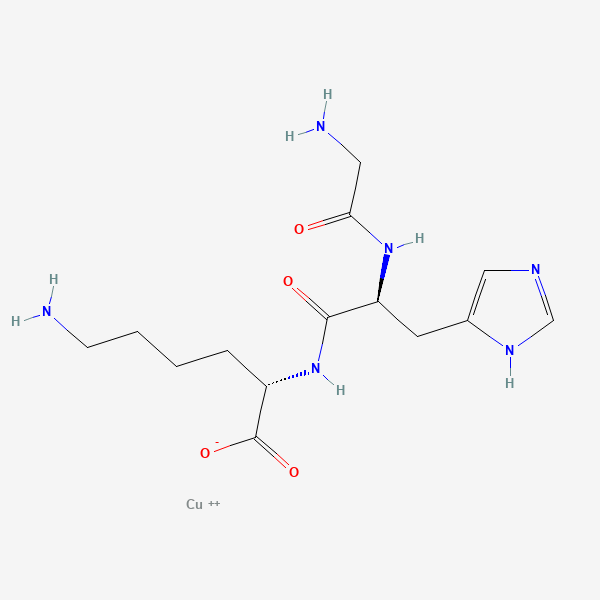
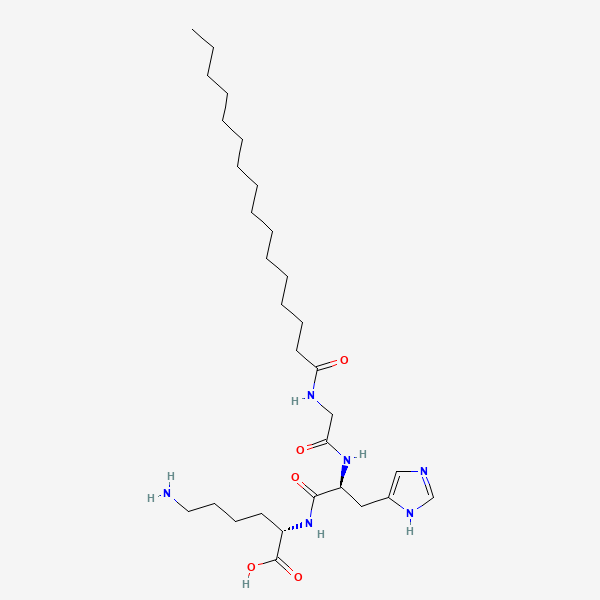
Which one fits which goal?
There's no universal winner here — the honest answer depends on what you're after. These picks are framed by goal, and each says why.
Wanting the stronger human cosmetic signal
Leans toward GHK-Cu
GHK-Cu has small human cosmetic studies behind it, while isolated palmitoyl tripeptide-1 remains at the cell-and-formulation evidence stage.
Wanting a straightforward topical signal peptide without copper
Leans toward Palmitoyl Tripeptide-1
Its palmitic-acid tail was designed for topical delivery, and it avoids the copper-specific formulation questions that follow GHK-Cu.
Wanting copper-dependent repair biology
Leans toward GHK-Cu
Copper delivery is part of GHK-Cu's mechanism rather than a decorative extra; palmitoyl tripeptide-1 does not carry copper.
Understanding what is already in a Matrixyl 3000 product
Leans toward Palmitoyl Tripeptide-1
Palmitoyl tripeptide-1 is one of Matrixyl 3000's two peptide components, so the ingredient may already be in the routine under the blend name.
References
- 1.Mortazavi et al., 2025 — topical GHK, GHK-Cu and Pal-GHK review
- 2.Pickart et al., 2015 — GHK in skin-regeneration pathways
- 3.Topical GHK-Cu gel for acute skin wound healing — registered Phase 2 trial
- 4.FDA — why cosmetics are not FDA-approved
- 5.FDA — bulk drug substances that may present compounding safety risks