Melanotan 1 vs 2
Melanotanundefinedvsundefinedcompares receptor selectivity, tanning, libido effects, mole monitoring, evidence, dosing, and US approval status in 2026.
Melanotanundefinedvsundefinedcomes down to selectivity, evidence, and tolerance for side effects: Melanotan I (afamelanotide) mainly targets MC1R and has an FDA-approved implant for EPP, while Melanotan II acts more broadly, adding libido, erection, appetite, nausea, and flushing effects. No trial has compared them directly.
What is the core difference between Melanotan I and II?
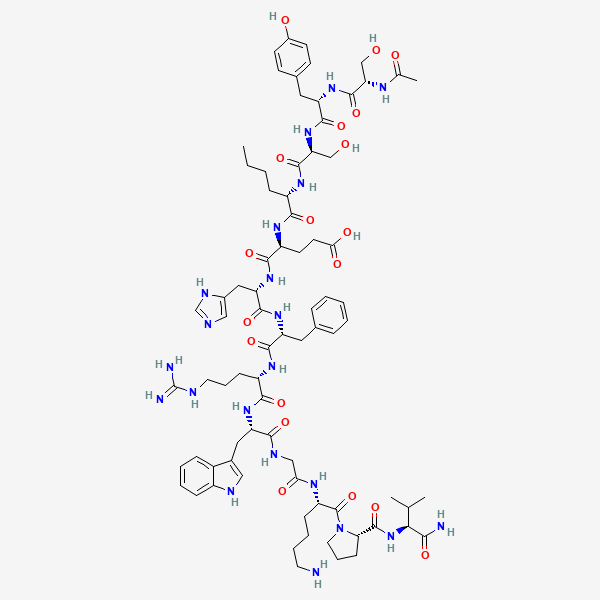
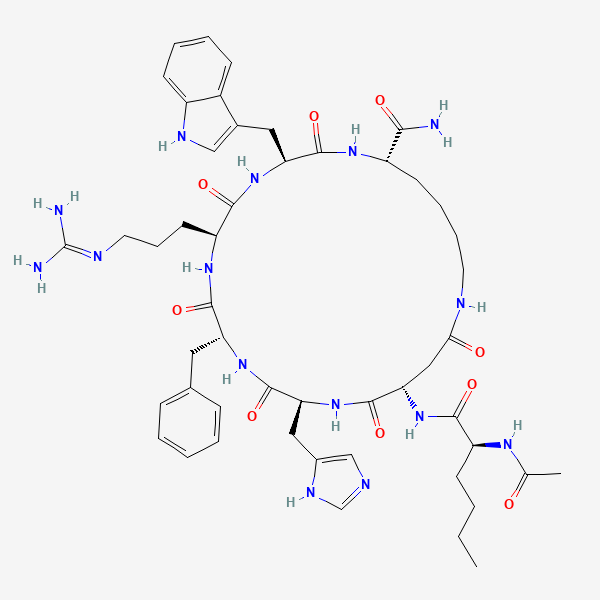
Melanotan I is the narrower pigment-focused compound; Melanotan II is the broader melanocortin agonist. Melanotan I, also called afamelanotide or MT-1, is a linear 13-amino-acid peptide that mainly activates the melanocortin-1 receptor (MC1R) on pigment cells. Melanotan II, or MT-2, is a cyclic seven-amino-acid peptide that also activates MC3R and MC4R.
That receptor split explains most of melanotan i vs ii. Both can increase eumelanin, the brown-black skin pigment. Melanotan II also reaches pathways involved in appetite and sexual response, so erections, libido changes, reduced appetite, nausea, flushing, yawning, and stretching belong more clearly to its profile. Melanotan I is not effect-free, but its job description is shorter.
Which one has better evidence for tanning?
Neither compound has won a direct tanning contest because no head-to-head trial exists. Separate human studies show that both increase pigmentation. Melanotan II’s early controlled studies documented visible tanning, while afamelanotide studies measured pigmentation as part of its pharmacology. That supports “both can tan,” not “one produced X percent more color.”
For readers asking melanotan 1 or 2 for the strongest cosmetic effect, Melanotan II is the usual by-goal pick because it is broader and described as the more potent tanning peptide. That pick is still an inference from separate evidence and use patterns, not comparative proof. Cosmetic tanning remains off-label for afamelanotide and unapproved for Melanotan II. A darker result also does not prove protection from ultraviolet damage or skin cancer.
How do MT1 vs MT2 effects differ beyond skin color?
MT1 vs MT2 separates cleanly outside the skin: afamelanotide has trial-backed photoprotection in EPP, while Melanotan II has small controlled human evidence for erections and sexual desire. The afamelanotide trials tested whether adults with erythropoietic protoporphyria could spend more pain-free time in light, and the answer favored treatment (PubMed).
Melanotan II produced spontaneous erections and increased desire in a small placebo-controlled crossover study of men with erectile dysfunction (PubMed). Melanotan II can also reduce appetite, but the existing profile does not treat that as an approved weight-management use. For sexual-function goals, the related approved drug is PT-141 (bremelanotide), not Melanotan II.
Which option has the stronger clinical and regulatory footing?
Melanotan I has the stronger footing, but only when “Melanotan I” means prescription SCENESSE used for EPP. Two randomized trials tested a 16 mg afamelanotide implant every 60 days, and FDA approval followed in 2019. The current label specifies one 16 mg implant inserted by a trained healthcare professional every two months (DailyMed).
Melanotan II has controlled human evidence, but the studies were small and early, and no long-term safety program led to approval. In the United States in 2026, Melanotan II is not FDA-approved for any indication. Gray-market Melanotan I powder also does not inherit SCENESSE’s approval merely because the active molecule is afamelanotide. Product oversight, route, dose accuracy, and sterility are part of the distinction; the vial label cannot borrow the implant’s résumé. See the site’s dated regulatory-status guide for how approved and research-use-only categories differ.
Are the safety differences meaningful?
Both compounds can darken moles and freckles, so skin monitoring matters with either one; Melanotan II adds more whole-body effects and more uncertainty. SCENESSE commonly causes implant-site reactions, nausea, fatigue, dizziness, hyperpigmentation, and melanocytic-nevus changes. Its FDA label recommends a full-body skin examination twice yearly because pre-existing nevi and freckles may darken.
Melanotan II commonly brings nausea and flushing, and may also cause appetite reduction, yawning, stretching, or spontaneous erections. A prolonged painful erection is an emergency. Published case reports describe new or changing atypical moles and melanomas around unregulated melanotan use, but case reports cannot prove that the peptide caused a cancer. The honest melanoma-monitoring note is narrower: pigment changes can make moles harder to track, and the absence of long-term controlled safety data leaves the size of any cancer risk unresolved (risk review).
Melanotan I may suit someone prioritizing targeted MC1R action and fewer expected off-target effects. No comparative safety trial has shown a lower overall adverse-event rate, however. Melanotan II may suit a person specifically seeking the broader tanning and libido package, provided the higher uncertainty is not edited out of the decision.
Can the doses be compared directly?
The doses should not be compared as if these were interchangeable vials. SCENESSE has an approved regimen: a clinician inserts one 16 mg subcutaneous implant every two months for EPP. That slow-release implant is not a template for dosing gray-market Melanotan I powder, and converting it into a self-injection schedule would be false precision.
Melanotan II has no FDA-approved dose. Early human research used subcutaneous dosing, but those study methods do not establish a safe cosmetic protocol, much less a dose equivalent to the afamelanotide implant. This page therefore does not turn either evidence base into personal dosing instructions. The distinction is basic but often lost in melanotan 1 vs melanotan 2 discussions: same broad hormone family does not mean same molecule, delivery system, or clinical evidence.
How should someone choose between melanotan 1 and 2?
Melanotan I fits the narrower goals: approved EPP photoprotection through SCENESSE, targeted pigmentation, and fewer expected appetite or sexual effects. Melanotan II fits broader off-label goals such as a stronger tan or simultaneous libido effects, but carries more receptor-driven side effects, no approved product, and thinner long-term safety evidence.
There is no universal winner in melanotan 1 vs 2. The structured picks above make the trade: MT-1 for the regulated medical use and narrower action; MT-2 for broader effects when someone accepts that cosmetic use is unapproved and the safety record is less complete. Both belong to the melanocortin peptide family, and both deserve evidence labels that separate documented effects from anecdotes rather than blending them together.
Melanotan 1 vs 2, point by point
Every dimension side by side — the honest differences, not a scoreboard.
| Dimension | Melanotan 1 | 2 |
|---|---|---|
| Molecule and receptor action | Afamelanotide, a linear 13-amino-acid analog that mainly targets the MC1 receptor (MC1R). | A cyclic seven-amino-acid analog that activates MC1R plus other melanocortin receptors, including MC3R and MC4R. |
| Main documented effects | Pigmentation and photoprotection; the approved use is increasing pain-free light exposure in adults with EPP. | Pigmentation plus appetite, sexual-arousal and erection effects associated with broader receptor activity. |
| Human evidence | Human randomized trials support the 16 mg SCENESSE implant for EPP; human studies also document increased pigmentation. | Small, early controlled human studies document pigmentation and erections, but long-term safety evidence is absent. |
| Common side-effect pattern | Nausea, fatigue, dizziness, skin hyperpigmentation and implant-site reactions are listed for SCENESSE. | Nausea, flushing, reduced appetite, yawning or stretching, and spontaneous erections are reported. |
| Pigmented lesions | Can darken existing moles and freckles; the SCENESSE label recommends a full-body skin examination twice yearly. | Can darken existing moles and prompt new pigmented lesions; case reports describe atypical-nevus changes and melanoma, without proving causation. |
| US regulatory status (2026) | SCENESSE is FDA-approved for EPP as a clinician-inserted implant; gray-market Melanotan I powder is not the approved product. | Not FDA-approved for any use and sold as a research chemical, not as an approved drug, supplement or cosmetic. |
| Dose evidence | The approved SCENESSE regimen is one 16 mg subcutaneous implant administered by a trained healthcare professional every two months. | There is no FDA-approved dose; early studies used subcutaneous dosing, but they do not establish a cosmetic self-use protocol. |
- Human evidence: No trial has compared Melanotan I and Melanotan II directly; this comparison weighs their separate evidence.
Melanotan 1 vs 2: the two molecules
The 2D chemical structures, straight from PubChem — a quick way to see how similar (or not) the two actually are.
Which one fits which goal?
There's no universal winner here — the honest answer depends on what you're after. These picks are framed by goal, and each says why.
Targeted pigmentation or photoprotection with fewer off-target receptor effects
Leans toward Melanotan 1
Afamelanotide mainly targets MC1R and lacks Melanotan II's expected appetite and sexual effects, although no direct trial has quantified a lower overall side-effect rate.
FDA-approved treatment for erythropoietic protoporphyria
Leans toward Melanotan 1
SCENESSE is the option approved and tested for increasing pain-free light exposure in adults with EPP.
Stronger cosmetic tanning effect despite higher uncertainty
Leans toward 2
Melanotan II is the broader, more potent tanning peptide people pursue for this goal, but no direct trial proves a stronger tan than afamelanotide; cosmetic use remains unapproved and riskier.
Arousal or erection effects alongside tanning
Leans toward 2
Small controlled human studies document erection and sexual-desire effects from Melanotan II; Melanotan I is not used for that broader receptor profile.
References
- 1.SCENESSE (afamelanotide) prescribing information — DailyMed
- 2.Langendonk et al. — Afamelanotide for Erythropoietic Protoporphyria (PMID 26132941)
- 3.Melanotan II — human research indexed by PubMed
- 4.Wierckx et al. — Risks of unregulated alpha-MSH analogues (PMID 28266027)
- 5.FDA — Drugs, approval status and unapproved-drug information