P21 vs Semax
P21 vs Semax compares two animal-only nootropic claims: CNTF-derived P021 for neurogenesis and intranasal Semax for stroke and cognition research.
P21 vs Semax is a choice between two early brain-growth ideas, not two proven cognitive enhancers: P021 is a CNTF-derived, adamantane-capped compound studied for hippocampal neurogenesis in rodents, while Semax is an intranasal ACTH(4-10) analog with Russian clinical history. No trial has compared them directly, and neither has human proof for healthy-person cognition.
What is the real difference between P021 and Semax?
P021 and Semax reach the “neurotrophic” idea from different starting points. P021 is a small peptide-like compound derived from an active region of ciliary neurotrophic factor (CNTF). Semax is a seven-amino-acid analog of adrenocorticotropic hormone fragment 4-10, or ACTH(4-10), developed as an intranasal drug. Both touch brain-derived neurotrophic factor (BDNF) signaling in preclinical research, but shared vocabulary does not make them interchangeable.
P021 uses a DGGL amino-acid core and an adamantane-containing modification intended to improve stability and brain exposure. The Iqbal research group developed the compound from CNTF biology. P021 is not a fragment of Cerebrolysin, despite that claim appearing on comparison and storefront pages. Cerebrolysin is a separate mixture of peptides; collapsing the two origin stories makes the chemistry sound tidier than it is.
Semax combines the ACTH(4-7) sequence with a Pro-Gly-Pro tail. In rats, a single intranasal dose increased hippocampal BDNF protein and TrkB activation (PubMed). That is a plausible mechanism for learning research, not proof of sharper human cognition.
Which peptide has better evidence for cognition?
P021 and Semax both earn Animal-only · Unknown · None-in-humans for the headline claim that a healthy person will think or learn better. Semax has more human exposure, including Russian medical use and small neurological studies, but “used in humans” is not the same question as “proven cognitive enhancer.” This nootropic peptide comparison keeps those two evidence lanes separate.
P021 improved neurogenesis markers, synaptic measures and cognition in rodent disease models. The encouraging part is that the animal program tests more than one marker. The limiting part is just as concrete: no human has received P021 in a published clinical trial. A 2024 study also found no rescue of several neurogenesis, survival or BDNF measures in a CDKL5-deficient mouse model (PMC). P021 is an active research hypothesis, not a result that appears in every rodent context.
Semax has a Russian clinical history in stroke and other neurological settings. A 1997 report compared 30 Semax-treated stroke patients with 80 controls and reported faster neurological recovery, but the paper was in Russian and does not supply the modern, replicated trial base needed for a broad conclusion (PubMed). FDA’s 2026 compounding review was blunter: it found insufficient effectiveness evidence for cerebral ischemia and insufficient clinical information to characterize safety (FDA).
Which fits each research goal?
Semax is the better fit for intranasal stroke or cognition research because that is the route and clinical setting attached to its history. P021 is the more purpose-built neurogenesis peptide for hippocampal research because new-neuron and synaptic-plasticity measures are the center of its rodent program. These are by-goal research picks, not advice and not a universal winner.
For the “semax vs p21” question about speed, the evidence does not support promising a fast Semax effect or a slow, structural P021 effect in people. Those timelines are common marketing copy, not a direct human comparison. The honest p021 vs semax distinction is experimental design: Semax has a defined intranasal formulation and clinical history; P021 has a focused rodent neurogenesis program and no human dosing framework.
The broader nootropic peptide hub shows how both sit beside compounds with different mechanisms and evidence. Readers weighing another growth-oriented candidate can also see Dihexa vs Semax; the same rule applies there too—mechanistic ambition does not promote an animal result into a human one.
How are P021 and Semax used in research?
P021 has been given orally and by injection in rodents, while Semax’s established product format is intranasal. P021 has no validated human route, schedule or dose. The Russian Semax instruction describes a ready-to-use 0.1% nasal solution with 50 micrograms per drop and indication-specific regimens (official instruction). Those labeled Russian amounts are not an FDA-reviewed US protocol.
This distinction matters because search results often turn animal exposure or a foreign label into a shopping-friendly “typical dose.” P021 offers no clinical basis for that conversion. Semax offers a real pharmaceutical formulation abroad, but a research vial sold in the United States is not automatically equivalent to that product in identity, concentration, delivery or quality. “Intranasal” describes a route; it does not certify what is in the bottle.
Are P021 and Semax FDA-approved or banned in sport?
P021 and Semax are not FDA-approved, and both remain research-use-only in the United States as of July 2026. Semax’s compounding position is moving: FDA is considering Semax free base and acetate for the 503A Bulks List, has proposed that neither be included, and will not make a final determination until after its advisory process. A nomination is not permission to compound.
P021 falls under the 2026 World Anti-Doping Agency S0 category because it lacks approval for human therapeutic use and is prohibited at all times. Semax is not named on the 2026 WADA Prohibited List, and its Russian approval complicates an S0 reading. That still is not a blanket clearance for a tested athlete; formulations, other rules and later list changes can matter.
The bottom line on p21 vs semax is narrower than the sales pages make it. Semax has the stronger human-use history and the clearer intranasal research path. P021 has the cleaner hippocampal neurogenesis question. Both reputations run ahead of the evidence for cognitive enhancement, and no head-to-head experiment tells us which idea translates better to people.
P21 vs Semax, point by point
Every dimension side by side — the honest differences, not a scoreboard.
| Dimension | P21 | Semax |
|---|---|---|
| What it is | A CNTF-derived peptidomimetic built around a DGGL core, with an adamantane-containing cap to improve stability and brain exposure. | A synthetic seven-amino-acid ACTH(4-10) analog, with a Pro-Gly-Pro tail added for stability. |
| Headline cognitive-enhancement badge | Animal-only · unknown verdict · None-in-humans. | Animal-only · unknown verdict · None-in-humans. |
| Best-supported research angle | Hippocampal neurogenesis, synaptic support and memory in rodent models of aging and neurological disease. | Intranasal neuroprotection and cognition research, including a Russian clinical history in ischemic stroke. |
| Delivery and reported dosing | Oral and injected dosing appears in animal studies; no human route or dose has been established. | The registered Russian product is a 0.1% intranasal solution containing 50 micrograms per drop; labeled regimens vary by indication. |
| Direct comparative evidence | No P021-versus-Semax trial exists. | No P021-versus-Semax trial exists. |
| United States status (July 2026) | Not FDA-approved; research-use-only, with no established human clinical program. | Not FDA-approved; research-use-only. FDA is reviewing Semax for the 503A Bulks List and has proposed against inclusion, but no final determination has been issued. |
| 2026 anti-doping status | Prohibited at all times under WADA S0 because P021 lacks approval for human therapeutic use. | Not named on the 2026 WADA list; Russian therapeutic approval means S0 does not apply cleanly, but absence from the name list is not an athlete clearance. |
- What it is: P021 is not a Cerebrolysin fragment. It came from ciliary neurotrophic factor (CNTF) work by the Iqbal group.
- Headline cognitive-enhancement badge: Semax has human use and small clinical reports in neurological settings, but that does not establish cognitive enhancement in healthy people.
- Delivery and reported dosing: These are research and label facts, not a personal dosing comparison.
- Direct comparative evidence: This comparison weighs separate evidence; it does not infer superiority from an untested matchup.
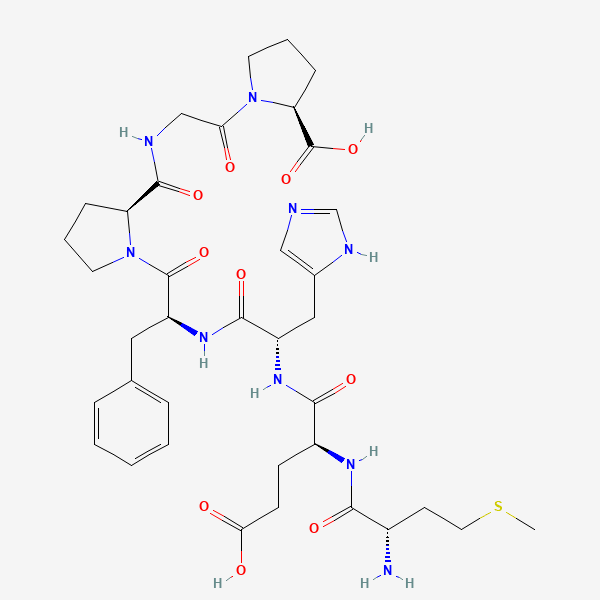
P21 vs Semax: the two molecules
The 2D chemical structures, straight from PubChem — a quick way to see how similar (or not) the two actually are.
Which one fits which goal?
There's no universal winner here — the honest answer depends on what you're after. These picks are framed by goal, and each says why.
Intranasal stroke or cognition research
Leans toward Semax
Semax is the compound with an intranasal registered product and a Russian clinical literature in stroke and neurological settings, although FDA found the submitted effectiveness record insufficient for US compounding review.
Hippocampal neurogenesis research
Leans toward P21
P021 was designed from a CNTF active region, and its clearest preclinical signal is increased neurogenesis and synaptic plasticity in rodent hippocampus.
References
- 1.Prevention of dendritic and synaptic deficits and cognitive impairment with a neurotrophic compound
- 2.P021 in in-vitro and in-vivo models of CDKL5 deficiency disorder
- 3.Semax regulates BDNF and TrkB expression in rat hippocampus
- 4.Semax in acute hemispheric ischemic stroke
- 5.FDA evaluation of Semax-related bulk drug substances for the 503A Bulks List