Also known as: Acadesine · AICA riboside · 5-aminoimidazole-4-carboxamide riboside
Animal-onlyHelped⚠ none in humans
On this page
- What is AICAR?
- How does AICAR activate AMPK?
- Is AICAR really “exercise in a pill”?
- What happened in human AICAR studies?
- What AICAR dosage has actually been studied?
- Is AICAR safe? What are the risks?
- Is AICAR FDA-approved or banned by WADA in 2026?
- AICAR vs MOTS-c: what is the difference?
- Evidence by outcome
- FDA & legal status
- Chemical identifiers
- References
- Related compounds
- More on AICAR
AICAR is not a peptide: it is acadesine, a nucleoside AMPK activator studied for metabolism and cardiac protection. The famous endurance result came from sedentary mice, not people. AICAR has no FDA-approved use in 2026, no validated performance dose, and is prohibited at all times in tested sport.
- Evidence tier for endurance: Animal-only
- United States status (July 2026): Unapproved; research-use-only
- Human program: Intravenous cardiac-surgery research, not fat loss
- Sport: WADA-prohibited at all times under S4.4.1
- Key unknown: Long-term safety for performance or longevity use
What is AICAR?
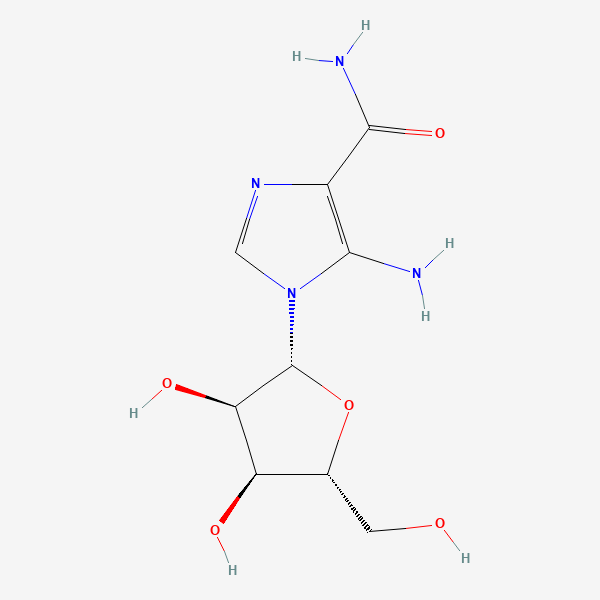
AICAR is acadesine, also called AICA riboside: a small nucleoside with the formula C9H14N4O5, molecular weight 258.23 g/mol, and CAS 2627-69-2. PubChem identifies the exact record as CID 17513. A nucleoside is a chemical base joined to a sugar; a peptide is a chain of amino acids. Peptide-store shelving does not get a vote in the chemistry.
The name creates a second trap. Acadesine enters cells and is phosphorylated into ZMP, the nucleotide form often called AICAR in biochemistry papers. This page uses “AICAR” for acadesine because that is the name readers search, while keeping the nucleoside and its phosphorylated product distinct.
How does AICAR activate AMPK?
AICAR activates AMP-activated protein kinase (AMPK) after cells convert acadesine into ZMP, a molecule that resembles AMP, the signal that energy is running low. AMPK acts like a cellular fuel gauge: when the needle drops, cells increase fuel availability and adjust energy-consuming work. That makes AICAR an AMPK activator, but not a miniature workout.
AMPK sits inside a large metabolic network, and AICAR also produces effects that do not depend on AMPK. The mechanism supports a research hypothesis; it cannot by itself prove more endurance, fat loss, or longer life in humans. The longevity compounds hub puts that distinction between pathway and outcome front and center.
Is AICAR really “exercise in a pill”?
AICAR earned the “exercise in a pill” headline from one clean but narrow mouse result. In the 2008 Cell paper by Narkar and colleagues, four weeks of treatment changed oxidative-metabolism genes and increased running endurance by 44% in sedentary mice (PMID 18674809). The mice ran farther without training. No human endurance trial was hiding in the small print.
That makes the AICAR endurance claim animal-only, helped, none in humans. The experiment showed that pharmacologically shifting an energy pathway could mimic part of an endurance-training adaptation in mice. It did not show that AICAR reproduces exercise’s effects on the human heart, bones, brain, strength, coordination, or long-term health. “AICAR exercise in a pill” is a mouse headline, not a human treatment result.
What happened in human AICAR studies?
AICAR’s human research focused on intravenous acadesine around heart surgery, not gym performance or fat loss. RED-CABG randomized 3,080 intermediate- to high-risk patients undergoing coronary artery bypass grafting to acadesine or placebo. The trial stopped after a planned futility analysis: death, nonfatal stroke, or severe left-ventricular dysfunction occurred in 5.1% with acadesine and 5.0% with placebo (PMID 22782417).
The registered RED-CABG protocol used an IV infusion beginning around anesthesia, plus acadesine in the heart-lung machine and cardioplegia solution. That is serious human exposure data, but it answers a cardiac-surgery question. It does not validate aicar endurance, bodybuilding, or anti-aging claims. The most developed human program failed on its main clinical outcome and never tested the consumer headline.
What AICAR dosage has actually been studied?
AICAR has no evidence-based dosage for endurance, fat loss, or longevity in people. RED-CABG used 0.1 mg/kg per minute intravenously for about seven hours, totaling 42 mg/kg, under surgical monitoring; acadesine was also added to bypass-related solutions. That dose is study context, not a transferable protocol.
An aicar dosage sold online cannot borrow legitimacy from a hospital infusion given during open-heart surgery. Route, monitoring, patient selection, and purpose were all different. The mouse endurance experiment likewise cannot establish a human conversion. Without a validated human performance trial or approved label, a consumer dosing chart would be arithmetic wearing a lab coat.
Is AICAR safe? What are the risks?
AICAR does not have an established safety profile for self-directed performance, weight-loss, or longevity use. People received acadesine in clinical trials, but those exposures were controlled, mostly intravenous, and tied to specific diseases or procedures. There is no approved prescribing information defining safe performance dosing, common adverse-event rates, contraindications, or long-term monitoring.
Research-use products add a separate layer: the label does not prove identity, concentration, purity, or sterility. AMPK also regulates many tissues rather than one convenient “endurance switch.” USADA’s AICAR safety and anti-doping review describes the compound as experimental and not approved for therapeutic use. Unknown is the honest safety verdict here.
Is AICAR FDA-approved or banned by WADA in 2026?
AICAR is not FDA-approved for any use in the United States as of July 16, 2026, and the consumer market is research-use-only. Acadesine’s past clinical trials made it investigational; they did not produce an approved drug. “Research use only” is not a quieter form of approval, as the guide to what research-use-only means explains.
AICAR WADA status is unusually clear. The 2026 WADA Prohibited List names AICAR under S4.4.1, activators of AMPK within metabolic modulators. The ban applies in and out of competition. Athletes can also use the site’s guide to peptides and drug testing, though AICAR itself is not a peptide.
AICAR vs MOTS-c: what is the difference?
AICAR vs MOTS-c starts with chemistry: AICAR is a nucleoside converted to an AMP-like metabolite, while MOTS-c is a 16-amino-acid mitochondrial-derived peptide. Both are discussed around AMPK, metabolic health, and exercise-mimetic claims. Both also remain animal-only for improved endurance, and the 2026 WADA list names both in S4.4.1.
AICAR has substantial human exposure from an unsuccessful IV cardiac-surgery program; MOTS-c does not have comparable completed human efficacy evidence. Neither has shown that taking it improves human endurance or longevity. NAD+ belongs in the same longevity conversation for a different reason: cellular energy chemistry, not AMPK activation. Grouping all three as “peptides” saves a menu category and loses the science.
Evidence by outcome
Each outcome AICAR has been studied for, with the honest evidence grade and what the studies actually found. A tier never stands alone — the verdict rides with it.
| Outcome | Evidence | What was found |
|---|---|---|
| Running endurance | Animal-onlyHelped⚠ none in humans | Four weeks of AICAR increased running endurance by 44% in sedentary mice. No controlled human trial has shown that taking AICAR improves endurance, so the headline performance claim remains animal-only. |
| Major outcomes after CABG surgery | Human RCTNo effect | In the 3,080-participant RED-CABG randomized trial, intravenous acadesine did not reduce the composite of death, nonfatal stroke, or severe left ventricular dysfunction. The study was stopped after a futility analysis. |
| Fat loss or exercise replacement | MechanisticUnclear⚠ none in humans | AMPK biology and mouse data make the idea plausible enough to study, but no controlled human trial has established AICAR as a fat-loss drug or a replacement for exercise. |
FDA & legal status
- United States: research use only (as of Jul 2026)
AICAR is not an FDA-approved medicine and has no approved therapeutic use. Human studies were investigational hospital research; products offered to consumers are research chemicals, not approved drugs or supplements.
Chemical identifiers
References
- 1.PubChem — Acadesine (CID 17513)
- 2.Narkar et al., 2008 — AMPK and PPARδ agonists are exercise mimetics (PMID 18674809)
- 3.Newman et al., 2012 — RED-CABG randomized trial (PMID 22782417)
- 4.ClinicalTrials.gov — RED-CABG acadesine study (NCT00872001)
- 5.USADA — What Athletes Should Know About AICAR
- 6.WADA — 2026 Prohibited List
More on AICAR
Everything else we've written about AICAR — what the community reports, the explainers that cover it, and the terms it keeps running into.