Also known as: EDR peptide · Glu-Asp-Arg
Animal-onlyUnclear⚠ none in humans
On this page
- What is Pinealon?
- How is the EDR peptide supposed to work?
- What does the pinealon research actually show?
- Has Pinealon been studied in humans?
- Is Pinealon safe? Side effects and risks
- Is Pinealon FDA-approved or banned in sport?
- Is there a validated pinealon dosage?
- Evidence by outcome
- FDA & legal status
- Chemical identifiers
- References
- Related compounds
pinealon is a synthetic three-amino-acid EDR peptide studied for neuroprotection and cognitive aging. Cell and rat experiments show signals worth following, but no independently replicated human trial establishes a benefit. Pinealon is not FDA-approved, has no validated human dose, and carries a mostly unmapped safety profile.
Key facts
- What it is: Glu-Asp-Arg, a 3-amino-acid peptide with a molecular weight of 418.4 g/mol
- Evidence tier: Animal-only for the headline neuroprotection claim; supporting work is also in vitro
- U.S. status (July 2026): Not FDA-approved; sold as research use only (RUO)
- Pinealon dosage: No validated human dose; one rat experiment used 10 micrograms/kg intraperitoneally
- Main risk: Human adverse effects, interactions, and long-term safety are not established
- Sport: Prohibited at all times under WADA’s S0 catch-all for non-approved substances
What is Pinealon?
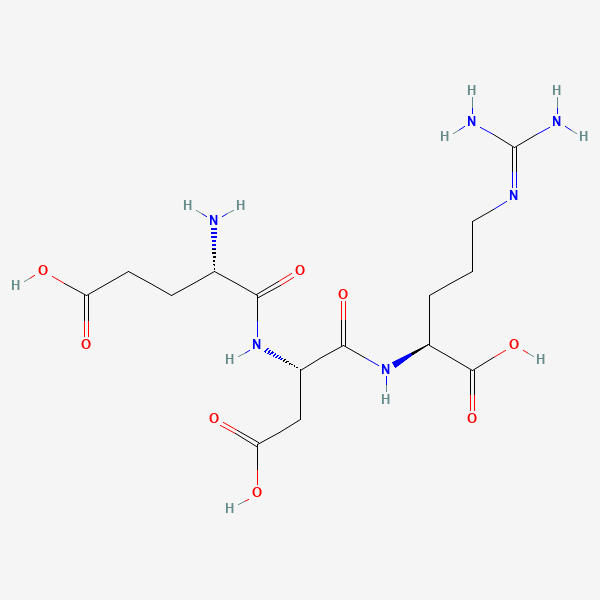
The pinealon peptide is the lab-made tripeptide Glu-Asp-Arg, abbreviated EDR: glutamic acid, aspartic acid, and arginine joined in that order. PubChem identifies it as CID 10273502, formula C15H26N6O8, molecular weight 418.40 g/mol, and CAS 175175-23-2. Three amino acids make this a very small peptide, not proof that it reaches the brain intact.
The pinealon bioregulator belongs to a family developed around Vladimir Khavinson’s work in St. Petersburg. A bioregulator peptide is proposed to influence tissue function through short amino-acid signals. Pinealon is usually placed in the longevity peptide group because claims focus on brain aging, although the published experiments are mainly neuroprotection models rather than lifespan studies.
How is the EDR peptide supposed to work?
The EDR peptide has two proposed stories: reducing oxidative stress in neural cells and changing the expression of genes tied to cell survival. The first has direct cell-assay support. The second remains a hypothesis built from in-vitro observations and molecular models, not a demonstrated conversation between an injected peptide and human DNA.
In a 2011 cell study, pinealon limited reactive oxygen species (ROS), reduced necrotic cell death, delayed ERK1/2 activation, and altered cell-cycle behavior in rat cerebellar granule cells, neutrophils, and PC12 cells (PMID 21978084). ROS are chemically reactive molecules that rise during cellular stress. Lowering them in a dish is a useful signal; it is not the same endpoint as preserving memory in a person.
The often-repeated nuclear mechanism needs cleaner wording. The 2020 review says EDR is assumed to enter cells and bind histones or RNA, while its discussion calls nuclear entry “presumed” (PMCID PMC7795577). Molecular modeling can suggest where binding might occur. It cannot show that pinealon reaches human brain-cell nuclei at a useful concentration and regulates the intended genes without unwanted effects.
What does the pinealon research actually show?
Pinealon has produced positive results in cultured neurons and a specialized rat model, but neither evidence tier predicts a clinical benefit reliably. The most useful findings involve oxidative stress, neuronal survival, dendritic spines, and learning behavior. No result below came from a randomized human trial.
A 2017 experiment exposed cultured mouse hippocampal neurons to amyloid-related synaptic stress. EDR at 200 ng/mL increased mushroom-shaped dendritic spines by 71% and restored that measure to the model’s normal level (Kraskovskaya et al.). Dendritic spines help neurons form connections, but a cultured-neuron proxy cannot establish prevention or treatment of Alzheimer’s disease.
The verified animal paper used pregnant rats with methionine-induced hyperhomocysteinemia. Pinealon was given intraperitoneally at 10 micrograms/kg daily for five days before methionine loading. Offspring later performed better in a water-maze task, and isolated cerebellar neurons accumulated less ROS and showed less necrosis under oxidative stress (PMCID PMC3342713). That is a narrow developmental rat model, not normal human cognitive aging.
Has Pinealon been studied in humans?
Pinealon lacks a verifiable, independently replicated randomized human efficacy trial. The 2020 Khavinson-group review describes oral use alongside standard care in 72 people with consequences of traumatic brain injury, but that claim traces to a Khavinson-affiliated paper and patent-era literature rather than a modern, independently reproduced trial.
That concentration of authorship matters. The key review is written entirely by researchers at the Saint Petersburg Institute of Bioregulation and Gerontology and the Pavlov Institute’s peptide-regulation group. The cell, animal, and dendritic-spine papers also include Khavinson or close collaborators. A research program can be sincere and still need outside replication; one family of laboratories is not a consensus.
Is Pinealon safe? Side effects and risks
Pinealon’s human safety profile is largely unknown, so a tidy list of “common side effects” would be invented precision. Published preclinical work does not establish the frequency of headache, fatigue, allergic reactions, drug interactions, reproductive harm, cancer-related effects, or long-term neurological outcomes in people.
The mechanism adds questions rather than reassurance. Changing cell-cycle activity or gene expression could be useful, neutral, or harmful depending on the tissue and dose. Research-use-only vials add a second layer: identity, potency, contaminants, and sterility have not been verified by FDA as they would be for an approved drug. “No reported problem” is a weak safety standard when systematic human monitoring barely exists.
Is Pinealon FDA-approved or banned in sport?
Pinealon is not FDA-approved for any indication in the United States as of July 16, 2026. An RUO label means research use only; it does not create approval for self-treatment. FDA also states that compounded drugs are not FDA-approved and are not reviewed for safety, effectiveness, or quality before marketing (FDA).
Pinealon is also prohibited at all times for athletes subject to the 2026 WADA Code. The peptide is not named individually, but S0 covers pharmacological substances without current human therapeutic approval from a governmental health regulator (2026 WADA list). That catch-all applies in and out of competition.
Is there a validated pinealon dosage?
No validated pinealon dosage exists for human use. The clearest primary-source dose found here is the rat experiment’s 10 micrograms/kg intraperitoneally for five days, given to pregnant animals in a disease model. Converting that figure into a human injection schedule would be scientifically unsound.
Online milligram protocols often mix clinic custom, vendor copy, and the older Russian literature without separating route, formulation, population, or study quality. Pinealon’s pharmacokinetics are also unestablished in humans: there is no solid answer for absorption, blood-brain-barrier exposure, or half-life. For context, Epitalon is another Khavinson-associated longevity peptide with a different sequence and evidence record; neither one lends Pinealon a dose by association.
Evidence by outcome
Each outcome Pinealon has been studied for, with the honest evidence grade and what the studies actually found. A tier never stands alone — the verdict rides with it.
| Outcome | Evidence | What was found |
|---|---|---|
| Neuroprotection under oxidative stress | Animal-onlyHelped⚠ none in humans | Pinealon reduced reactive oxygen species and cell death in cultured rat-derived neural cells, while a prenatal hyperhomocysteinemia experiment reported better learning and more stress-resistant cerebellar neurons in rat offspring. These findings do not establish a clinical benefit in people. |
| Alzheimer's disease or age-related cognitive decline | In-vitroUnclear⚠ none in humans | EDR preserved mushroom-shaped dendritic spines in a cultured mouse-neuron model of amyloid toxicity. No independently replicated randomized human trial has shown that Pinealon prevents or treats Alzheimer's disease or cognitive aging. |
FDA & legal status
- United States: research use only (as of Jul 2026)
Pinealon is not an FDA-approved drug and has no FDA-approved indication or dosing label. Products offered as research use only are not approved for human use; a compounded preparation would not itself be FDA-approved.
Chemical identifiers
References
- 1.Glu-Asp-Arg — PubChem CID 10273502
- 2.Khavinson et al., 2020 — EDR peptide and Alzheimer's disease mechanisms (PMCID PMC7795577)
- 3.Khavinson et al., 2011 — Pinealon, reactive oxygen species, and cell viability (PMID 21978084)
- 4.Arutjunyan et al., 2012 — Pinealon in rat offspring (PMCID PMC3342713)
- 5.Kraskovskaya et al., 2017 — EDR in an in-vitro Alzheimer's model
- 6.FDA — Compounding and the FDA: Questions and Answers
- 7.WADA — 2026 Prohibited List