Also known as: GLYX-13 · BV-102 · TPPT-amide
Human RCTNo effect
On this page
- Rapastinel at a glance
- What is rapastinel?
- How does rapastinel work?
- Does rapastinel work for depression?
- Why did rapastinel fail in Phase 3?
- Is rapastinel safe? Side effects
- Rapastinel vs ketamine: what is the difference?
- Is rapastinel FDA-approved or legal in 2026?
- Evidence by outcome
- FDA & legal status
- Chemical identifiers
- References
- Related compounds
Rapastinel is GLYX-13, an experimental four-amino-acid NMDA receptor modulator once pitched as a fast antidepressant without ketamine’s dissociation. If you found it through nootropic forums, the decisive fact is less hopeful: three pivotal Phase 3 trials did not beat placebo. Rapastinel was never FDA-approved, and its depression program was discontinued.
Rapastinel at a glance
Rapastinel reached the strongest kind of test this site grades: large, randomized human trials. That makes the conclusion unusually firm for a research peptide. The molecule appeared well tolerated, but tolerability could not rescue an antidepressant effect that failed to separate from placebo across the pivotal program.
- What it is: an amidated tetrapeptide, Thr-Pro-Pro-Thr-NH2, also called GLYX-13
- Studied for: major depressive disorder, usually added to an existing antidepressant
- Evidence: Human RCT
- Verdict: No effect in Phase 3
- U.S. status, July 2026: investigational, not FDA-approved, development discontinued
- Studied route: intravenous injection; rapastinel was not an oral medicine
- Doses reported in trials: 1, 5, 10, or 30 mg/kg once in Phase 2; 225 or 450 mg weekly in Phase 3
- Key safety point: well tolerated in trials, with no psychotomimetic signal
- Sport: prohibited at all times under WADA’s S0 rule for non-approved substances
What is rapastinel?
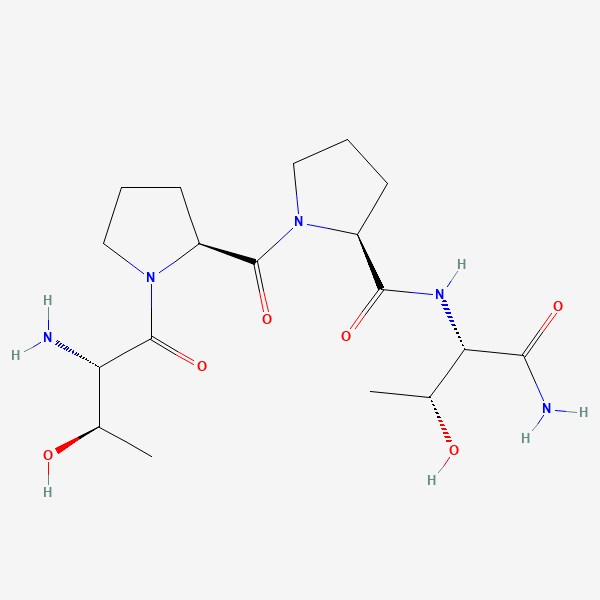
Rapastinel is a synthetic NMDA peptide antidepressant candidate built from just four amino acids: threonine-proline-proline-threonine, with an amide cap at the end. PubChem lists the sequence as TPPT, molecular formula C18H31N5O6, molecular weight 413.5 g/mol, CAS 117928-94-6, and CID 14539800.
Naurex developed GLYX-13 before Allergan bought the company in 2015. The SEC-filed acquisition announcement put the upfront payment at $560 million and described rapastinel as Phase 3-ready. That price records how much confidence surrounded the program. It does not count as evidence that the drug worked.
How does rapastinel work?
Rapastinel positively modulates the N-methyl-D-aspartate receptor, or NMDAR, a glutamate receptor involved in synaptic plasticity: the brain’s ability to strengthen or weaken connections. Think of rapastinel as trying to adjust the gain on that learning circuit, while ketamine temporarily blocks the channel. Similar destination, opposite handle.
The finer description changed over time. The clinical paper called GLYX-13 a glycine-site functional partial agonist. Later sponsor-funded experiments reported that rapastinel enhanced NMDAR activity through a novel site independent of the glycine co-agonist site. Calling it an NMDA positive modulator is therefore safer than pretending the binding-site question is settled.
Does rapastinel work for depression?
Rapastinel does not have convincing evidence of antidepressant efficacy after the full clinical program. The early rapastinel depression story was promising: a 116-person randomized Phase 2 trial reported that single 5 or 10 mg/kg intravenous doses improved depression scores within two hours and through day seven. The 1 and 30 mg/kg arms did not supply that headline.
The Phase 2 paper was a reason to run a larger test, not the final answer. RAP-MD-01, RAP-MD-02, and RAP-MD-03 then tested weekly intravenous rapastinel as an add-on to an oral antidepressant. Allergan reported that every rapastinel arm missed the primary and key secondary endpoints against placebo.
That is why the page carries a Human RCT tier paired with a No effect verdict. The evidence-grading system records both study design and result; a strong trial design does not force a positive answer.
| Evidence step | What happened | Honest read |
|---|---|---|
| Phase 2, 116 people | Mid-range single doses produced a rapid signal | Worth testing, not confirmation |
| RAP-MD-01, -02 and -03 | No separation from placebo on primary or key secondary outcomes | No-effect verdict |
| RAP-MD-04 relapse prevention | Interim analysis predicted the same endpoint failures | No maintenance rescue |
Why did rapastinel fail in Phase 3?
Why did rapastinel fail? The public results establish that benefit did not separate from placebo; they do not establish one neat biological reason. Possible explanations such as an unreliable Phase 2 signal, dose selection, trial design, or a large placebo response remain explanations, not findings. The clean answer is that efficacy failed replication.
This is the useful counterweight to hopeful nootropic coverage. Rapastinel was not abandoned after a mouse study or starved of funding. Three acute pivotal trials enrolled roughly 1,500 people in total, and RAP-MD-04 enrolled 1,304 before its interim analysis pointed toward failure. Full Phase 3 money arrived. The expected antidepressant advantage did not.
Is rapastinel safe? Side effects
Rapastinel looked well tolerated in the controlled human program, but its long-term safety picture is incomplete. The Phase 2 report found no psychotomimetic or other significant side effects, and Allergan said the three acute Phase 3 trials looked similar to placebo for safety and tolerability, without a psychotomimetic signal.
That clean signal matters, especially in rapastinel vs ketamine discussions. It does not mean “risk-free.” Rapastinel never became an approved medicine with a prescribing label, routine clinical use, or years of postmarketing surveillance. Development stopped for lack of benefit, so uncommon and long-latency risks were never mapped like those of a marketed antidepressant.
Rapastinel vs ketamine: what is the difference?
Rapastinel vs ketamine is a mechanism-and-evidence comparison, not a choice between two equivalent treatments. Rapastinel positively modulates NMDA receptors and showed no psychotomimetic signal, but failed its depression Phase 3 program. Ketamine blocks NMDA receptors and has replicated rapid antidepressant effects, alongside dissociation, monitoring needs, and abuse concerns.
No direct depression trial established rapastinel as equal or superior to ketamine. A later driving study compared single doses in healthy volunteers, which can inform short-term impairment but cannot overturn the failed efficacy program. For other brain-focused compounds, the nootropic and mental-health peptide hub keeps mechanism, animal work, and human outcomes on separate rungs.
Is rapastinel FDA-approved or legal in 2026?
Rapastinel is not FDA-approved for depression or any other use in the United States as of July 16, 2026. The correct status is investigational with development discontinued, not a prescription antidepressant, compounded therapy, or dietary supplement. Earlier FDA Fast Track and Breakthrough Therapy designations accelerated development; neither was approval.
WADA’s 2026 S0 rule also prohibits non-approved pharmacological substances, including discontinued investigational drugs, at all times. That catches rapastinel even though the list does not name GLYX-13 individually. The broader lesson is simple: development labels describe a review pathway, while endpoints decide whether the drug earns a medicine label. Our guide to reading peptide evidence explains that distinction without selling a workaround.
The site’s dated regulatory-status reference keeps approval, investigational status, and sports rules separate rather than compressing them into the vague word “legal.”
Evidence by outcome
Each outcome Rapastinel has been studied for, with the honest evidence grade and what the studies actually found. A tier never stands alone — the verdict rides with it.
| Outcome | Evidence | What was found |
|---|---|---|
| Major depressive disorder as adjunctive treatment | Human RCTNo effect | Three randomized, placebo-controlled Phase 3 studies found that rapastinel did not separate from placebo on their primary or key secondary endpoints. |
| Rapid antidepressant response after one dose | Human RCTMixed | A 116-person Phase 2 trial reported improvement after 5 or 10 mg/kg, but the much larger Phase 3 program failed to confirm a clinically useful benefit. |
| Psychotomimetic effects | Human RCTNo effect | Human trials did not identify a psychotomimetic or dissociative signal, the main tolerability feature intended to distinguish rapastinel from ketamine. |
FDA & legal status
- United States: investigational (as of Jul 2026)
Rapastinel is not FDA-approved. Its major-depression development program was discontinued after the Phase 3 efficacy failures; no active sponsor program was identified as of this review date.
Chemical identifiers
References
- 1.Rapastinel compound record — PubChem CID 14539800
- 2.Preskorn et al., 2015 — randomized proof-of-concept trial of GLYX-13 (PMID 25782764)
- 3.Allergan announces Phase 3 results for rapastinel in major depressive disorder
- 4.RAP-MD-04 relapse-prevention study — ClinicalTrials.gov NCT02951988
- 5.Allergan acquisition of Naurex — SEC Exhibit 99.1
- 6.WADA 2026 Prohibited List