Human RCTHelped
On this page
Betaine, better known as TMG (trimethylglycine), is a methylation workhorse. Its whole reason for being is carrying and donating methyl groups — the little chemical tags the body attaches to everything from DNA to homocysteine. That makes it one of the most reliable supplements for keeping homocysteine in check, and a hopeful, if less certain, one for training performance.
What is betaine?
Betaine isn’t one of the standard protein-building amino acids — it’s a derivative, a molecule of the amino acid glycine carrying three extra methyl groups (hence “trimethylglycine”). Those methyl groups are the point: they’re the currency betaine spends in the body’s methylation reactions. It first turned up in sugar beets, which is where the name comes from.
What does betaine do in the body?
Betaine has two standout jobs. First, it’s a methyl donor: it hands a methyl group to homocysteine to turn it back into methionine, keeping the body’s methylation cycle topped up and homocysteine from piling up. Second, it’s an osmolyte — a molecule cells use to hold onto water and stay stable under stress, a bit like antifreeze that keeps a cell’s internal environment steady. It also helps the liver manage fat.
Where do you get betaine?
Food is a real source here. Beets, spinach, whole grains, wheat bran, quinoa and shellfish all supply betaine, and the body can also make its own from choline. Because it’s available in a normal diet, betaine sits in that sweet spot of being both a nutrient you eat and a supplement people take at higher doses for a specific effect.
What does the research show?
Betaine’s homocysteine effect is the solid part of the story: controlled human trials consistently show it lowers blood homocysteine by feeding the methylation that recycles it, and it’s even an FDA-approved prescription (Cystadane) for a rare inherited disorder of homocysteine metabolism. The performance angle is the hopeful part: some trials report small gains in power, strength or body composition, while others show nothing, so the honest verdict is a modest and inconsistent effect. One molecule, one rock-solid use and one promising-but-unsettled one — a clean example of grading evidence by what’s actually been shown.
Is betaine safe?
Betaine is well tolerated, and its use as a gram-scale prescription drug speaks to a strong safety record. Side effects are usually limited to mild stomach upset or, rarely, a fishy body odour at high doses. The one caveat worth flagging is that large amounts have nudged cholesterol upward in some studies, so anyone managing their lipids should factor that in.
Evidence by outcome
Each outcome Betaine (TMG) has been studied for, with the honest evidence grade and what the studies actually found. A tier never stands alone — the verdict rides with it.
| Outcome | Evidence | What was found |
|---|---|---|
| Lowering homocysteine | Human RCTHelped | This is betaine's best-established effect: by donating a methyl group to convert homocysteine into methionine, it reliably lowers blood homocysteine in controlled human trials. Betaine is even an FDA-approved prescription (Cystadane) for a rare inherited disorder that causes dangerously high homocysteine. |
| Strength & power performance | Human (controlled)Mixed | Betaine is a popular ergogenic supplement, and some controlled trials report small gains in power, strength or body composition, possibly via its osmolyte and methylation roles. Other trials find no benefit, so the honest read is a modest, inconsistent effect rather than a sure thing. |
FDA & legal status
- United States: fda approved (as of Jul 2026)
This amino acid is also an FDA-approved prescription medicine (e.g. Betaine; Betaine Anhydrous). That approved drug is prescription-only; any version sold as a plant-extract "supplement" is a separate, unapproved product.
Chemical identifiers
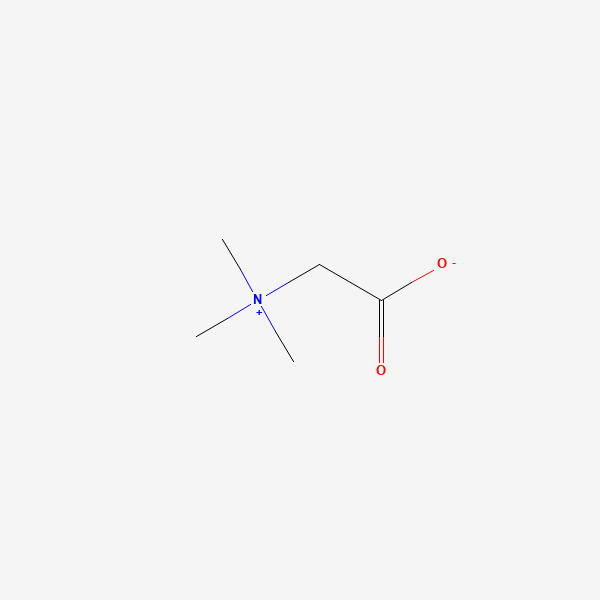
- Molecular formula
- C5H11NO2
- Molecular weight
- 117.15 g/mol
- IUPAC name
- 2-(trimethylazaniumyl)acetate
Verified external records: