Human (controlled)Mixed
On this page
5-HTP is the molecule your body makes on the way to building serotonin — the neurotransmitter tied to mood, appetite and sleep. Take it as a supplement and you hand your brain the raw material for serotonin one step from the finish line. That direct link is why 5-HTP has real human research behind it for mood and appetite, and also why it needs respect around serotonin-raising medications.
What is 5-HTP?
5-HTP, or 5-hydroxytryptophan, is a non-proteinogenic amino acid that sits one step before serotonin in the body’s assembly line. Your body makes it from the essential amino acid tryptophan, then converts it into serotonin. Its standout trait: unlike serotonin, which can’t get into the brain from the bloodstream, 5-HTP crosses the blood-brain barrier — so supplementing it can actually raise the raw material inside the brain.
What does 5-HTP do in the body?
5-HTP has one headline job: it becomes serotonin. Picture serotonin production as a two-stage factory — tryptophan is the ore, 5-HTP is the refined metal, and serotonin is the finished part. The refining step (tryptophan into 5-HTP) is the slow one, so supplying 5-HTP directly lets the factory skip its bottleneck. Serotonin in turn influences mood, feelings of fullness after eating, and — converted onward to melatonin — the timing of sleep.
Where do you get 5-HTP?
You won’t get meaningful 5-HTP from food; the body normally makes its own from tryptophan in protein-rich meals. Supplemental 5-HTP is extracted from the seeds of Griffonia simplicifolia, a West African plant that happens to be unusually rich in it. That plant source is why 5-HTP is sold as a standalone supplement rather than something you’d eat your way to.
What does the research show?
The appetite research is the tidier of the two stories: small controlled trials have found 5-HTP increases fullness and trims calorie intake, a consistent and encouraging direction. On mood, the logic is strong — 5-HTP feeds serotonin, the exact system antidepressants act on — and several small trials have reported benefit, but most are older and modest in size, so it’s a plausible, promising signal rather than modern, airtight proof. The through-line is exciting: this is one of the few supplements with a clear, direct mechanism into a system that matters for how people feel.
Is 5-HTP safe?
On its own, 5-HTP is generally well tolerated, with nausea the usual complaint — often eased by taking it with food. The important safety line is drug interactions: combining 5-HTP with SSRIs, SNRIs, MAOIs, triptans or other serotonin-raising medicines risks serotonin syndrome, a serious over-accumulation of serotonin. Never stack it with an antidepressant unless a clinician is guiding you.
Evidence by outcome
Each outcome 5-HTP has been studied for, with the honest evidence grade and what the studies actually found. A tier never stands alone — the verdict rides with it.
| Outcome | Evidence | What was found |
|---|---|---|
| Mood & depression | Human (controlled)Mixed | Because 5-HTP is the direct raw material for serotonin — the neurotransmitter most antidepressants target — it's a biologically sensible mood support, and several small controlled trials have reported benefit. The catch is that most of this research is older and small, so it's a promising, plausible signal rather than modern proof. |
| Appetite & satiety | Human (controlled)Helped | Some of the cleaner human evidence is on appetite. Small controlled trials have found that 5-HTP can increase feelings of fullness and reduce calorie intake, likely through serotonin's role in satiety. The trials are small, but the effect direction is consistent and encouraging. |
FDA & legal status
- United States: dietary supplement / food (as of Jul 2026)
A non-proteinogenic amino acid, sold as a dietary supplement. Not an FDA-approved drug; supplements are regulated as food, not medicine.
Chemical identifiers
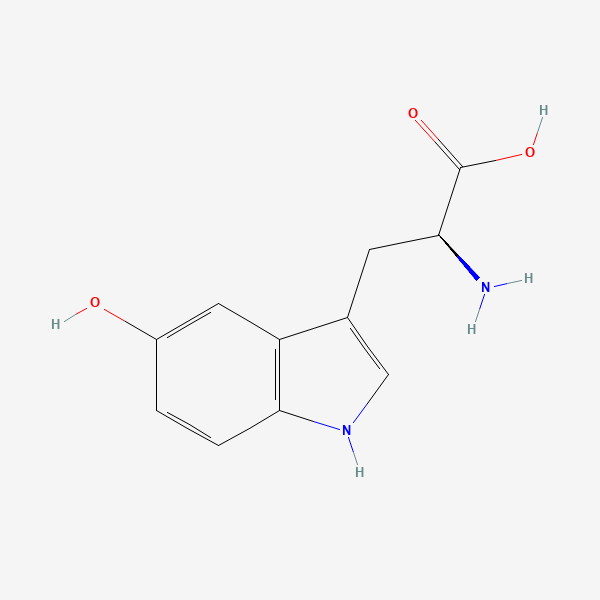
- Molecular formula
- C11H12N2O3
- Molecular weight
- 220.22 g/mol
- IUPAC name
- 2-amino-3-(5-hydroxy-1H-indol-3-yl)propanoic acid
Verified external records: