Human (controlled)Mixed
On this page
L-Arginine is the amino acid your body turns into nitric oxide — the molecule that tells blood vessels to relax and open up. That single job puts it at the center of circulation, blood pressure, and exercise “pump,” and it moonlights in ammonia clearance and growth-hormone release too. Your body can make it, but not always fast enough during growth, healing or serious stress.
What is L-Arginine?
L-Arginine is a conditionally-essential proteinogenic amino acid. Its side chain ends in a nitrogen-rich guanidinium group, which is both what makes it strongly basic and what the body plucks nitrogen from to build nitric oxide. “Conditionally essential” means healthy adults usually make enough via the urea cycle, but demand can outstrip supply when the body is building or repairing tissue at pace. You’ll see it abbreviated Arg or R.
What does L-Arginine do in the body?
L-Arginine’s headline role is as the direct substrate for nitric oxide, a short-lived gas that signals the muscle in blood-vessel walls to loosen, widening the vessel and easing blood flow. It’s also a linchpin of the urea cycle, the system that packages toxic ammonia into urea for disposal, and it’s a precursor for creatine and for polyamines that cells need to grow and divide. On top of that, a dose of arginine can nudge the pituitary to release growth hormone. Think of it as a supply depot feeding several very different production lines.
Where do you get L-Arginine?
L-Arginine is rich in protein foods: turkey, chicken, meat and fish, plus plant sources like pumpkin seeds, peanuts, other nuts and seeds, soybeans, chickpeas and lentils. Between diet and the body’s own urea-cycle production, healthy adults are generally well covered — the interesting cases are growth, injury and illness, when the internal supply lags behind.
What does the research show?
The nitric-oxide story is real but nuanced in humans. Controlled trials show arginine can modestly lower blood pressure and improve blood flow in some groups, though results are mixed — largely because a lot of swallowed arginine is broken down in the gut and liver before reaching your circulation. That quirk is exactly why citrulline, which converts to arginine downstream, is often studied as a sneakier route to the same pathway. Arginine’s growth-hormone effect, by contrast, is well established — reliable enough to be used in clinical GH stimulation tests — even if turning that spike into real muscle gains from a supplement is far from proven.
Is L-Arginine safe?
L-Arginine is well tolerated for most people; the usual complaint at higher doses is digestive upset like nausea or loose stools. The meaningful caution is cardiovascular: anyone recovering from a heart attack, or taking blood-pressure or erectile-dysfunction medication, should talk to a clinician first, because arginine works on the very same nitric-oxide system those situations involve.
Evidence by outcome
Each outcome L-Arginine has been studied for, with the honest evidence grade and what the studies actually found. A tier never stands alone — the verdict rides with it.
| Outcome | Evidence | What was found |
|---|---|---|
| Blood flow and blood pressure | Human (controlled)Mixed | As the raw material for nitric oxide, arginine can relax and widen blood vessels, and controlled trials show modest blood-pressure and blood-flow effects in some groups. Results are mixed partly because much oral arginine is broken down before it reaches the bloodstream — one reason citrulline is often studied as a more efficient route to the same pathway. |
| Growth hormone release | Human (controlled)Helped | Arginine reliably triggers a short-term rise in growth hormone — the effect is well enough established that it's used in clinical GH stimulation testing. Whether that translates into meaningful muscle or body-composition change from supplements is far less certain. |
FDA & legal status
- United States: dietary supplement / food (as of Jul 2026)
A proteinogenic amino acid found in dietary protein and sold as a supplement. Not an FDA-approved drug; supplements are regulated as food, not medicine.
Chemical identifiers
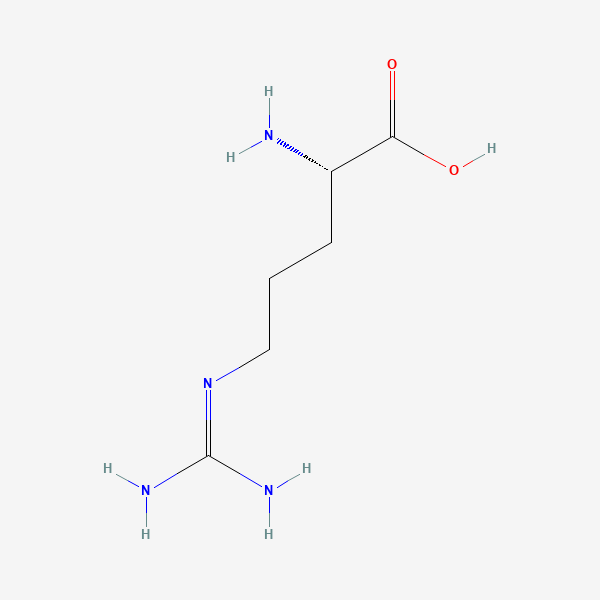
- Molecular formula
- C6H14N4O2
- Molecular weight
- 174.2 g/mol
- IUPAC name
- (2S)-2-amino-5-(diaminomethylideneamino)pentanoic acid
Verified external records: