Human (controlled)Mixed
On this page
Carnosine is a small molecule with an outsized job in muscle and brain: it buffers acid, scavenges free radicals, and blocks the sugar-driven damage that stiffens proteins over time. It’s concentrated in the tissues that take the most wear, which is exactly why researchers keep circling back to it for metabolic health and healthy ageing.
What is carnosine?
Carnosine isn’t a single amino acid — it’s a dipeptide, two amino acids (beta-alanine and histidine) bonded into one small molecule. That pairing gives it chemistry neither amino acid has alone. It’s found in high concentrations in skeletal muscle and the brain, and it’s made inside the body rather than being essential in the diet. You’ll also see it written as L-carnosine.
What does carnosine do in the body?
Carnosine wears several hats. In muscle it works as a pH buffer, soaking up the acid that floods in during hard exercise — think of it as baking soda for your muscle cells, keeping them from turning too acidic too fast. It’s also an antioxidant, and one of its most interesting roles is anti-glycation: it intercepts reactive sugars and their byproducts before they can gum up and damage proteins, the slow process behind a lot of age-related tissue stiffening.
Where do you get carnosine?
Carnosine comes from meat — red meat, poultry and fish are the rich sources — and it’s essentially absent from plants, so vegetarians and vegans carry lower muscle carnosine. Your body also builds its own from beta-alanine and histidine. Supplement forms exist, but there’s a catch worth knowing before you buy: swallowed carnosine is mostly dismantled during digestion.
What does the research show?
The metabolic angle is the most promising. Because carnosine soaks up the reactive sugars behind glycation, small controlled trials in people with or at risk of diabetes have reported better glucose markers — encouraging, though the studies are small and results mixed. The exercise story comes with an honest asterisk: muscle carnosine buffers acid, but taking carnosine by mouth doesn’t raise muscle stores well, because it’s broken back down into beta-alanine and histidine first. That’s why beta-alanine, its precursor, is the supplement with the stronger performance evidence.
Is carnosine safe?
Carnosine is well tolerated, with the main quirk being a harmless tingling sensation at higher doses — the same histidine-related flush seen with beta-alanine. There’s no serious toxicity reported at supplement levels. As always, use sensible doses and check with a clinician if you have an existing condition or take medication.
Evidence by outcome
Each outcome Carnosine has been studied for, with the honest evidence grade and what the studies actually found. A tier never stands alone — the verdict rides with it.
| Outcome | Evidence | What was found |
|---|---|---|
| Blood sugar & anti-glycation | Human (controlled)Mixed | Because carnosine binds the reactive sugars behind glycation damage, it's a biologically sensible target for metabolic health, and some small controlled human trials in people with or at risk of diabetes have reported improvements in glucose markers. The trials are small and results are mixed, so it's a promising lead rather than a proven treatment. |
| Raising muscle carnosine for exercise | MechanisticUnclear | Muscle carnosine clearly buffers acid during intense effort, which matters for high-intensity performance. But taken by mouth, carnosine is largely broken back down into beta-alanine and histidine before it reaches muscle — so supplementing beta-alanine, not carnosine itself, is the evidence-backed way to raise muscle stores. |
FDA & legal status
- United States: dietary supplement / food (as of Jul 2026)
A non-proteinogenic amino acid, sold as a dietary supplement. Not an FDA-approved drug; supplements are regulated as food, not medicine.
Chemical identifiers
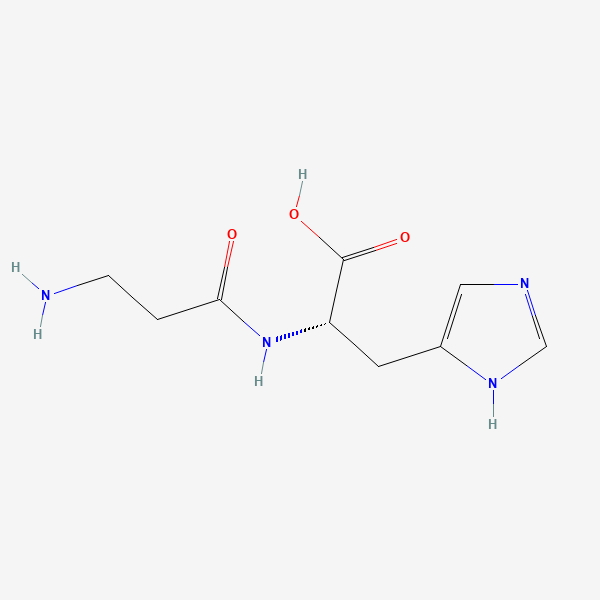
- Molecular formula
- C9H14N4O3
- Molecular weight
- 226.23 g/mol
- IUPAC name
- (2S)-2-(3-aminopropanoylamino)-3-(1H-imidazol-5-yl)propanoic acid
Verified external records: