Human (controlled)Mixed
On this page
L-Cysteine is the sulfur-carrying amino acid that quietly sets the ceiling on one of your most important defenses: glutathione, the body’s master antioxidant. It’s also the amino acid whose sulfur atoms clasp proteins into their working shapes. Your body can make it from methionine, so it’s conditionally essential — you only lean on the diet when supply runs tight.
What is L-Cysteine?
L-Cysteine is a conditionally-essential proteinogenic amino acid, and one of only two that carry sulfur. That sulfur, sitting on a reactive thiol (-SH) group, is the whole story: it lets cysteine form disulfide bonds — chemical staples that lock proteins together — and makes it the reactive heart of glutathione. “Conditionally essential” means the body normally builds it from the essential amino acid methionine, so food only becomes the limiting source when methionine is short or demand spikes. You’ll see it abbreviated Cys or C.
What does L-Cysteine do in the body?
L-Cysteine’s biggest job is being the scarce, rate-limiting ingredient in glutathione — the antioxidant your cells rely on to neutralize damaging oxidants and detoxify. Because cysteine is usually the ingredient in shortest supply, glutathione production tends to rise or fall with it. Its thiol group also forms the disulfide bridges that give structural proteins like keratin (in hair and nails) their toughness, and it supplies sulfur for molecules such as taurine. Picture it as both the limiting reagent for your antioxidant system and the rivet that holds certain proteins in shape.
Where do you get L-Cysteine?
L-Cysteine comes from protein foods rich in sulfur amino acids: meat, poultry, fish, eggs, and dairy, with contributions from garlic, onions and legumes. The body also manufactures it from methionine, so a mixed diet with adequate protein generally keeps you supplied. Supplement-wise, the more common form isn’t free cysteine but NAC (N-acetylcysteine), a more stable delivery vehicle.
What does the research show?
The clearest finding is mechanistic and well supported: cysteine is the limiting brick for glutathione, so topping it up — typically via NAC — can raise glutathione in people who are depleted. Its supplement form NAC also has real, established clinical roles, most famously as the antidote for acetaminophen overdose and as a mucus-thinner. Beyond those, NAC has been trialled broadly for antioxidant support with mixed results. One honest caveat: free dietary cysteine and clinical NAC aren’t the same thing, so a claim proven for one doesn’t automatically transfer to the other.
Is L-Cysteine safe?
L-Cysteine from food is safe and unavoidable in any normal diet. Supplemental forms are generally well tolerated, with digestive upset the main issue at high doses. Because NAC interacts with some medications and clinical situations, it’s worth using thoughtfully rather than casually.
Evidence by outcome
Each outcome L-Cysteine has been studied for, with the honest evidence grade and what the studies actually found. A tier never stands alone — the verdict rides with it.
| Outcome | Evidence | What was found |
|---|---|---|
| Glutathione production | Human (controlled)Helped | Cysteine is the scarce ingredient that caps glutathione synthesis, so supplying more of it — usually as NAC — can raise glutathione levels in people whose stores are depleted. That the raw material is limiting is well supported; the downstream health payoff depends heavily on the situation. |
| Antioxidant and respiratory uses | Human (controlled)Mixed | Its supplement form NAC has genuine clinical uses (including as an antidote for acetaminophen overdose and as a mucus-thinner), and it's been trialled more broadly for antioxidant support with mixed results. Free dietary cysteine and clinical NAC aren't identical, so read specific claims carefully. |
FDA & legal status
- United States: dietary supplement / food (as of Jul 2026)
A proteinogenic amino acid found in dietary protein and sold as a supplement. Not an FDA-approved drug; supplements are regulated as food, not medicine.
Chemical identifiers
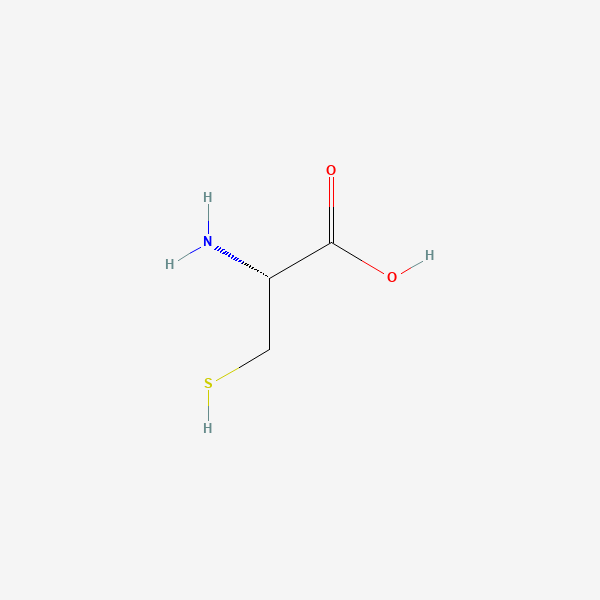
- Molecular formula
- C3H7NO2S
- Molecular weight
- 121.16 g/mol
- IUPAC name
- (2R)-2-amino-3-sulfanylpropanoic acid
Verified external records: