Human observationalMixed
On this page
L-Histidine is a small essential amino acid that does chemistry far bigger than its size. It’s the piece your body pairs with beta-alanine to make carnosine, the starting point for histamine, and a key resident in the oxygen-grabbing pocket of hemoglobin. Your body can’t manufacture it, so it comes entirely from food.
What is L-Histidine?
L-Histidine is an essential proteinogenic amino acid — one of the twenty protein building blocks, and one adults must get from the diet. Its defining feature is an imidazole ring on its side chain, a nitrogen-rich group that can grab and release protons at body pH. That knack for shuffling protons is exactly why histidine sits at the business end of countless enzymes, doing the actual catalytic work. You’ll see it abbreviated His or H.
What does L-Histidine do in the body?
L-Histidine has a versatile résumé. Muscle cells join it to beta-alanine to make carnosine, which acts like a sponge for the acid that builds up during hard exercise. The body also converts it into histamine — a messenger in immune responses, stomach-acid release and wakefulness. And structurally, histidine lines the pocket of hemoglobin that binds oxygen and studs the active sites of enzymes that need a nimble proton-handler. If you picture the other amino acids as bricks, histidine is more like an adjustable wrench.
Where do you get L-Histidine?
L-Histidine is plentiful in protein: meat, poultry, fish, eggs and dairy lead the way, with soy, beans, lentils, whole grains, nuts and seeds contributing. A diet with adequate protein covers it comfortably. It’s a particular priority in infancy and rapid growth, when demand outstrips what the body can spare.
What does the research show?
Here honesty matters. Histidine’s carnosine role is textbook, but raising muscle carnosine is limited by beta-alanine, not histidine — so taking histidine alone isn’t an established way to boost that buffer in well-nourished people. The more intriguing human research is observational: higher histidine status tracks with better inflammatory and metabolic markers in some studies, and a few small trials have tested it directly. That work is promising but early and mostly associational — enough to make histidine worth watching, not enough to make claims. The structural biology, by contrast, is rock solid.
Is L-Histidine safe?
L-Histidine is safe as part of a normal, protein-adequate diet and has been used in studies without reported trouble. High-dose supplements are less thoroughly studied, and since histidine is the raw material for histamine, large amounts are best treated with a little caution rather than enthusiasm.
Evidence by outcome
Each outcome L-Histidine has been studied for, with the honest evidence grade and what the studies actually found. A tier never stands alone — the verdict rides with it.
| Outcome | Evidence | What was found |
|---|---|---|
| Carnosine and muscle buffering | MechanisticUnclear | Histidine combines with beta-alanine to form carnosine, which buffers acid in working muscle. In practice, beta-alanine is the ingredient that limits how much carnosine you make, so supplementing histidine on its own isn't a proven way to raise muscle carnosine in well-fed people. |
| Metabolic and inflammatory markers | Human observationalMixed | Some human observational and small interventional work links higher histidine status to better markers of inflammation and metabolic health. The signal is interesting but preliminary and mostly associational, not proof that supplements deliver those benefits. |
FDA & legal status
- United States: dietary supplement / food (as of Jul 2026)
A proteinogenic amino acid found in dietary protein and sold as a supplement. Not an FDA-approved drug; supplements are regulated as food, not medicine.
Chemical identifiers
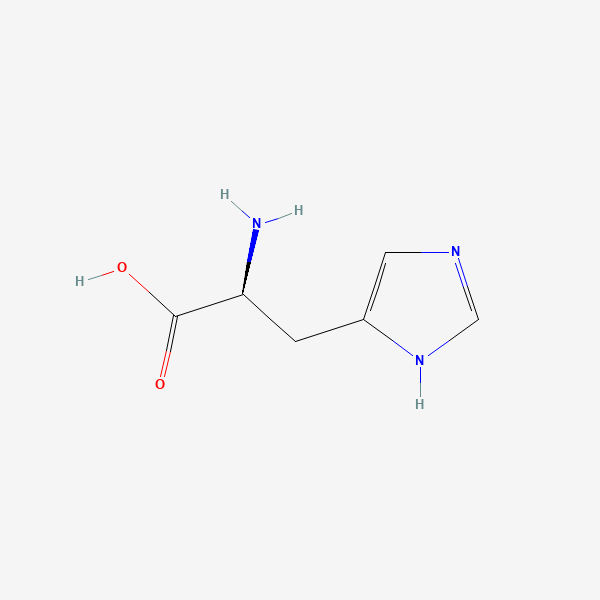
- Molecular formula
- C6H9N3O2
- Molecular weight
- 155.15 g/mol
- IUPAC name
- (2S)-2-amino-3-(1H-imidazol-5-yl)propanoic acid
Verified external records: