Human (controlled)Mixed
On this page
L-isoleucine is the quiet middle sibling of the three branched-chain amino acids. It’s essential — your body can’t make it — and while leucine gets the spotlight for triggering muscle growth, isoleucine does its own useful work: it helps muscle pull in glucose for fuel and serves as a direct energy source during exercise.
What is L-isoleucine?
L-isoleucine is an essential, proteinogenic amino acid and one of the three branched-chain amino acids (BCAAs), sitting alongside leucine and valine. The name means “isomer of leucine” — the two share a formula but arrange their atoms differently. You’ll see it written Ile or the single letter I. Being essential, it has to come from your diet; there’s no human pathway to build it from scratch.
What does L-isoleucine do in the body?
L-isoleucine plays two roles worth knowing. First, like its BCAA siblings, muscle can burn it directly for energy — handy during prolonged exercise when muscle wants fuel on site. Second, isoleucine is linked to glucose uptake: it helps nudge sugar out of the bloodstream and into muscle cells, a bit like helping open the door so fuel can get where it’s needed. It’s also a general-purpose building block in the proteins throughout your body, and its carbon skeleton is flexible enough to feed either glucose or ketone production depending on what the body needs.
Where do you get L-isoleucine?
L-isoleucine is widespread in protein-rich food. Eggs, meat, poultry, fish, dairy and whey are dense sources; soy, other legumes, seeds and nuts cover the plant side. Because it shows up in essentially all complete proteins, anyone eating enough total protein is comfortably meeting their isoleucine needs without thinking about it.
What does the research show?
L-isoleucine is mostly studied as part of a branched-chain amino acid blend rather than on its own, and those human trials — for recovery and muscle soreness — land on mixed, modest results. The more distinctive isoleucine finding is its role in glucose uptake, but that evidence is animal- and cell-based so far. It’s an interesting lead for blood-sugar handling, not something shown to move the needle clinically in people. Honest read: isoleucine is a real contributor to muscle energy and repair, with its standout mechanism still awaiting human confirmation.
Is L-isoleucine safe?
L-isoleucine is safe at dietary levels and in balanced BCAA supplements — you eat it every day in any protein source. The main practical point is balance with the other two branched-chain amino acids rather than mega-dosing one alone. The exception is people with rare inborn BCAA-metabolism disorders, who must restrict it under medical supervision.
Evidence by outcome
Each outcome L-Isoleucine has been studied for, with the honest evidence grade and what the studies actually found. A tier never stands alone — the verdict rides with it.
| Outcome | Evidence | What was found |
|---|---|---|
| Muscle recovery and exercise support (as part of BCAAs) | Human (controlled)Mixed | Isoleucine is usually studied inside a branched-chain amino acid blend rather than alone. Controlled human trials of BCAAs for recovery and soreness show mixed, generally modest effects. Isoleucine clearly contributes to the muscle energy and rebuilding machinery; a large standalone benefit isn't established. |
| Glucose uptake / blood-sugar handling | Animal-onlyUnclear⚠ none in humans | Isoleucine promotes glucose uptake into muscle in animal and cell studies, which is a biologically interesting angle for blood-sugar handling. This is mechanistic and animal-level work — it hasn't been shown to translate into a reliable clinical effect in people, so treat it as a promising lead, not proof. |
FDA & legal status
- United States: dietary supplement / food (as of Jul 2026)
A proteinogenic amino acid found in dietary protein and sold as a supplement. Not an FDA-approved drug; supplements are regulated as food, not medicine.
Chemical identifiers
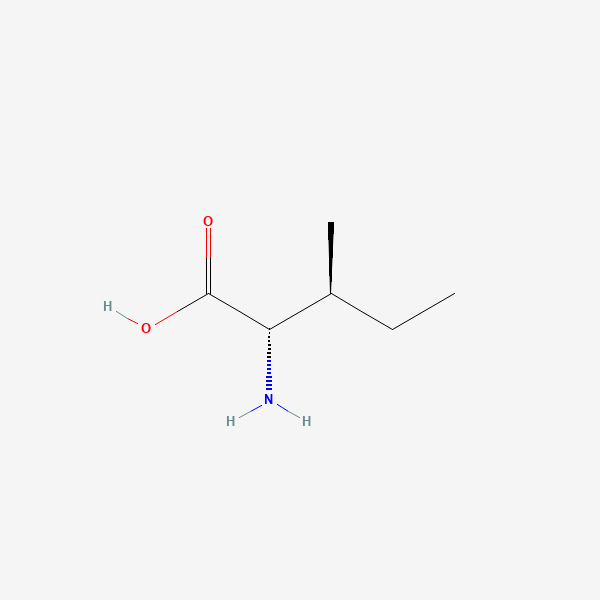
- Molecular formula
- C6H13NO2
- Molecular weight
- 131.17 g/mol
- IUPAC name
- (2S,3S)-2-amino-3-methylpentanoic acid
Verified external records: