Human (controlled)Mixed
On this page
L-Citrulline is the amino acid behind the “watermelon boosts your pump” claim — and unlike most gym folklore, the mechanism holds up. Your body turns citrulline into arginine, which it uses to make nitric oxide, the molecule that relaxes blood vessels and lets more blood flow to working muscle. That single pathway explains why it shows up in pre-workouts, blood-pressure research, and even circulation studies.
What is L-citrulline?
L-Citrulline is a non-proteinogenic amino acid — your body uses it as a metabolic intermediate rather than a protein building block. Its name comes from Citrullus, the watermelon genus where it was first found. It plays two roles worth knowing: it’s a step in the urea cycle that clears waste ammonia, and it’s the body’s clever back-door route to raising arginine and nitric oxide.
What does L-citrulline do in the body?
Citrulline’s standout trick is what it becomes. The kidneys convert it into L-arginine, and arginine is the direct precursor to nitric oxide — a gas that signals blood vessels to relax and widen. Wider vessels mean more blood, oxygen and nutrients reaching tissue, which is the whole idea behind the gym “pump.” Here’s the twist: swallowing citrulline raises arginine in the blood better than swallowing arginine does, because it dodges the liver’s first-pass cleanup crew.
Where do you get L-citrulline?
Watermelon is the famous natural source — it’s literally named after the fruit — with the highest concentrations in the rind. Cucumber, pumpkin and other gourds carry smaller amounts. Your body also makes its own from glutamine in the gut lining. To hit the doses used in studies, though, most people use L-citrulline or citrulline malate powder rather than eating a wheelbarrow of watermelon.
What does the research show?
The strongest evidence is for blood flow: controlled human studies consistently show citrulline raising arginine and nitric oxide and improving blood-vessel widening. For exercise, several trials report modest gains in reps, endurance or reduced soreness, though results swing with dose and study design — a real but moderate effect. For blood pressure, some trials show small reductions, especially in people who start out elevated. Put together, citrulline is that satisfying case where a clean mechanism and honest human data mostly agree, even if the performance hype runs ahead of the numbers.
Is L-citrulline safe?
L-Citrulline is well tolerated, used in human trials at several grams a day with little of the stomach upset high-dose arginine can cause. The one sensible caution: because it boosts nitric oxide, anyone taking blood-pressure medication or nitric-oxide-related drugs should check with a doctor first, since the effects can add up.
Evidence by outcome
Each outcome L-Citrulline has been studied for, with the honest evidence grade and what the studies actually found. A tier never stands alone — the verdict rides with it.
| Outcome | Evidence | What was found |
|---|---|---|
| Blood flow & nitric oxide | Human (controlled)Helped | This is citrulline's best-supported effect. Controlled human studies show supplementation raises arginine and nitric oxide and improves measures of blood vessel widening and blood flow. The mechanism is clean and the human evidence is consistent. |
| Exercise performance | Human (controlled)Mixed | Better blood flow is why citrulline (often as citrulline malate) is a pre-workout staple, and several trials report modest gains in reps, endurance or reduced muscle soreness. Results vary by dose and study, so call it a real but moderate effect, not a guaranteed one. |
| Blood pressure & vascular health | Human (controlled)Mixed | Because it widens blood vessels, citrulline has been studied for blood pressure, with some trials showing small reductions, especially in people with elevated readings. Encouraging early data rather than an established treatment. |
FDA & legal status
- United States: dietary supplement / food (as of Jul 2026)
A non-proteinogenic amino acid, sold as a dietary supplement. Not an FDA-approved drug; supplements are regulated as food, not medicine.
Chemical identifiers
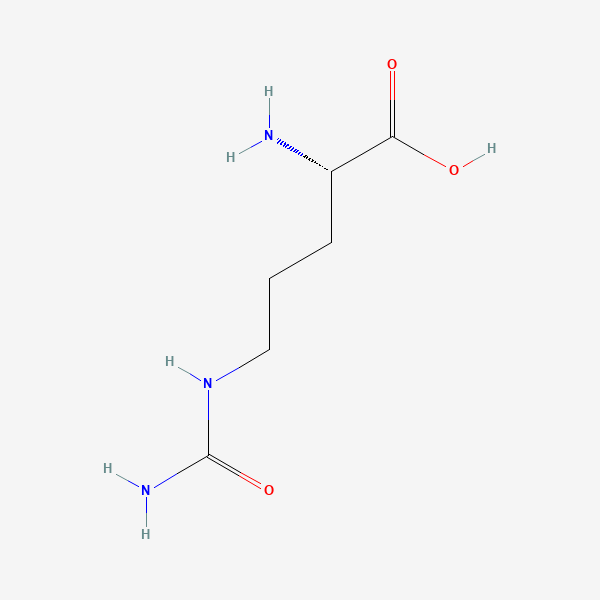
- Molecular formula
- C6H13N3O3
- Molecular weight
- 175.19 g/mol
- IUPAC name
- (2S)-2-amino-5-(carbamoylamino)pentanoic acid
Verified external records:
References
More on L-Citrulline
Everything else we've written about L-Citrulline — what the community reports, the explainers that cover it, and the terms it keeps running into.